

































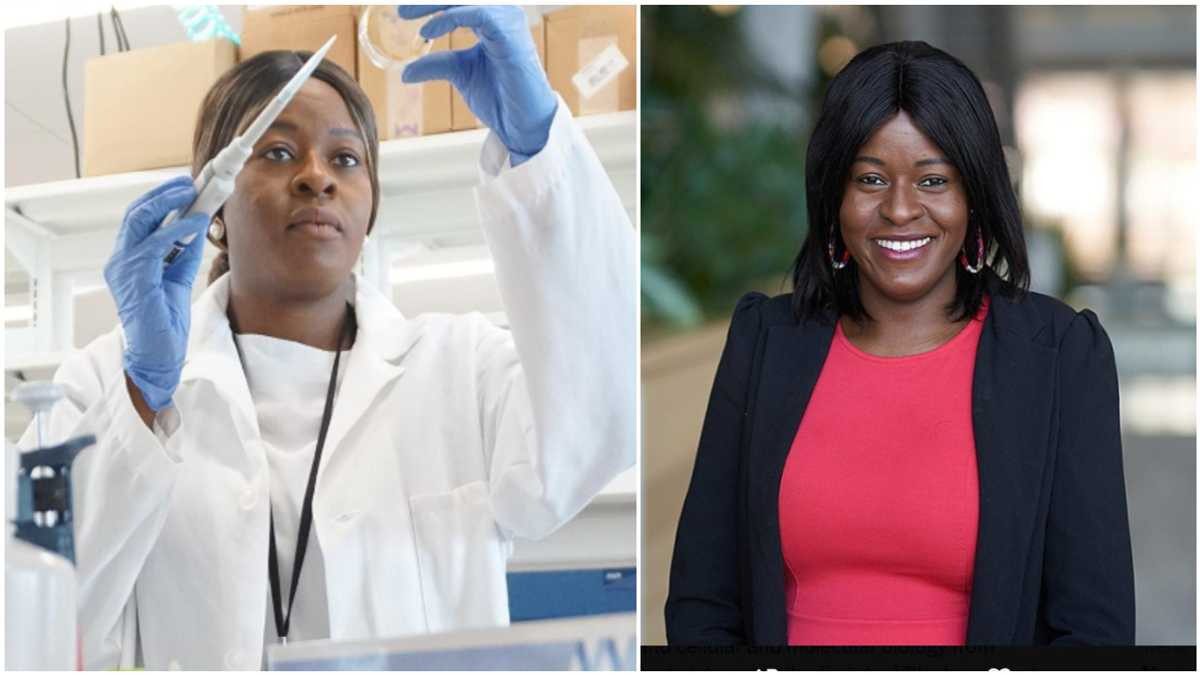
Amie Fornah Sankoh has achieved a historic milestone, becoming the first deaf Black woman to earn a doctorate in a STEM field in the United States, and potentially the world. Born in Sierra Leone, she lost her hearing at the age of three, a challenge that made her early schooling incredibly difficult. Her path changed dramatically when she was sent to the United States to live with a family friend who later adopted her, providing her the stability and access to the deaf community where she mastered American Sign Language.
Reports says that Sankoh found her footing through mathematics, a subject she gravitated toward because of its clear, visual structure. She explained that while spoken language was inaccessible, watching someone write out formulas allowed her to follow every step of a problem effortlessly. That visual clarity sparked a deeper interest in science, eventually leading her to fall in love with complex chemistry during high school.
After working as a lab technician and earning degrees from the Rochester Institute of Technology, she pursued her PhD in biochemistry and cellular and molecular biology at the University of Tennessee, Knoxville. She successfully defended her work on May 20, 2023, where her research focused on the intricate effects of hormones on plant-pathogen interactions. Throughout her academic career, she has already co-authored four scientific publications.
Her journey was not without significant obstacles, particularly during the pandemic. Sankoh admitted to that when Covid-19 forced the world into masks and online meetings, she feared her graduate studies were over because communication barriers became overwhelming. She overcame these hurdles thanks to the support of mentors and colleagues who utilized clear masks and written communication, ensuring she could keep pace with her work.
Now serving in a postdoctoral position at the Danforth Plant Science Center in Missouri, Sankoh remains committed to both her research and her advocacy for the deaf community. She views her doctorate as more than a personal victory; she hopes it serves as a powerful message to others. She shared that she is deeply proud of her persistence and finds great joy in knowing she can inspire the next generation of deaf scientists to recognize their own potential.