
























Global oil prices took a slight dip on Monday as the international market reacted to the news of upcoming high-stakes talks between the United States and Iran in Geneva. Investors are moving with caution, as any breakthrough in these negotiations could significantly alter the current landscape of global oil supply.
For Nigeria, the impact was reflected in the price of Brent crude, which settled at $70.59 per barrel. This represents a 0.8 percent decline from the previous close of $71.22. Despite this marginal drop, the price remains notably higher than the country’s national budget benchmark. Similarly, the US benchmark, West Texas Intermediate (WTI), saw a 0.9 percent decrease, falling to $65.68 per barrel from $66.30 in the preceding session.
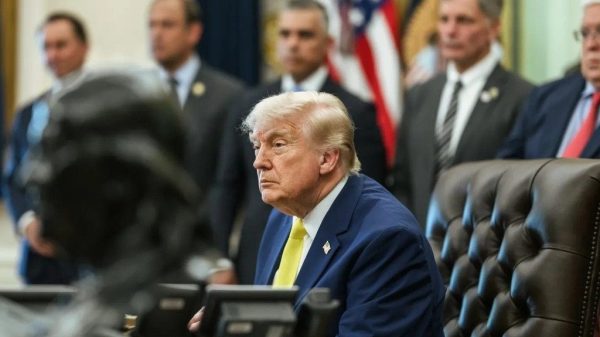
The eyes of the world are now fixed on February 26, the date set for the Washington-Tehran dialogue. Oman’s Foreign Minister, Badr Albusaidi, confirmed the meeting through a social media post, expressing optimism about the potential to finalize a deal. Albusaidi noted that there is a genuine push from both sides to go the extra mile during this Thursday’s session.
However, the road to a resolution is not without conditions. Reports suggest that Washington’s participation is contingent on Iran presenting a comprehensive and detailed nuclear proposal within the next 48 hours. This requirement adds a layer of tension to the countdown, as the global market awaits a signal that both nations are ready to move past previous deadlocks.
Iranian Foreign Minister Abbas Araghchi has indicated that the specifics of the proposal are still being polished. He told news outlets that the goal is to create a framework that addresses the core concerns and trust issues of both parties. While Araghchi admitted that the top Iranian leadership has yet to give the final green light, he remains hopeful that the Geneva meeting will yield measurable progress.