































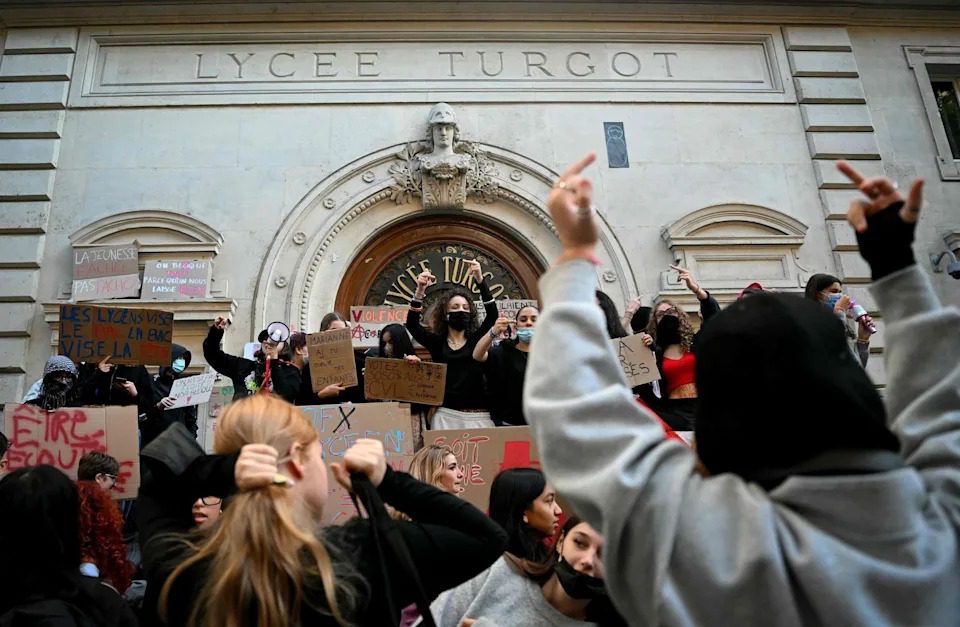
More than 250,000 students, teachers and supporters took to the streets across France on Tuesday, demanding improved conditions in schools as a growing protest movement that began among high school students entered another day of nationwide demonstrations.
The protests, which started in late September, have seen students block entrances to hundreds of high schools. They say many schools are struggling with a shortage of teachers, overcrowded timetables, poor facilities and classrooms that are not equipped to cope with rising temperatures.
Teachers’ unions, rights groups and students have also raised concerns about the way security forces have handled the demonstrations, accusing police of using excessive force. The situation has become more tense in recent days, with several young people reportedly suffering serious injuries during clashes.
One 15 year old student lost a hand on Monday after a stun grenade was fired by riot police in the northern town of Lens. Another student was reportedly left with several broken teeth after being hit by a police projectile the previous week.
In Paris, large numbers of protesters gathered at Place de la République, carrying banners calling for greater government investment in education. Two men wearing climbing equipment scaled a nearby monument and displayed a banner carrying the message “Neglected schools, sacrificed youth”.
Speaking during the huge demonstration in central Paris, 19 year old Lilia said young people were determined to make their voices heard.
“Gen Z has risen up and wants to be heard,” she said, expressing hope that President Emmanuel Macron would pay attention to the concerns being raised.
The demonstrations come at a politically sensitive time for France, with the country preparing for the 2027 presidential election that will determine Macron’s successor. Far right politician Marine Le Pen remains a strong contender despite her conviction in a graft case.
The main march in Paris was largely peaceful, but tensions increased later near its eastern endpoint. Police used tear gas as some protesters threw rocks towards officers protected by riot shields.
Police officials said about 300 people considered hostile were attempting to confront officers. A young man with a head injury was also seen receiving treatment from volunteer medics.
The French government has condemned the violence associated with some of the demonstrations. Prime Minister Sebastien Lecornu told lawmakers that violence would not be tolerated, arguing that attacking or burning schools would not solve the problems facing the education system.
Although many of the demonstrations have remained peaceful, some incidents have involved fires, damaged bus shelters and confrontations with riot police. Officers have used batons, tear gas and riot control rounds to disperse some crowds.
According to government figures, 215 students and 715 police officers have been injured since the protests began. The number of arrests has also risen sharply, with more than 5,000 people detained, about 87 percent of them minors.
The government has faced growing criticism over its handling of the protests. Amnesty International called on French authorities to end what it described as disproportionate police action against students.
Interior Minister Laurent Nunez said 10 internal investigations had been opened into allegations of police misconduct. In the city of Metz, prosecutors also requested an investigation after video footage appeared to show a plainclothes officer inappropriately touching a female student under the age of 15 while she was being detained.
The education ministry said 24 schools had been burned or ransacked since the movement began. The prime minister’s office also reported that 85 members of teaching staff had been injured.
The protests have attracted significant support from adults, including teachers and parents who say the students’ concerns deserve attention.
In Rennes, teacher Romain Dubourg said staff members had discussed concerns over police conduct before deciding to join their students on the streets. Parents in Lyon also organised demonstrations in support of the young protesters.
Teacher Rindala Younes said students should be allowed to express their concerns peacefully and make their demands known.
“The high school students’ demands are legitimate,” she said.
Seventeen year old Thomas, a student from Val de Marne on the outskirts of Paris, described some of the problems at his school, saying there were not enough desks and chairs in certain classrooms while some bathrooms lacked doors, toilet paper and soap.
“We just want better conditions for studying,” he said.
The government has indicated that it wants to respond to some of the concerns raised by students, but it has also accused the hard left France Unbowed party of helping to fuel the movement.
Veteran politician Jean Luc Mélenchon, a leading figure within the party and a former presidential candidate, has openly backed the students while urging protesters to avoid violence.
As the demonstrations continue to spread, pressure is mounting on the French government to address the condition of schools while also dealing with growing concerns over clashes between young protesters and security forces.







