



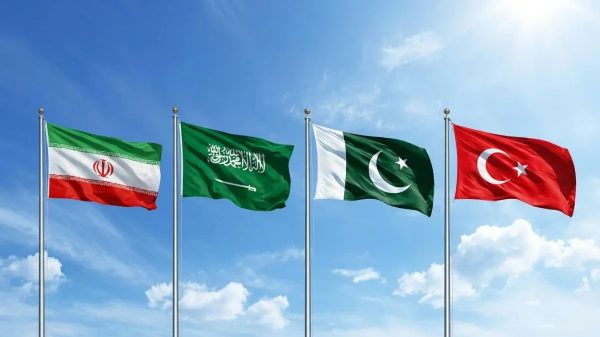



















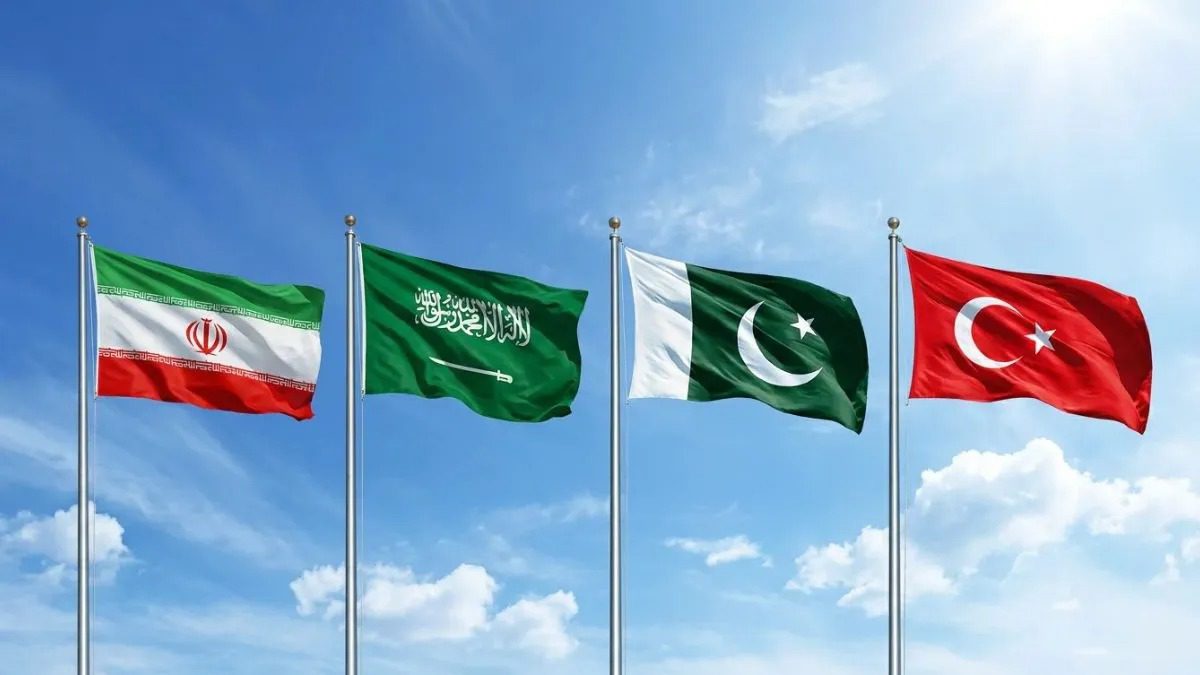
Saudi Arabia, Turkey and Pakistan have stepped up diplomatic efforts to prevent the Middle East crisis from escalating again, with senior officials from the three countries holding talks with Iranian leaders in Tehran on Monday.
The high level delegation travelled to Iran as part of a wider effort to ease tensions between the parties involved in the ongoing crisis. Saudi Arabia’s Defence Minister, Prince Khalid bin Salman, was among the senior officials who took part in the talks.
The meeting came amid growing fears that the conflict could flare up again, following fresh warnings from the United States, Iran and Israel about the possibility of renewed hostilities after eight months of war and rising regional tensions.
It was also the first joint visit to Tehran by officials from Saudi Arabia, Pakistan and Turkey since the three countries formed a defence alliance in Mecca, the holy city in western Saudi Arabia, in August.
During their visit, the delegations met Iranian President Massoud Pezeshkian and Foreign Minister Abbas Araghchi. The discussions ended without any major agreement being announced, although the parties said they had agreed to keep the talks going.
The diplomatic push comes at a particularly sensitive moment, with tensions rising ahead of Israel’s pivotal elections on Tuesday and next week’s US midterm elections, where President Donald Trump’s Republican Party is fighting to retain control of both chambers of Congress.
United Nations Secretary General Antonio Guterres also urged all sides to avoid any action that could worsen the situation. Speaking at a press conference in Cairo as the Tehran talks got underway, he said preventing further escalation in the Middle East was essential.
Guterres warned that the possibility of a major military assault on Iran combined with a large scale Iranian attack on Gulf countries must be avoided at all costs.
Before the meetings began, a senior Iranian official said Prince Khalid, Pakistan’s army chief General Asim Munir and Turkey’s intelligence chief Ibrahim Kalin were expected to meet Iran’s security chief Mohsen Rezaei.
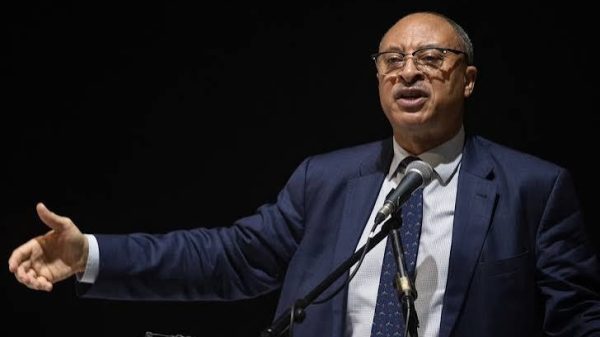
The significance of the diplomatic mission was also highlighted by Saudi security analyst Hesham Alghannam, who described the Tehran meeting as a potentially decisive opportunity to prevent the crisis from spiralling further.
He said the talks could represent a last chance to establish a path towards de escalation before events move beyond diplomatic control.
Powerful signal from Riyadh
The latest diplomatic initiative comes as Saudi Arabia faces continued security threats linked to attacks claimed by the Iran backed Houthis.
Fresh explosions were reported in Riyadh on Sunday night after the Houthis claimed responsibility for another attack targeting the Saudi capital’s international airport.
The Saudi led coalition operating in Yemen later said it had intercepted three drones launched by the Houthis over southern Saudi Arabia and the Riyadh region.
The continuing attacks have prompted other countries in the region to consider ways of supporting Saudi Arabia’s defence. Egypt’s parliament approved a request from President Abdel Fattah al Sisi for defensive military assistance to Saudi Arabia if Riyadh formally asks for it.
Egypt has one of the largest militaries in the Arab world, with hundreds of thousands of active personnel as well as fighter aircraft and air defence systems acquired from countries including the United States, China, France and Russia. However, the exact nature of any potential Egyptian assistance to Saudi Arabia remains unclear.
Qatar and Pakistan have also been involved in diplomatic efforts aimed at reducing tensions between the United States and Iran. A Qatari delegation travelled to Tehran on Sunday as part of those efforts.
The presence of Prince Khalid bin Salman in Tehran has attracted particular attention because of his close position within Saudi Arabia’s leadership.
The Saudi Defence Minister, who is the brother of Crown Prince Mohammed bin Salman, has increasingly become one of Riyadh’s most important figures for handling sensitive regional diplomacy. He has been repeatedly sent on high level missions involving some of the region’s most delicate political and security issues.
His decision to personally join the Tehran talks was therefore seen as a significant indication of how seriously Riyadh is treating the current crisis.
Saudi analyst Ali Shihabi said the defence minister’s seniority and close relationship with the Saudi leadership sent a powerful message about Riyadh’s willingness to engage diplomatically with Tehran.
According to the analyst, Saudi Arabia is committing substantial political capital to dialogue with Iran in an effort to contain the situation and establish a credible diplomatic route away from further conflict.
Fears of renewed conflict grow
Despite the diplomatic efforts, concerns over another outbreak of fighting have continued to grow following a series of statements from Washington and Jerusalem.
President Donald Trump said on Friday that the United States could carry out another military operation against Iran, referring to the US Israeli campaign against the country that began on February 28.
The statement has added to speculation that Washington could again become directly involved if tensions deteriorate.
In Israel, Prime Minister Benjamin Netanyahu has also warned that Iran and groups allied with Tehran could attempt to interfere with the country’s elections.
Netanyahu said Israeli intelligence had identified signs suggesting that Iran and its proxies could launch attacks in an attempt to disrupt the election, in which he is facing a closely contested battle to remain in power.
The warning came amid reports of disagreement within Israel’s military leadership over the handling of the conflict with Iran.
Reports emerged of an alleged confrontation between Netanyahu and Israeli army chief Eyal Zamir over a new directive relating to the war. Netanyahu has denied the reported dispute.
With the region already facing heightened military and political pressure, the talks in Tehran now represent one of the most significant diplomatic attempts to prevent another major escalation.
For Saudi Arabia, Turkey and Pakistan, the immediate challenge is to persuade Iran and other key players to maintain dialogue at a time when military threats, regional attacks and domestic political pressures are once again pushing the Middle East towards a dangerous point.







