









































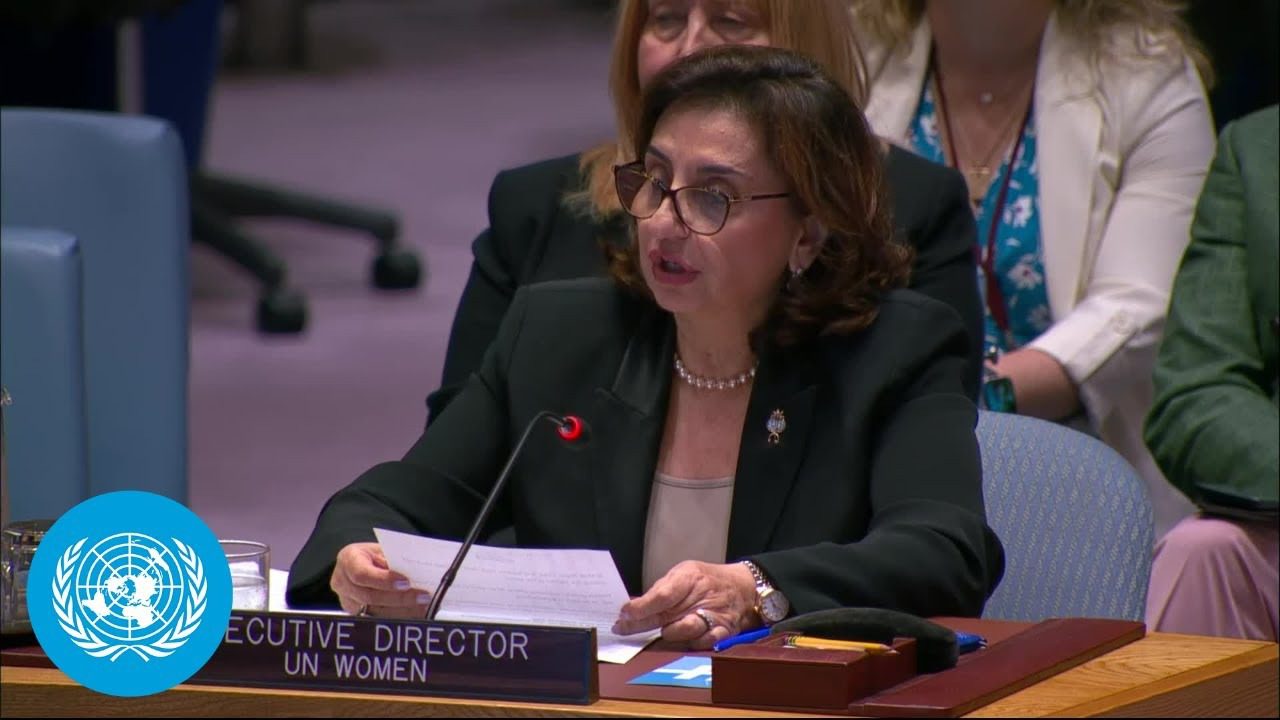
UN Women has urged governments and private sector organisations to make stronger investments in care systems, describing the sector as a vital driver of gender equality, economic growth and long term social development.
The organisation said care services remain the backbone of every society and economy, yet they continue to receive inadequate attention and funding. It noted that building accessible and inclusive care systems would not only improve people’s lives but also create decent jobs, strengthen communities and ease the heavy burden of unpaid care work carried mostly by women and girls.
According to UN Women, around 350 million children across the world currently require childcare services. It added that the number of people needing different forms of care is expected to increase from 2.1 billion in 2015 to about 2.3 billion by 2030.
The agency explained that unpaid care work contributes enormous value to economies around the world. If assigned a financial value, it could account for as much as 40 per cent of Gross Domestic Product in some countries. It also noted that investments in the care sector have the potential to create two to three times more jobs than similar spending on construction projects.
UN Women identified the unequal sharing of care responsibilities as one of the biggest barriers preventing women from achieving full economic participation. It revealed that women and girls spend about two and a half times more hours on unpaid care duties than men.
The organisation further disclosed that about 708 million women of working age, representing 45 per cent globally, remain outside the labour force because of unpaid care responsibilities. By comparison, only five per cent of men are kept out of employment for the same reason.
It also described care as a human rights issue, noting that women make up about two thirds of workers in the care sector, including healthcare, childcare and domestic services. Globally, women account for 80 per cent of paid domestic workers, yet about 90 per cent of those workers have no access to social protection or social security benefits.
UN Women warned that conflicts and climate related disasters are placing even greater pressure on care systems, leaving women and girls to shoulder much of the additional responsibility. In emergency situations, women spend almost four times more hours on unpaid care work than men.
Using Ukraine as an example, the organisation said women there devote an extra 16 hours each week to unpaid care work compared with men, a gap that has contributed to an estimated economic loss of 72.5 billion dollars.
Looking ahead, UN Women said increased investment in the care economy could generate nearly 300 million decent jobs by 2035. It also noted that such investments are about 30 per cent less polluting than those made in the construction sector.
Through its Transform Care Initiative, the organisation plans to strengthen care systems in more than 50 countries. The programme is expected to benefit about 2.9 billion women and girls, create around 260 million decent jobs for women and free up an estimated 10 trillion hours currently spent by women and girls on unpaid care work by 2035.







