




























As the Super Eagles navigate the high-stakes environment of AFCON 2026, many analysts are quick to credit the team’s success to the sterile metrics of European football. They point to world-class UK academies, advanced sports science, and the tactical discipline instilled by elite foreign coaching. While these factors are undeniably important, they only tell half the story. The true engine behind this generation of talent is what many now call the “Invisible Academy” the Nigerian diaspora parent.
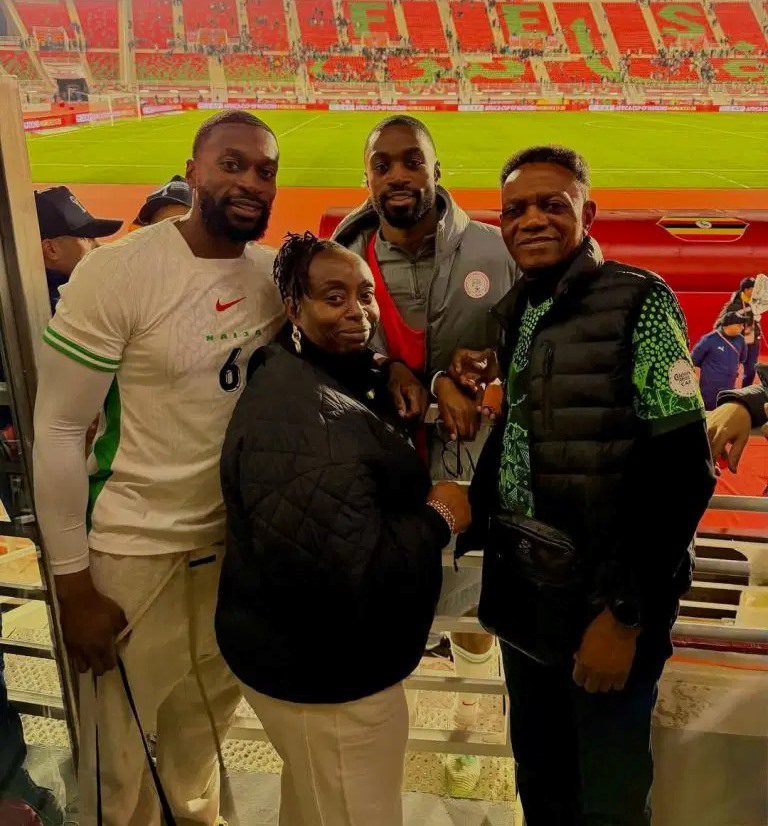
This realization became vivid during a recent encounter in Morocco, where the atmosphere around the team is electric. The presence of parents like Mr. Sunday Osayi-Samuel, father of defender Bright Osayi-Samuel, serves as a bridge between two worlds. Despite living abroad for decades, these parents haven’t lost an ounce of their heritage. They navigate hotel lobbies and matchday crowds with the effortless rhythm of home, speaking Pidgin and sharing local meals, proving that their “Nigerianness” isn’t a costume it is an unbroken identity.
Behind stars like Alex Iwobi, Semi Ajayi, and Ola Aina is a quiet but decisive force of immigrant parents who did much more than just drive their children to practice. They acted as cultural guardians, preserving a specific moral ecosystem in the heart of Western societies. They instilled a sense of communal obligation and national ethics that no training manual can provide. This has created a unique brand of athlete: players who are technically polished by Europe but emotionally anchored in Nigeria.
The success of the Super Eagles today relies on a beautiful co-production model. While Western systems provide the technical GPS vests and career predictability, Nigerian parenting provides the “heart.” This is perhaps most visible in the character of players like Ola Aina. Coaches often marvel not just at his pace, but at his humility and respect values that are “home-trained” and cannot be manufactured on a tactics board. These athletes aren’t mercenaries visiting for a shift; they are extensions of Nigerian households that were simply transplanted overseas.
There is a profound lesson here for sports policymakers back home. Sustainable excellence isn’t just about building stadiums or buying equipment; it’s about the transmission of values. The diaspora parent manages to maintain these cultural stabilizers without government grants or public applause, ensuring that while the talent may have left Nigeria, Nigeria never left the talent.
As the tournament progresses, it is clear that culture isn’t just an accessory to the sport it is the very thing that makes these players feel the weight and pride of the 200 million people they represent. The Super Eagles are soaring because their foundation is built on the deliberate, loving efforts of families who refused to let distance dampen their spirit.