























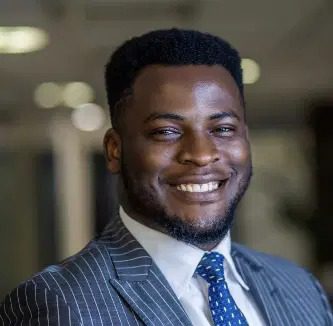
Africa’s future will be shaped not by the number of gifted people it has, but by how well it connects that talent to real opportunities, policy and technology expert Chris Ogbodo has said.
According to him, the continent is not lacking in brilliant minds. What remains missing is the system that can properly support those minds with the right institutions, awareness and long term investment needed to drive development and meaningful change.
Speaking in an interview with Vanguard, Ogbodo, an AI governance expert and contributor to Nigeria’s National Artificial Intelligence Strategy, said Africa already has the human capacity to become a major force in the world. He noted that across sectors such as artificial intelligence, education, immigration, leadership and global technology policy, the building blocks are already present. The real task, he said, is creating the structure that allows talent to thrive.
Using the United States’ merit based immigration routes as an example, Ogbodo said many highly accomplished Africans are more qualified for global opportunities than they often realise. He pointed to permanent residency pathways such as the EB 1A and the EB 2 National Interest Waiver, explaining that these options are designed to recognise outstanding professional achievement rather than depending on employer sponsorship.
He said many people wrongly assume such programmes are only meant for Nobel Prize winners, Olympic champions or world famous public figures. In reality, he explained, the law recognises excellence across several professions, including medicine, engineering, law, entrepreneurship, academia, public policy, research, the creative industry and executive leadership.
According to him, many African professionals already have the kind of credentials that can support such opportunities, from leadership experience and awards to publications, media recognition, conference speaking engagements and landmark projects. The real problem, he said, is that many do not have access to the information that would help them use those achievements strategically.
For Ogbodo, the issue is often not whether someone qualifies, but whether they know what is available to them. He also rejected the belief that permanent residency in the United States must always come through an employer, saying professionals with strong records can often apply on the strength of their own accomplishments.
Still, he stressed that global mobility should not be seen only through the lens of relocation. In his view, it gives talented professionals more freedom, more options and the ability to contribute to different economies at various stages of their careers.
On artificial intelligence, Ogbodo said Africa has clear promise but remains uneven in its level of preparedness. He described the continent as showing readiness in some areas while still lacking the scale required to compete strongly in the global AI race.
He said countries such as Nigeria, Kenya, Rwanda, South Africa, Egypt and Ghana already have highly skilled engineers, researchers, entrepreneurs and policymakers who can compete on the world stage. What is still lacking, however, are the institutions and support systems needed to sustain that momentum.
He identified digital infrastructure, computing capacity, access to quality datasets, research funding and stronger technical expertise within government as some of the major areas where investment is urgently needed. With Africa expected to account for about a quarter of the world’s population by 2050, he believes the continent already has a strategic advantage in numbers. The key question, he said, is whether it will build the institutions needed to turn that human capital into lasting technological leadership.
As one of the contributors to Nigeria’s National AI Strategy, Ogbodo said artificial intelligence must not remain trapped in policy papers or abstract conversations. For him, the real value of AI lies in how it improves everyday life for ordinary people.
He said AI has the potential to strengthen disease diagnosis and healthcare delivery, improve personalised learning in schools, support farmers with weather and crop management tools, widen financial inclusion and boost fraud detection in the banking system.
He also pointed to language inclusion as one of the biggest opportunities before the continent. According to him, advances in AI systems that understand and serve languages such as Yoruba, Hausa, Igbo, Swahili and Amharic could significantly expand access to information and digital services for millions of Africans.
Even so, he said the biggest hurdle remains implementation. Good policy documents alone are not enough, he argued, unless they are translated into working systems that directly improve people’s lives.
Ogbodo also offered a broader view of the long standing brain drain conversation. While he acknowledged that Africa loses valuable expertise when professionals move abroad permanently, he said the global economy now offers more room for mobility to become a source of strength rather than loss.
He pointed to diaspora investment, startup support, mentorship, policy advisory work, academic collaboration and knowledge transfer as examples of how Africans abroad can still make meaningful contributions to the continent. In his view, the goal should not be to stop mobility, but to create conditions where movement helps strengthen Africa instead of disconnecting people from it.
He said global mobility should serve as a bridge rather than an exit route.
Reflecting on his academic journey through Harvard Law School and his next step at Harvard Business School, Ogbodo advised young Africans not to become overly consumed by the prestige of elite institutions. While acknowledging that top schools can create access, he said long term success depends more on a person’s ability to create value and solve real problems.
He encouraged professionals to build businesses, publish research, document their work, solve meaningful challenges and develop strong public portfolios that clearly show their expertise. He also urged young Africans to pursue fellowships, international partnerships and mentorship opportunities while remaining flexible in an increasingly competitive world.
Drawing from his experience as Africa’s first Google Policy Fellow and his work representing Meta in international policy conversations, including engagements connected to the United Nations system, Ogbodo said many Africans still misunderstand how global decisions are shaped.
He explained that the major decisions often happen long before public conferences and headline events. According to him, by the time cameras arrive at global summits, much of the real negotiation has already taken place through months or even years of engagement among governments, researchers, technical experts, private sector leaders and civil society groups.
That, he said, is why Africa must invest more deliberately in research, policy expertise and coalition building if it hopes to influence global technology governance in a serious way.
Looking ahead, Ogbodo said he is confident Africa can build its own model for technology governance rather than simply copying systems designed elsewhere. He argued that the continent’s realities, from its economic structure and demographics to its infrastructure challenges, languages and development priorities, demand solutions that reflect its own context while still aligning with global standards.
He pointed to innovations like mobile money as proof that African ideas can shape the world, not just adapt to it. In his view, the continent already has the intellectual strength to lead these conversations. What is needed now is steady investment in research, stronger institutions and policymaking that is built for the long term.
Ogbodo said the work ahead will not be completed in a few years, but over generations. Even so, he believes the process has already begun.
Despite the challenges, he remains optimistic about what lies ahead for the continent. For him, Africa’s future will not be determined by geography or natural resources alone, but by whether it can truly unlock the potential of its people.
He said the challenge has never been a lack of talent. What matters is ensuring that Africans have access to opportunity, information, networks, capital, education and mobility. Once more people are able to access those tools, he believes Africa will not simply take part in the future, but will help shape it.