





























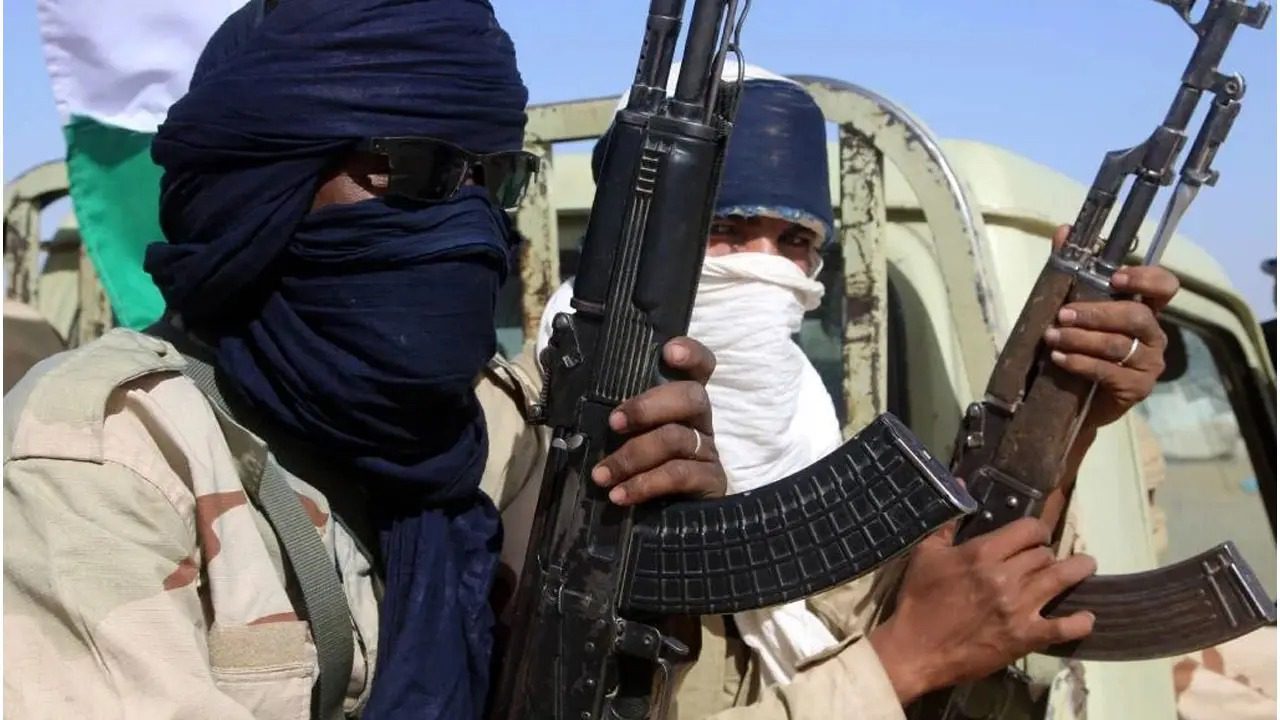
Bandit attacks over the weekend left six people dead in separate incidents across Niger and Sokoto states, deepening fears over the worsening security situation in parts of the country.
In Niger State, gunmen stormed Damala village in the Woko district of Borgu Local Government Area in the early hours of Saturday, January 10. Four residents were killed during the raid, which also saw several shops set ablaze and an unspecified number of cattle driven away. The attack came barely a week after a deadly assault in Borgu and neighbouring Agwara local councils claimed the lives of 42 people, further heightening tension in the area.
Confirming the incident, the Niger State Police Command said security operatives responded swiftly after the attackers fled. The police spokesperson, Wasiu Abiodun, explained that a clearance operation was already underway, with security monitoring stepped up to prevent further violence. He assured residents that efforts were ongoing to track down those responsible and restore calm to the affected communities.
While Niger State was still reeling from the attack, tragedy also struck Darusa, a border community in Gudu Local Government Area of Sokoto State. Suspected Lakurawa gunmen invaded the busy weekly market and killed two Bureau de Change operators, making away with large sums of money in both local and foreign currencies.
Witnesses said the attackers arrived on four motorcycles, each carrying two armed men, and headed straight for the currency dealers. The victims, Alhaji Ummaru Darusa and Muhammad Sani, were reportedly shot at close range without warning. Both men were well known in the market, which serves traders from Nigeria and neighbouring Niger Republic.
Residents described scenes of panic as traders and customers fled for safety. One local source said the attackers appeared to have monitored their targets before striking, suggesting the operation was carefully planned. Muhammad Sani was said to be a Nigerien national who regularly conducted business in Darusa, a factor that further underscores the cross-border nature of criminal activity in the area.
The Sokoto State Police Command confirmed the killings, noting that one victim died instantly, while the other passed away later at Dogon Daji Hospital. Community members lamented the lack of visible security presence and called on authorities to intensify patrols to protect lives and livelihoods in the border town.
The latest killings reflect a broader pattern of violence that has plagued communities across the North Central and North Western regions, where bandits frequently carry out deadly raids, kidnappings for ransom and large-scale looting. Niger State remains one of the hardest hit, alongside Kaduna, Benue, Plateau, Kebbi and Zamfara.
Against this backdrop, the Nigerian Army says it has stepped up clearance and internal security operations across parts of Kwara and Niger states. Speaking during the 2025 Nigerian Army Social Activities held at the Sobi Cantonment in Ilorin, the Commander of 22 Armoured Brigade, Brigadier General Nicholas Rume, said the military was intensifying efforts to curb banditry and other security threats in the region.
He explained that several operations had been sustained within the brigade’s area of responsibility, targeting criminal elements hiding in border communities and forest reserves. These include Operation Fansan Yamma, Operation Harmony in Kwara State, and the recently concluded Operation Park Strike IV and V, which covered Kainji Lake National Park and surrounding areas in Niger and Kwara states.
According to the brigade commander, the army has also strengthened its presence through the establishment of forward operating bases and patrol bases in strategic locations to improve response time and support ongoing operations. He stressed that collaboration with other security agencies remained central to achieving lasting peace.
Kwara State Governor, AbdulRahman AbdulRazaq, commended the military for its role in tackling insecurity, describing its efforts as vital to protecting lives and sustaining economic activities. Represented by his Special Adviser on Security Matters, he reaffirmed the state government’s commitment to supporting the armed forces through logistics and continued cooperation.
He also expressed appreciation to the leadership of the Nigerian Army and the federal government for their support, noting that the partnership between the military and state authorities had already begun to yield positive results.
As communities mourn the latest victims, residents across the affected states continue to hope that intensified security operations will bring relief from the cycle of violence that has disrupted lives, trade and daily activities.