
























The International Monetary Fund (IMF) has raised its economic growth forecast for Nigeria in 2026 to 4.2%, while retaining its projection of 4.3% growth for 2027. Despite the improved outlook, the institution has warned that rising food and energy prices continue to place significant pressure on households, with the most vulnerable Nigerians facing the greatest risk.
The projections were published in the IMF’s 2026 World Economic Outlook, titled “Resilience Under Strain, Urgent Choices,” presented in Bangkok, Thailand. The 2026 forecast represents an increase of 0.1 percentage point from the institution’s earlier estimate, while its outlook for 2027 remains unchanged.
Although the revised projection points to continued economic expansion, the IMF stressed that stronger growth does not necessarily translate into immediate relief for households struggling with the rising cost of living.
The institution attributed Nigeria’s improved economic outlook to greater macroeconomic stability and favourable terms of trade. However, it cautioned that higher prices for essential goods could deepen poverty and worsen food insecurity.
Nigeria has spent the past three years implementing major economic reforms aimed at improving the country’s financial position and strengthening long term stability. While the measures have attracted recognition for their ambition, they have also placed considerable pressure on households through reduced purchasing power and rising living costs.
The IMF’s latest assessment highlights the challenge facing policymakers as they seek to sustain economic growth while addressing the hardship experienced by ordinary Nigerians.
IMF Calls for Immediate Relief for Struggling Nigerians
The IMF has urged the Nigerian government to provide targeted assistance to vulnerable households affected by rising food and energy costs, warning that immediate social needs must be addressed without undermining the country’s economic stability.
Speaking in response to a question from Nigerian journalist Nancy Nnaji, Deniz Igan, a division chief in the IMF’s Research Department, said governments needed to strike a balance between protecting citizens from rising prices and maintaining sound economic policies.
Igan acknowledged that Nigeria’s position as an energy exporter had helped support its growth outlook, but noted that the benefits had not eliminated the pressure on households. She stressed that many Nigerians continued to struggle, particularly with food security, which could face additional risks from El Niño related weather conditions.
According to her, temporary cash transfers and targeted income support would offer a practical way to help the most vulnerable households cope with rising expenses.
She explained that such assistance could ease the effects of poverty and improve access to food without necessarily reversing the broader economic reforms introduced by the government.
However, Igan emphasised that any support programme should be designed to remain fiscally sustainable. This would require the government to improve spending efficiency, strengthen revenue collection and ensure that assistance reaches the people who need it most.
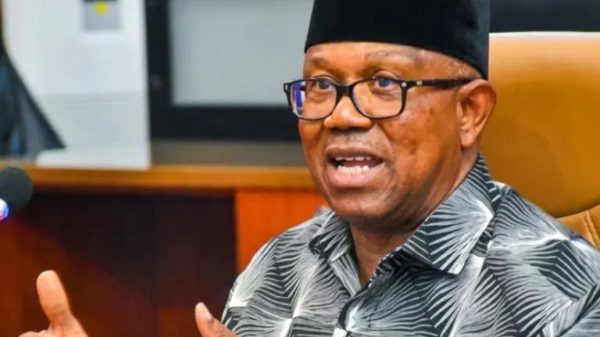
The IMF’s recommendation comes amid growing political pressure on President Bola Tinubu’s administration to introduce measures that would reduce the burden of high petrol prices. Opposition presidential aspirants Atiku Abubakar and Peter Obi have called for the restoration of elements of petrol subsidies to ease the financial strain on Nigerians.
Global Economic Growth Faces Fresh Challenges
Beyond Nigeria, the IMF expects the global economy to expand by 3.1% in 2026 before growth improves to 3.4% in 2027. The institution warned that although the world economy had shown resilience, that strength was increasingly being tested by mounting risks.
The outlook presented by IMF Research Director Silvana Tenreyro points to the effects of higher energy and commodity prices linked to conflict, which are contributing to inflation and slowing economic activity in several parts of the world.
At the same time, investment linked to artificial intelligence continues to support trade, demand and economic expansion, although the resulting pressures could also contribute to higher prices.
The IMF projects global headline inflation to rise to 4.7% in 2026 before easing to 4.1% in 2027. The figures suggest that inflationary pressures could remain a concern even as economic activity gradually strengthens.
For Nigeria, these international developments could have important implications for domestic prices, particularly because changes in global energy and commodity markets can affect the cost of essential goods and the wider economy.
World Bank Also Raises Nigeria’s Growth Outlook
The IMF’s revised projection follows a similar assessment by the World Bank, which recently raised its forecast for Nigeria’s economic growth in 2026 to 4.3%, up from the 4.0% growth recorded in 2025.
The World Bank also expects the Nigerian economy to expand by 4.4% in both 2027 and 2028. It attributed the stronger outlook to improving macroeconomic stability, growing investor confidence and a gradual recovery in private sector investment.
The lender also upgraded its growth forecasts for nearly three quarters of the countries in Sub Saharan Africa, suggesting that the region’s economic prospects have improved despite continuing global uncertainties.
Data from Nigeria’s National Bureau of Statistics showed that the country’s real gross domestic product grew by 4.43% year on year in the second quarter of 2026, compared with 4.23% in the corresponding period of 2025.
The figures indicate that economic activity has continued to expand. However, the central concern for many households remains whether that growth will translate into better living conditions, more affordable food, improved purchasing power and greater economic security.
Government Introduces Petrol Discount Amid Subsidy Debate
Meanwhile, the Tinubu administration has announced a 30 day discount window for petrol sold by NNPC Limited, with public transport operators across the country identified as a priority.
Finance Minister Taiwo Oyedele has rejected claims that the measure represents a partial return of petrol subsidies. He said the discount would be financed entirely through NNPC Retail’s margins rather than allocations from the federal budget or the Federation Account.
The explanation has not ended the debate, as critics argue that the measure amounts to a renewed form of subsidy introduced in response to mounting public concern and pressure from opposition figures.
The disagreement reflects the wider challenge confronting the government as it attempts to maintain its economic reform programme while responding to the immediate needs of citizens facing high transport costs, expensive food and other essential expenses.
The IMF’s latest assessment reinforces the need for policymakers to look beyond headline growth figures and consider how economic progress affects households. While the improved forecasts offer some encouragement, the institution’s call for temporary, targeted assistance underscores the urgency of protecting vulnerable Nigerians as the country pursues longer term economic stability.







