






























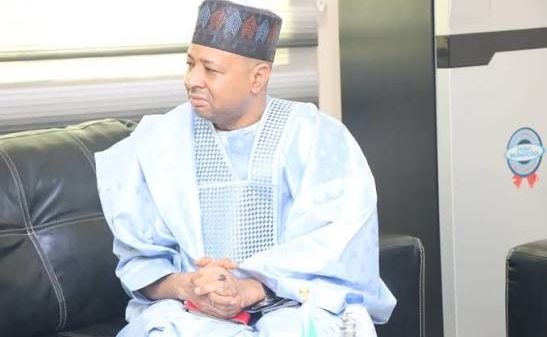





India’s Energy Transition Faces Challenges but Makes Progress India’s shift towards cleaner energy is gathering pace despite its continued dependence on coal, according to geopolitical expert Sachin Yadav, who says the country’s climate progress should be assessed against the challenges it faces and the progress it has made.
Yadav, a PhD scholar in International Studies at Jamia Hamdard in New Delhi, argues that portraying India simply as a coal dependent economy overlooks the scale of its renewable energy expansion. His research focuses on South Asia, India’s neighbouring countries and geoeconomics, with an academic background in economics and education. Although coal remains central to India’s electricity supply, the country is adding renewable energy capacity at a remarkable rate. Yadav believes the contrast between its continued use of fossil fuels and its growing clean energy sector calls for a broader understanding of how climate progress is measured. India’s challenges are significant.
The country recorded the world’s largest absolute increase in emissions in 2024, while thermal power continues to account for around 70 per cent of its electricity generation. However, Yadav argues that these figures reflect the country’s current energy structure rather than the direction in which it is moving. At the 2015 Paris climate conference, India pledged to source 40 per cent of its installed electricity capacity from non fossil fuel sources by 2030. It achieved that target in November 2021, nearly nine years ahead of schedule. The country subsequently raised its ambition to 50 per cent and crossed that threshold in June 2025, five years before its revised deadline. India’s clean energy expansion has continued since then. Its non fossil fuel capacity exceeded 300 gigawatts in July 2026, representing more than half of its total installed electricity capacity. The country also added a record 55 gigawatts of clean energy capacity during the 2025 to 2026 financial year, placing it third globally in installed renewable energy capacity. Another milestone came on July 29, 2025, when renewable sources supplied more than half of India’s electricity demand for the day. The achievement highlighted the growing contribution of clean energy to the country’s power supply.
Despite these gains, the transition remains complicated by the gap between installed capacity and actual electricity generation. Although non fossil fuel sources account for more than half of India’s installed capacity, they still produce less than one third of the electricity consumed. Solar power generation typically peaks during daylight hours, while electricity demand often rises in the evening. The transmission infrastructure and energy storage systems needed to balance these fluctuations are still being developed. Until these systems become sufficiently reliable, coal will continue to play a major role in ensuring a steady electricity supply. Growing demand is another major challenge. Economic expansion, rapid urbanisation and increasingly frequent heatwaves are pushing electricity consumption higher. As a result, India’s total emissions continue to rise even as cleaner sources take up a larger share of its installed capacity.
The country is therefore trying to expand clean energy quickly enough to meet additional demand while gradually reducing its reliance on fossil fuels. Heavy industry presents a separate obstacle. Sectors such as steel and aluminium are particularly difficult to decarbonise because their production processes require substantial energy and are not easily replaced by renewable electricity alone. Indian exporters are also facing growing pressure from carbon related trade rules in major international markets. The Global Trade Research Initiative has estimated that Indian steel and aluminium exporters could need to reduce prices by 15 to 22 per cent to remain competitive in Europe. Smaller businesses may face greater difficulties because measuring, monitoring and reporting emissions can be expensive. Financing remains another critical issue. Transforming an energy system of India’s size requires substantial investment, particularly in electricity grids, battery storage and other infrastructure that may take years to generate financial returns. At the COP29 climate summit, India opposed the new climate finance target of $300 billion annually, arguing that it fell far short of the $1.3 trillion a year sought by developing countries. Nevertheless, the country has continued to introduce measures intended to support its transition. Its national carbon market became operational in January 2025, creating an additional incentive for industries to reduce emissions. Projections have also suggested that the growth of India’s fossil fuel emissions slowed sharply in 2025, although the longer term impact will depend on how quickly cleaner energy can replace conventional sources. Yadav argues that India’s experience should also be viewed within the wider history of industrial development. Many wealthy economies relied heavily on coal for decades before gradually moving towards cleaner energy.
India, by contrast, is attempting to expand electricity access, support industrial growth and develop a large renewable energy sector at the same time. Recent events in Europe also demonstrate how difficult it can be to balance climate commitments with energy security. During the 2022 energy crisis, several European countries temporarily increased their reliance on coal to maintain electricity supplies before renewable energy expansion resumed. Such decisions illustrate the pressure governments face when energy affordability and reliable supply come into conflict with environmental goals. India faces similar choices, but with lower average incomes and millions of people still seeking dependable access to electricity.
Yadav believes international cooperation could help address some of the country’s most pressing challenges. Greater financial support for electricity grids and battery storage would help ensure that renewable energy capacity translates into a larger share of actual power generation. He also argues that recognising domestic carbon pricing systems, including India’s carbon market, could reduce some of the pressure that carbon border rules place on smaller exporters. The International Solar Alliance, co founded by India, could provide another platform for cooperation on clean technology, investment and supply chains. For Yadav, the continued use of coal should not overshadow the progress India has made in developing renewable energy.
He acknowledges that the country will depend on coal for some time, but maintains that climate assessments should consider more than a nation’s present energy mix. He argues that a fair assessment should also examine the direction of a country’s transition, its emissions per person and its historical contribution to global warming. India’s average annual carbon dioxide emissions per person stand at about 2.2 tonnes, less than half the global average, while its contribution to cumulative carbon dioxide emissions since the Industrial Revolution remains below four per cent, according to the figures cited in his analysis.
These differences, he argues, are important when comparing countries with different levels of economic development and historical responsibility for emissions. The central question, therefore, is not simply whether India still uses coal, but how steadily it is building alternatives and what barriers remain in the way. India’s energy transition is far from complete. Yet its expanding renewable capacity shows that significant progress is possible even while the country continues to grapple with rising demand, industrial pressures, infrastructure gaps and limited climate financing.







