


















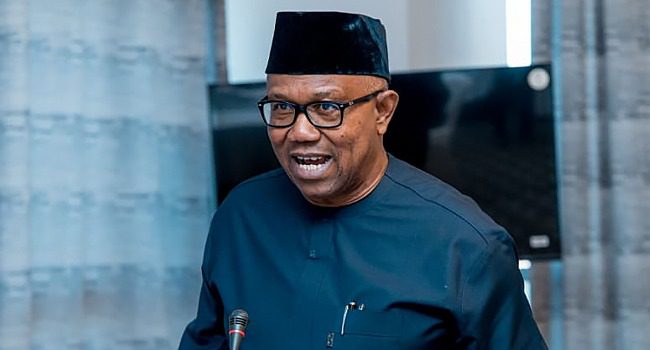
Peter Obi, presidential candidate of the Nigeria Democratic Congress, has cautioned against the rising trend of linking criminal activity to ethnic identity, warning that such generalisations only deepen division and weaken national unity.
In a statement shared on his verified X account on Monday, the former Anambra State governor expressed concern over what he described as the growing habit of judging entire ethnic groups based on the actions of a few individuals involved in crime.
He noted that many Nigerians, including himself, have at different times experienced unfair stereotypes rooted in their ethnic backgrounds, stressing that such attitudes strip people of their individuality and reduce them to labels that do not define who they are.
Obi also spoke in defence of ordinary Fulani citizens, saying they are often wrongly judged and associated with criminal acts committed by people they neither know nor support. He said it was unfair for innocent members of any community to bear the burden of crimes committed by others.
Drawing a parallel with global struggles for equality, he referenced the teachings of civil rights icon Martin Luther King Jr., who emphasised that people should be judged by their character rather than their identity.
He maintained that criminal behaviour should never be attributed to any ethnic group, insisting that wrongdoing is purely individual. According to him, a thief is a thief, a kidnapper is a kidnapper, and such actions should not be used to define entire communities.
Obi called on security agencies to focus on identifying and prosecuting offenders based on evidence and the law, rather than allowing ethnic profiling to influence public perception or enforcement.
He further warned that blaming whole groups for the actions of a few only fuels resentment and creates openings for further misunderstanding and manipulation within the country’s social and political space.
The former presidential candidate urged Nigerians to embrace unity in diversity and prioritise shared humanity over stereotypes, adding that the vision of a better Nigeria depends on rejecting discrimination in all its forms.