





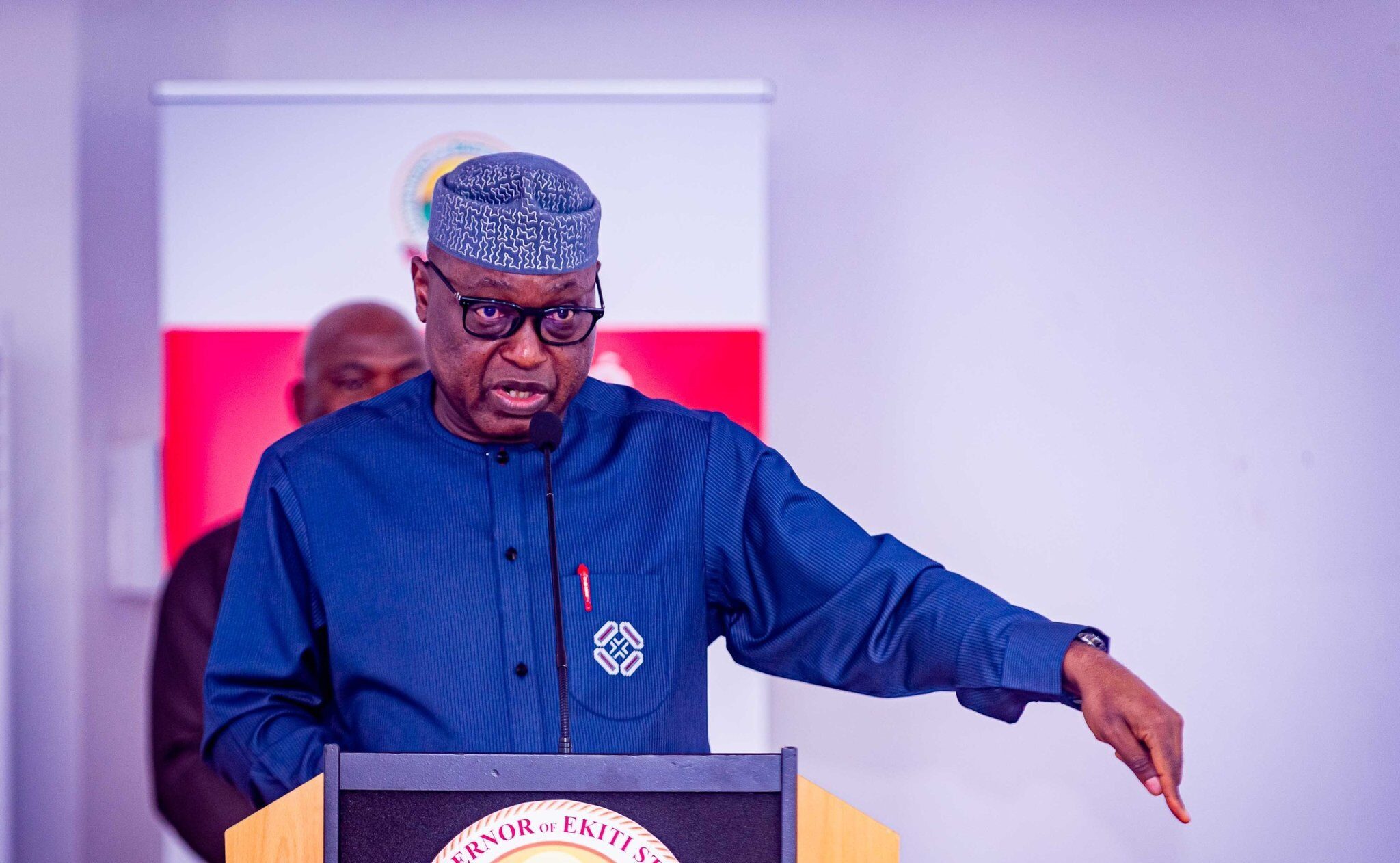
The emergence of Biodun Oyebanji as governor of Ekiti State carried a deep sense of sentiment, rooted not just in politics but in the state’s long-standing attachment to local leadership. Oyebanji, the first governor to be considered truly ‘homegrown’ since 1999, pursued all his education within the state and played a pivotal role as secretary of the committee that created Ekiti nearly three decades ago.
His dedication to public service began early. Oyebanji went on to serve as Personal Assistant to the state’s first civilian governor, Otunba Niyi Adebayo, and throughout his career, he remained steadfast in his commitment to progressive politics, never wavering even as his party evolved over the years.
Leadership, many say, is defined not by the office but by the occupant, and Oyebanji has exemplified this. He has reshaped the perception of the governorship, adopting a servant-leader approach that balances accessibility to aides and stakeholders with a strong connection to ordinary citizens. Close sources note that Oyebanji’s approach is hands-on; he insists on seeing the true state of affairs rather than relying on filtered reports, ensuring his decisions reflect reality on the ground.
This commitment to listening and acting on the concerns of the people has fostered a period of political stability in Ekiti. For the first time in years, former governors and critical stakeholders across party lines have praised his leadership, acknowledging his ability to put the state’s interest above partisan loyalties. Some critics have suggested that his conciliatory approach was a strategy to minimize competition, but many recognize it as genuine statesmanship and a reflection of his character as a true Omoluabi.
Oyebanji has also shown a willingness to continue and complete the work of his predecessors. Key among these projects was the state airport, initiated under Dr. Kayode Fayemi. Under Oyebanji, the airport was completed, certified by the Federal Airports Authority of Nigeria, and is now operational for commercial flights—providing a major boost to accessibility and convenience for residents and visitors alike.
Beyond infrastructure, the governor has been transforming Ado-Ekiti, particularly in traffic management. Projects like the overpass connecting Ajilosun, Ijigbo, and Old Garage aim to ease vehicular movement and enhance business activity. When completed, commuters will be able to travel from Ajilosun to Basiri in under ten minutes, marking a significant improvement for the city’s daily life and economy.
Security has also improved significantly during his tenure. Kidnappings and violent crimes, once common concerns, have declined, thanks to proactive measures taken behind the scenes. Residents now enjoy greater freedom of movement, reflecting the effectiveness of a quietly coordinated approach to law enforcement and public safety.
Oyebanji’s first three years have not been without challenges, but they reflect a leadership style that balances hope with pragmatic action. As the state looks to the future, the groundwork laid under his administration suggests that the next four years hold even greater potential for growth, stability, and development in Ekiti State.