





























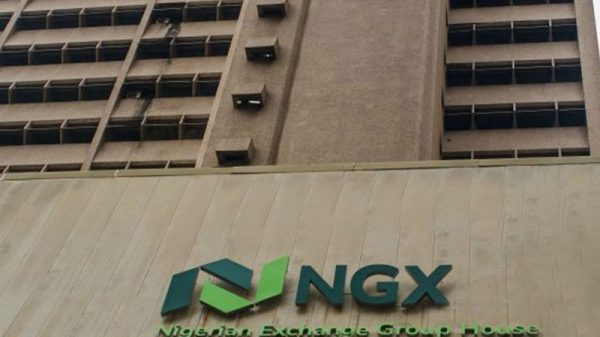


The Nigerian stock market reached a monumental milestone on Monday as the All-Share Index officially breached the 200,000-point mark for the first time in history. This historic breakthrough comes on the back of intense investor demand and a broad-based rally that has swept across several key sectors of the economy.
The benchmark index climbed by 1.55 percent to close the day at 201,474.89 points, moving up significantly from its previous close. This performance pushes the market’s year-to-date return to nearly 30 percent, signaling a period of robust momentum that has caught the attention of both local and international observers. The total market capitalization has now expanded to a staggering N129.33 trillion, largely driven by gains in heavy-hitting blue-chip stocks.
Trading activity during the session was notably high, with over 72,000 deals concluded as investors traded nearly 950 million shares worth over N49 billion. Financial services remained the focal point of the day, dominating the volume of transactions. Among the top performers were BUA Cement, Premier Paints, and John Holt, while the session also saw some profit-taking in stocks like VFD Group and Royal Exchange.
Temi Popoola, the Group Managing Director of the Nigerian Exchange Group, noted that this milestone is a clear indicator of the growing confidence in the nation’s capital market. He observed that ongoing economic reforms are helping to strengthen domestic capital formation. In his view, the increased involvement of local investors and the improving fundamentals of listed companies are helping the market fulfill its role as a engine for long-term wealth creation.
This sentiment was supported by Jude Chiemeka, Chief Executive Officer of the Nigerian Exchange Limited, who linked the record-breaking performance to sustained interest across various sectors. He emphasized that crossing the 200,000-point threshold reflects an active and engaged investor base. He further mentioned that the exchange remains committed to improving trading infrastructure and ensuring market transparency to maintain this positive trajectory.
The current trend suggests that the Nigerian capital market is becoming an increasingly vital pillar of the broader economy. As modernization efforts continue and liquidity deepens, many believe the market is well-positioned to support sustainable growth and offer a resilient platform for both institutional and retail participants.