



































President Bola Tinubu says his administration is working to double the livestock sector’s annual contribution to Nigeria’s economy, currently estimated at more than $32 billion.
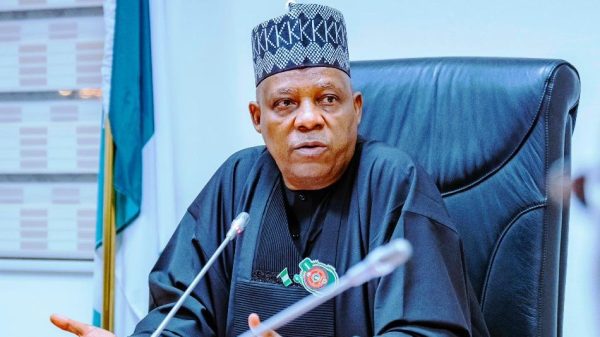
Tinubu made this known in Abuja while declaring open the 9th All Africa Conference on Animal Agriculture. He was represented at the event by the Secretary to the Government of the Federation, Senator George Akume.
The President said the plan was part of broader efforts to strengthen food security, create more jobs and reduce the country’s dependence on other sectors by expanding the agricultural economy.
According to him, Nigeria’s livestock industry remains a major contributor to national development, supporting millions of livelihoods through food production, employment and related businesses.
“Our national strategy aims to double the sector’s economic contributions to position Nigeria as a leading hub for livestock production and processing in Africa,” Tinubu said.
He noted that the country has an estimated 58 million cattle, 64 million sheep, 124 million goats and about 660 million poultry birds, all of which contribute significantly to economic activity across the country.
Tinubu said agriculture and food security remain central to his administration’s Renewed Hope Agenda. He pointed to the creation of the Federal Ministry of Livestock Development in July 2024 as evidence of the government’s determination to modernise the sector.
“The establishment of the Federal Ministry of Livestock Development marked the beginning of a comprehensive national livestock transformation programme,” he said.
The President explained that the ministry was established to move livestock production away from largely traditional and subsistence practices towards a modern, technology driven and commercially competitive industry capable of competing in the global market.
He also highlighted the National Livestock Growth Acceleration Strategy as one of the major programmes designed to unlock the sector’s potential. The strategy focuses on raising productivity, strengthening value chains, improving animal health services, expanding commercial feed production and developing better livestock genetics.
Other areas covered by the strategy include climate smart production, peacebuilding and efforts to position Nigeria as a major destination for livestock investment and exports in Africa.
Tinubu said the government was also promoting ranching and other modern livestock production systems as part of efforts to improve productivity and address conflicts linked to traditional methods of animal husbandry.
He added that the administration was working to attract investment across key areas of the livestock value chain, including dairy production, meat processing, leather, feed milling and livestock infrastructure.
On dairy development, the President said the government’s ongoing programme was designed to double local milk production through better animal genetics, improved nutrition, modern breeding methods and stronger private sector participation.
He added that measures were also being taken to support improved breeds, pasture development, commercial feed production, milk collection facilities, private dairy investments and modern processing plants.







