






















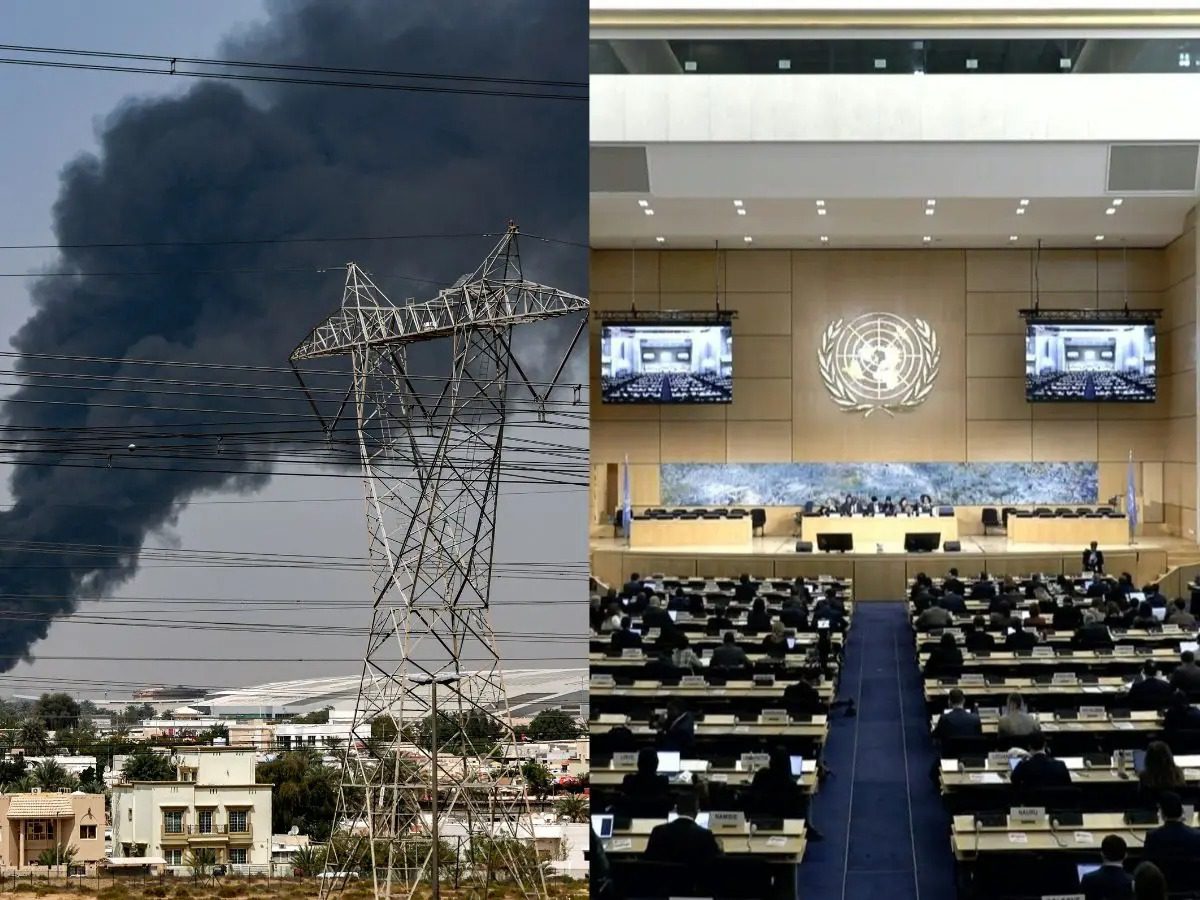
The UN Human Rights Council has strongly condemned Iran’s recent attacks on its Gulf neighbours, calling for full reparations for all victims affected by the strikes. The 47-member council adopted the resolution, sponsored by the six Gulf Cooperation Council (GCC) countries and Jordan, demanding that Tehran immediately end all unprovoked aggression.
While the resolution passed by consensus, several countries noted concerns over its limited scope, particularly the absence of any reference to Israel or the United States. The council stressed the severity of Iran’s actions, highlighting efforts to disrupt the Strait of Hormuz and target critical energy infrastructure across the region.
Bahrain described enduring 26 days of relentless attacks, labeling the aggression as “unprovoked and unjustified,” while Jordan insisted the strikes must stop immediately. Kuwait highlighted assaults on civilian infrastructure, including a recent attack on its international airport, calling the actions “a form of terror waged against civilians.”
Oman, which had recently mediated talks between US and Iranian officials in Geneva, reaffirmed its commitment to diplomacy, condemning Tehran’s attacks while denouncing what it described as the illegal US-Israeli strikes. Saudi Arabia’s ambassador emphasized that targeting mediators undermines peace efforts, asserting that Iran cannot evade responsibility. Meanwhile, the United Arab Emirates reported intercepting more than 2,000 Iranian ballistic missiles and drones, underlining that Tehran’s actions threaten international security.
Tehran, however, rejected the council’s censure, with its ambassador Ali Bahreini pointing to Israel as the root cause of regional instability. Bahreini claimed the Gulf states were being misled and warned that airfields used by Gulf countries facilitated attacks on Iranian civilians. He called for unity against Israel, framing it as the “common enemy,” and accused external actors of encouraging aggression against Iran.
Some members, including Cuba, expressed concerns that the resolution failed to consider the broader context, noting that the war itself should never have been initiated. Israel’s mission in Geneva described Iran as the source of ongoing instability, asserting that its regional strikes underscore the shared threat Tehran poses to international security.
UN Human Rights Chief Volker Turk cautioned that the escalating strikes near Iran and Israel’s nuclear sites risk “unmitigated catastrophe.” The council is set to hold a follow-up urgent debate on Friday to examine a deadly airstrike on a school in the southern Iranian city of Minab on February 28, which claimed at least 165 lives, mostly children.
The debate reflects growing international concern over the human cost of the conflict, even as Tehran and Gulf nations remain locked in tit-for-tat strikes, threatening broader regional stability.