






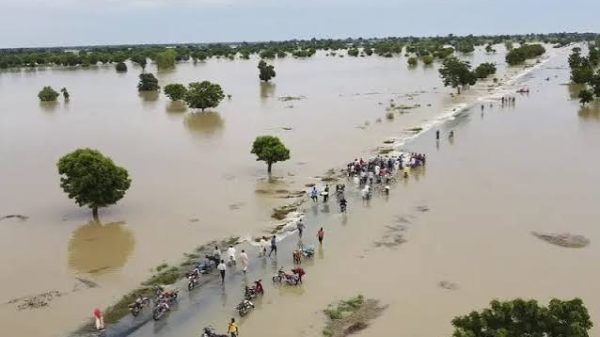




















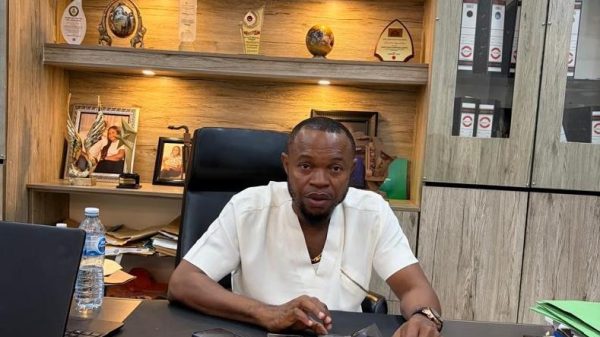


Lere Olayinka, Senior Special Assistant on Public Communications and Social Media to the Minister of the Federal Capital Territory, Nyesom Wike, has defended the FCT Administration following flooding recorded in parts of Abuja after a heavy downpour on Saturday.
Olayinka argued that flooding has been a recurring challenge in the nation’s capital long before Wike became FCT minister. He accused lawyer and activist Deji Adeyanju of using the latest incident to attack the administration.
In a statement issued on Monday titled “Deji Adeyanju and his Gang of Flooded Brains,” Olayinka acknowledged that the heavy rainfall caused flooding in some parts of the city but noted that the water later receded.
He said the FCT Administration was aware of the situation and was already taking steps to address the problem and reduce the likelihood of similar incidents in the future.
According to him, blaming Wike for the flooding or claiming that the minister had destroyed Abuja was misleading, considering that the city had experienced similar incidents before the current administration.
Olayinka questioned whether Wike could reasonably be held responsible for flooding recorded in the capital years before he assumed office.
He referred to reports of flooding in parts of Abuja in 2019, asking whether Wike was responsible for those incidents. He also cited areas such as Wuse, Jabi and Lokogoma, which were reportedly affected by heavy flooding that year.
He further noted that similar incidents occurred in 2022 in areas including Lokogoma, Efab Estate and Gudu, as well as some connecting bridges.
“Sad reality is that Abuja has been witnessing floods long before Wike assumed office,” Olayinka said.
The minister’s aide described Saturday’s incident as another indication of the difficulties associated with managing a rapidly growing city. He said Abuja’s drainage network, waste management system and enforcement of planning regulations face increasing pressure as the population and built environment continue to expand.
Olayinka also raised concerns over the activities of scavengers who allegedly remove drainage covers, leaving the drainage channels exposed to refuse and other materials that can obstruct the free flow of water.
He said the FCT Administration was reviewing the 1979 Abuja Master Plan to bring it in line with the current realities and growing needs of the capital.
According to him, the administration is also introducing drainage covers designed to make them more difficult to remove, particularly by scavengers.
Addressing Adeyanju directly, Olayinka questioned his understanding of Abuja’s urban planning challenges. He alleged that the lawyer had previously defended an individual who built a school and church on land originally designated for recreational purposes.
Olayinka maintained that the latest flooding should be viewed within the wider challenges confronting Abuja as a rapidly expanding city rather than being blamed entirely on the current FCT Administration.
Flooding remains a recurring concern in several parts of Abuja, particularly during periods of heavy rainfall, with drainage capacity, waste disposal and urban development continuing to generate public debate.