






























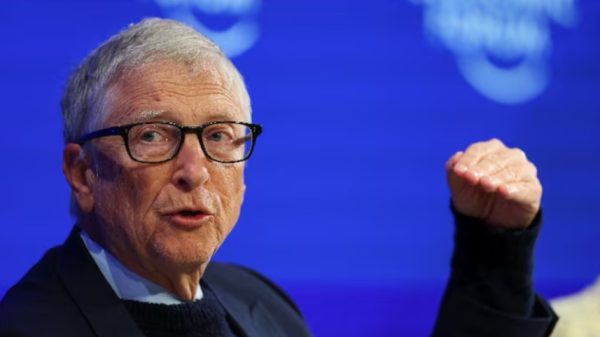





Microsoft co founder Bill Gates has raised fresh concerns about the potential dangers of artificial intelligence, warning that the technology could be used in ways capable of causing catastrophic loss of life.
Gates made the remarks during an interview with NBC’s Meet the Press, excerpts of which were released on Friday ahead of the full programme. He was discussing the growing concerns surrounding increasingly powerful AI systems and the need for stronger safeguards.
Asked whether AI could pose a threat on a scale that could end humanity, Gates stopped short of predicting that human extinction would happen. However, he warned that the technology is already powerful enough to enable events resulting in an enormous number of deaths.
“AI is certainly powerful enough to drive events that, you know, cause a billion deaths,” Gates said.
He also pointed to the danger of malicious actors gaining access to advanced AI tools, describing the combination as potentially more powerful than any weapon seen before.
“There’s never been a weapon as powerful as the combination of people with ill intent using the latest AI tools,” he said.
Gates also called for governments and lawmakers to become more involved in deciding how powerful AI systems should be monitored and controlled. He argued that allowing technology companies to regulate themselves would not be enough.
“No one thinks self regulation is enough,” Gates said, stressing that legislation, law enforcement and political authorities should be part of discussions on safeguards and monitoring.
According to Gates, introducing such safeguards may create additional requirements for the AI industry, but he does not believe regulation would necessarily bring the sector’s development to a halt.
His warning comes as concerns over the rapid advancement of artificial intelligence continue to grow among technology executives, researchers and policymakers. Gates has previously highlighted risks involving job losses, cyberattacks and the possible misuse of AI to develop dangerous technologies.
Earlier this month, Gates also warned that governments around the world were struggling to keep pace with the speed of AI development, while stressing that the technology could still deliver major benefits in areas such as healthcare, education and agriculture if properly managed.
The latest comments have added to an increasingly active debate over how governments and the technology industry should balance the rapid development of AI with measures designed to reduce its potential for serious harm.