








































The World Health Organisation (WHO) announced on October 20 that Nigeria had recorded an imported case of Ebola caused by the Bundibugyo virus. The patient, the wife of a Swiss diplomat based in Abuja, reportedly arrived in Nigeria on October 3 after travelling from Uganda and developed symptoms a few days later.
The patient and her husband were subsequently evacuated to Switzerland on Monday, while Nigerian health authorities identified 53 contacts and began monitoring them for possible signs of infection.
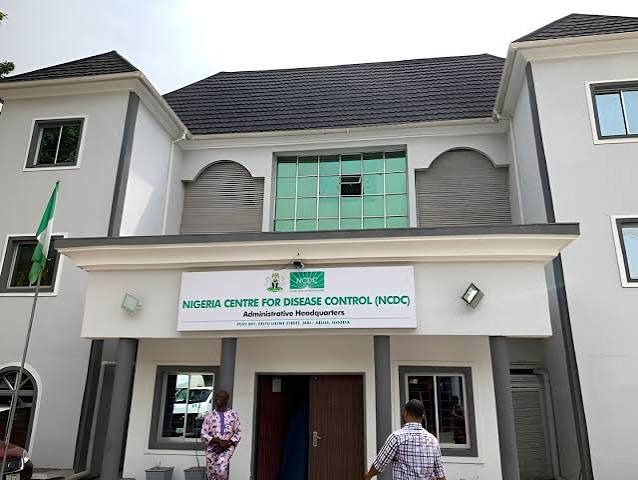
The development followed earlier warnings from the Nigeria Centre for Disease Control and Prevention (NCDC) about the risk of Ebola entering Nigeria amid an outbreak in the Democratic Republic of the Congo.
Since the confirmation, health authorities have been working to identify people who may have been exposed to the virus, trace their movements, test suspected cases and protect healthcare workers. These efforts depend heavily on effective coordination between state governments, local authorities and health facilities, where suspected cases are likely to be identified and reported.
A review of states’ approved 2026 budgets reveals considerable differences in how governments have provided for disease surveillance, infection prevention, emergency response systems and infectious disease facilities.
While some states have made substantial financial provisions for public health emergencies, others have earmarked smaller amounts for specific disease control programmes. In some cases, funding is grouped under broad health emergency headings, while other budgets identify particular diseases, facilities or surveillance activities.
However, budgetary allocations alone do not show how much money has been released, whether the funded facilities are operational or how effectively the resources can be deployed during an outbreak. They provide an indication of government priorities, but actual preparedness also depends on trained personnel, functioning equipment, reliable diagnostic services and established response procedures.
Nigeria already has a legal and institutional framework for managing public health threats. The NCDC Establishment Act 2018 provides the statutory basis for the agency’s role in preventing, detecting and controlling diseases of public health importance. Its responsibilities include coordinating surveillance, supporting state health authorities and assisting with emergency responses.
The International Health Regulations 2005 also require countries to maintain the capacity to detect, assess, report and respond to public health risks.
Another important framework is the National Health Act 2014, which established the Basic Health Care Provision Fund under Section 11 to support essential health services, particularly at the primary healthcare level. Although the fund does not replace state emergency preparedness budgets, primary healthcare centres remain crucial to identifying suspected infections, referring patients and reporting unusual disease patterns.
These frameworks do not prescribe a uniform amount that every state must allocate specifically to Ebola preparedness. Nevertheless, they highlight the importance of maintaining public health systems capable of responding quickly when infectious disease threats emerge.
In May, the NCDC warned that the risk of Ebola entering Nigeria was high, citing international travel, population movements and the difficulty of distinguishing early symptoms from common illnesses such as malaria. The agency urged state governments and the Federal Capital Territory to strengthen their preparedness and ensure that suspected cases could be detected and contained promptly.
The confirmation of an imported case has added urgency to those calls.
On Monday, the WHO said Nigeria had no active Ebola case following the evacuation of the patient to Switzerland. The organisation’s Regional Director for Africa, Mohamed Janabi, made the statement on X shortly after the Coordinating Minister of Health and Social Welfare, Muhammad Pate, confirmed the evacuation.
States Make Billions Available for Emergency Preparedness
Some of the largest provisions identified in the 2026 approved budgets include Delta State’s N37.28 billion for emergency operations centres, Zamfara State’s N20 billion for a health emergency response fund and Lagos State’s combined N17.79 billion for two infectious disease research facilities.
Delta also earmarked N590 million for integrating national disease surveillance, N100 million for infectious disease control and management, and N50 million for communicable diseases.
Zamfara’s N20 billion allocation could provide significant financial support for responding to public health emergencies. Its actual impact, however, will depend on the timely release of the funds and how effectively they are used.
In Lagos, the combined N17.79 billion allocation comprises N15.27 billion for a public health epidemics and infectious disease research institute and N2.52 billion for an infectious disease research institute at Mainland Hospital, Yaba.
These facilities could strengthen the state’s ability to investigate and respond to outbreaks, including Ebola. Their effectiveness will depend on factors such as completion, staffing, diagnostic capacity and adequate funding for daily operations.
Ogun State allocated N2.5 billion for a medical emergency preparedness and response project, alongside N4.8 billion for national disease surveillance.
Akwa Ibom State provided N1 billion for upgrading statewide emergency health interventions and N100 million for improving its health emergency operations centre.
Although the allocations indicate the level of funding planned by these governments, they do not establish whether the money has been released or whether the relevant emergency systems are ready for immediate use.
A fully operational emergency operations centre with trained personnel, dependable communications and clear response procedures can play a crucial role during the early stages of an outbreak. By contrast, a facility still under construction may not provide immediate assistance, regardless of the amount allocated to it.
Effective disease surveillance is equally important because early detection can help authorities respond before an infection spreads widely.
States Fund Surveillance, Hospitals and Infection Control
Other states have focused their spending on infectious disease hospitals, medical equipment, surveillance systems and community prevention programmes.
Cross River State allocated N350 million to upgrade the abandoned tuberculosis hospital in Obubra into an infectious disease hospital. It also provided N300 million for a disease control and partners complex and N20 million for communicable disease prevention and control. The three allocations amount to N670 million.
Enugu State’s budget includes N129.33 million for communicable diseases, N100 million for medical equipment intended to strengthen health security, N20 million for furniture and information technology equipment for a health sector command centre or public health emergency operations centre, and N10 million for fencing an infectious disease hospital. Together, these provisions total N259.33 million.
Kaduna State allocated N179.69 million for monitoring and tracking public health emergencies and N620.68 million for the Kaduna State Centre for Disease Control, bringing the combined amount to N800.37 million.
Kebbi State provided N410.37 million for disease surveillance tools, equipment and essential emergency drugs for its emergency operations centre. Kwara State earmarked N301.5 million for integrated national disease surveillance, while Plateau State allocated N25.7 million for the same general purpose.
Kogi State made provision for N500 million in health security funding covering emergency preparedness, response and disease control. It also allocated N3.02 million for controlling emerging public health diseases.
Benue State provided N19.38 million for infection control and community awareness, while Taraba State allocated N107 million for disease surveillance and response vehicles, alongside N27.37 million for establishing and maintaining a responsive public health emergency system.
Adamawa State’s budget includes N10 million for communicable diseases, N2 million for emergency responses to rural outbreaks and N27.8 million for chemicals used in fumigation and decontamination.
Bauchi State allocated N500 million for disease surveillance and outbreak prevention, N100 million for medical equipment for communicable diseases, N100 million for rehabilitating the infectious disease hospital at Bayara and N300 million for renovating another infectious disease hospital.
Gombe State provided N35 million for disease surveillance under its public health emergency system, N10 million for emergency operations centres and N3 million for communicable diseases. Yobe State allocated N1.09 billion for health emergency services, while Borno State earmarked N35 million for research into communicable diseases.
In Jigawa State, N135 million was allocated for renovating the infectious disease hospital in Dutse.
Kano State’s 2026 budget includes N92.7 million for integrated disease surveillance, N115 million for coordinating communicable disease activities in primary healthcare, N20 million for coordinating public health emergencies at the local government level and N54.67 million for strengthening its communicable disease prevention task force.
Katsina State allocated N50 million to an infectious disease fund and another N50 million for communicable disease control.
Sokoto State provided N500 million as counterpart funding for health emergencies, N73 million in recurrent funding for the Infectious Disease Hospital in Amanawa and N75 million for an ambulance for the facility. The state’s budget also contains provisions for medical equipment and community level prevention.
In the South East, Abia State allocated N4.5 million for research into vaccine hesitancy and disease burden, another N4.5 million for an electronic surveillance system for communicable diseases, and N10 million for distributing buckets fitted with taps to 903 primary healthcare centres.
Anambra State provided N90 million for a disease control and surveillance centre, N10 million for controlling emerging communicable diseases and N15 million for surveillance and epidemic response equipment.
Ebonyi State allocated N15 million for equipment to support emergency responses to epidemic diseases.
Imo State earmarked N500 million specifically for the operational funding of its COVID 19 emergency operations centre. Although an existing emergency operations centre could potentially support an Ebola response, its usefulness would depend on its current capabilities, staffing and readiness to handle the specific demands of the outbreak.
The wide differences in these allocations show that state governments are approaching public health preparedness in different ways, from investing in specialist hospitals and emergency facilities to funding surveillance, medical equipment and community awareness.
However, the real measure of preparedness goes beyond the figures in approved budgets. Timely release of funds, trained health workers, functioning laboratories, adequate protective equipment and clear coordination between state and federal authorities will be essential to ensuring that suspected Ebola cases are identified quickly and contained before wider transmission occurs.







