



The President of the Economic Community of West African States, Dr Omar Alieu Touray, has expressed grave concern over the growing threats to democracy and security across the region.
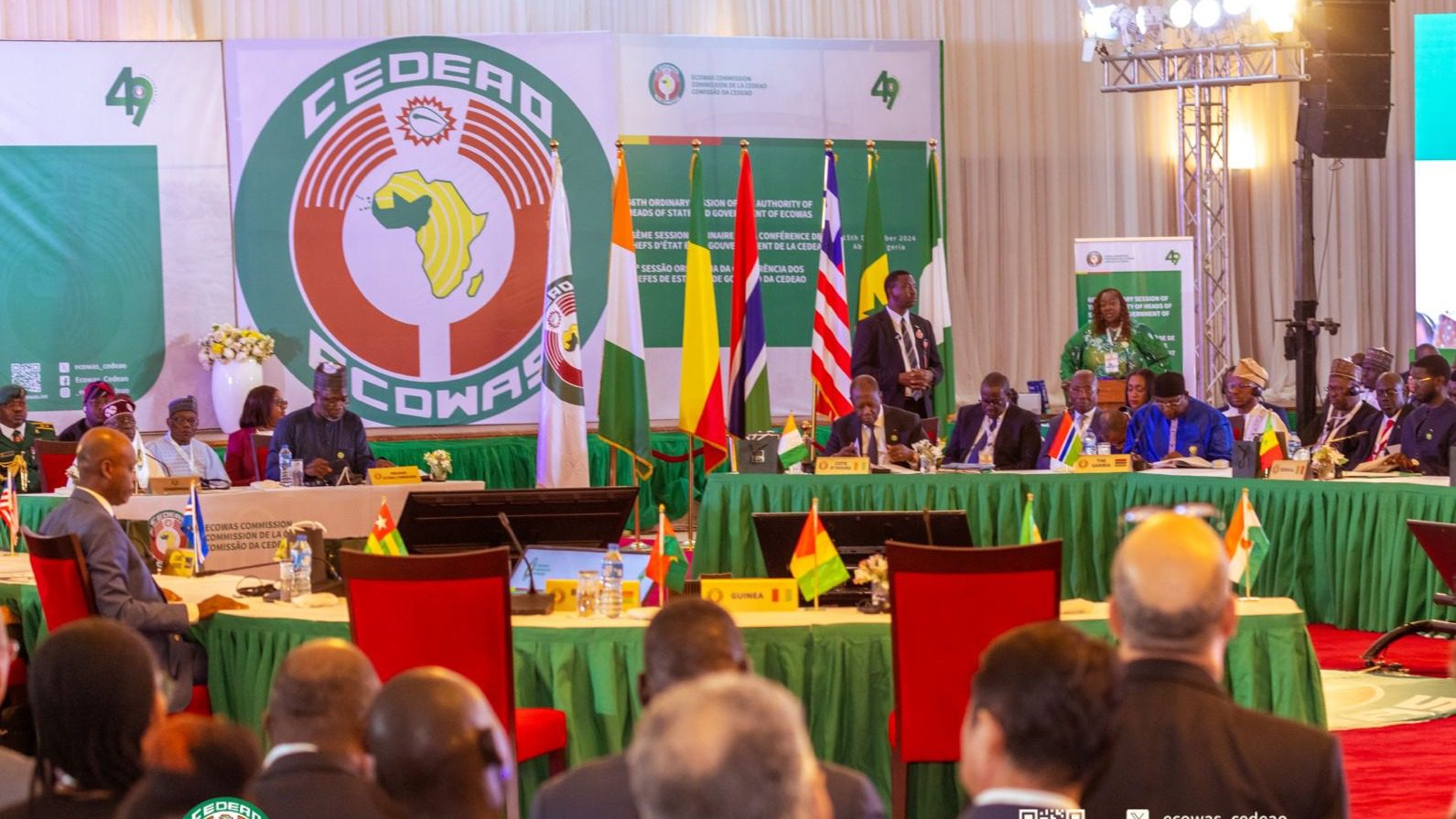
Speaking in Abuja during the second edition of the African Political Square and the Experts Meeting on Alternative Futures for ECOWAS at 50 — an event jointly organized with the African Leadership Centre in collaboration with Codesria and Wathi — Dr Touray, represented by the Commissioner for Political Affairs, Peace and Security, Ambassador Abdufatah Musah, said the region was at a defining moment that demanded “deep introspection and honest self-assessment.”
According to him, ECOWAS is currently facing one of its toughest challenges in history. He lamented that the manipulation of constitutions and the rise of exclusionary politics had become widespread across several member states, warning that democracy in the region was under serious strain while insecurity continued to worsen.
Reflecting on the bloc’s journey, Dr Touray outlined three major phases in ECOWAS’s evolution — its establishment during the Cold War, its peacekeeping prominence in the 1990s, and the present era marked by governance struggles and rising instability. He reminded participants that ECOWAS was founded on a bold vision of unity among francophone, anglophone, and lusophone nations in 1975, describing that act as a “miracle of visionary leadership.”
“After fifty years, we must ask ourselves if we have remained true to that founding vision,” he said, stressing that both external pressures and internal weaknesses have combined to push the region to a critical crossroads.
Dr Touray noted that the global order had shifted from a bipolar to a multipolar and multicultural world, where countries now align based on their unique interests and values. He urged West African leaders to make deliberate choices that place people and democratic governance at the heart of the region’s future rather than sliding into authoritarianism.
He emphasized that the survival of ECOWAS and the stability of the region depend on recommitting to inclusive democracy, good governance, and collective security.