



























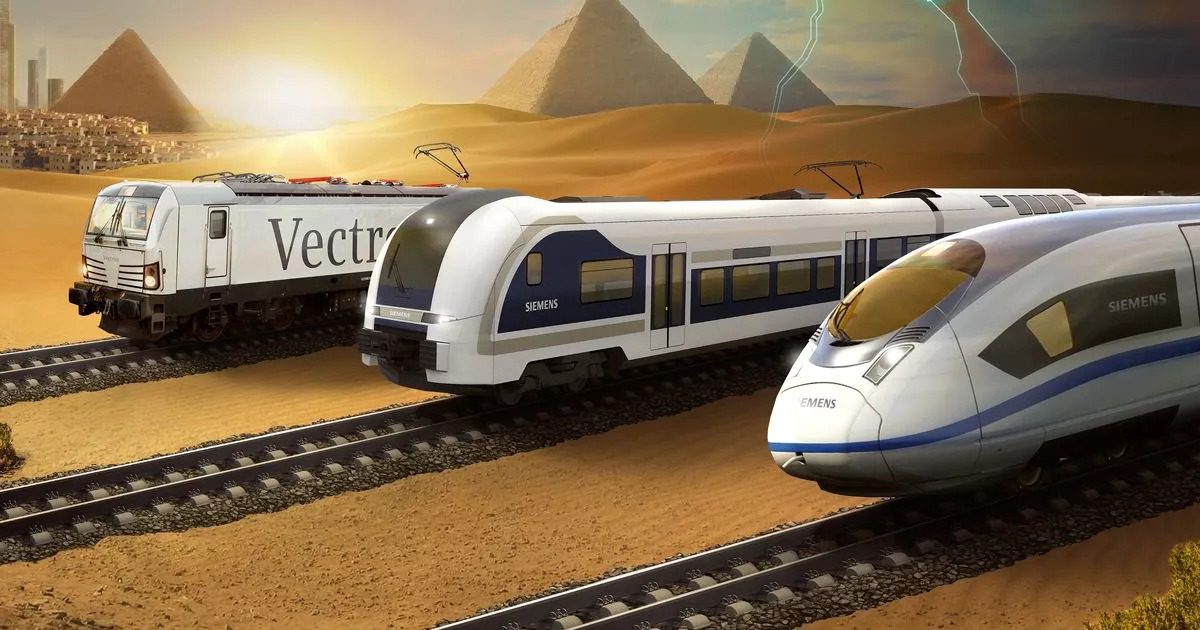
In the sweeping deserts east of Cairo, a transformation is taking place that promises to reshape the way people and goods move across North Africa. Workers have officially begun laying tracks for Egypt’s first high-speed rail line, a massive infrastructure project designed to bridge the gap between the Red Sea and the Mediterranean. Transport officials have already started calling the venture a “new Suez Canal on rails,” highlighting its potential to become a vital economic artery for the nation.
Once the project is completed in 2028, the “Green Line” will stretch over 660 kilometers, cutting travel time between the two seas to just three hours. His initiative is the first phase of an ambitious nearly 2,000-kilometer network that the government hopes will eventually serve 1.5 million passengers every day. It represents a significant upgrade for a country where the current railway system, though heavily used, has struggled with maintenance issues and safety concerns for years.
The Green Line is set to run from Ain Sokhna on the Red Sea to Marsa Matrouh on the Mediterranean coast. Along the way, it will serve critical hubs like the New Administrative Capital and 6th of October City. Beyond just moving people, the rail network is expected to handle about 15 million tonnes of cargo annually. This shift toward rail is intended to ease the heavy traffic in Greater Cairo and stimulate economic growth in areas that are currently sparsely populated.
While the project is a marvel of modern engineering, it also represents a major urban planning gamble. The government is betting that high-speed connectivity will encourage citizens to move away from the overcrowded Nile Delta, where the majority of Egypt’s 108 million people are currently concentrated. However, some workers on the ground remain skeptical about whether these new desert cities will become vibrant residential hubs or primarily serve as transit points for tourists and international shipping.
Following the launch of the Green Line, two more phases are planned to complete the national overhaul. The Blue Line will eventually follow the path of the Nile to connect Cairo with Aswan in the south, while the Red Line will link the coastal cities of Hurghada and Safaga to the historic inland city of Luxor. Together, these tracks represent a multi-billion dollar investment in a future where Egypt’s vast desert landscape is no longer a barrier, but a bridge to modern development.