

























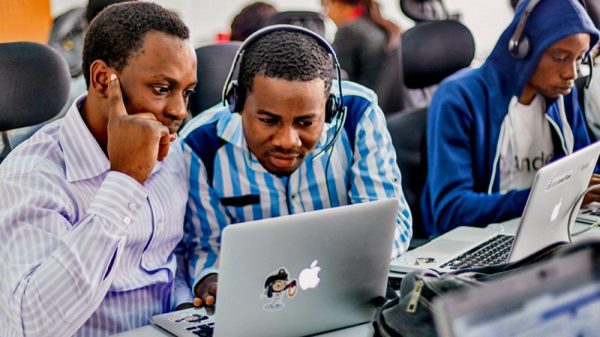









Nigeria is making a strong case for African nations to join forces and build independent artificial intelligence infrastructure. Kashifu Abdullahi, the Director-General of the National Information Technology Development Agency (NITDA), warned that without collective action to develop local cloud and computing power, the continent remains at risk of total dependence on foreign technology platforms.
During a discussion at GITEX Africa in Marrakech, Morocco, Abdullahi highlighted a concerning gap in global technology. While Africa is home to a massive portion of the world’s population and its youngest demographic, its share of global data center computing power is less than 0.6 percent. This disparity is a critical hurdle for the future of Africa’s digital economy.
The NITDA chief stressed that Africa must not repeat the patterns of previous industrial revolutions, where the continent provided raw materials and talent but failed to build its own industrial systems. He pointed out that while Africa generates vast amounts of data, it currently lacks the systems to store, refine, and turn that data into intelligence. To solve this, Nigeria is proposing a “cloud of clouds” model—a decentralized network that connects existing infrastructure across the continent to bolster digital sovereignty.
Closer to home, Abdullahi touched on the National Sovereign Cloud Initiative, explaining that the government’s role is to provide the right environment while the private sector handles the actual building and operation. This approach, supported by a new public-private partnership framework, aims to speed up projects without being tied down by government budgets. He also addressed concerns about state control, clarifying that the focus is on national interest and security rather than restricting the market.
The conversation also turned to the upcoming GITEX Nigeria event. After a massive turnout last year that exceeded venue capacity, organizers are preparing for an even larger crowd, potentially reaching 25,000 participants. The goal this year is to encourage deeper participation from West African neighbors and shift the focus toward startups that have proven products and strong commercial potential.
Finally, the Director-General raised a serious note on cybersecurity. He pointed out that as systems become more interconnected, a single vulnerability in one organization can threaten an entire sector. Citing a recent incident where a breach at a bank affected connected platforms like Remita, he urged organizations to stop hiding cyberattacks for the sake of their reputation. Instead, he called for transparent intelligence-sharing to combat the increasingly complex risks posed by the rise of AI.