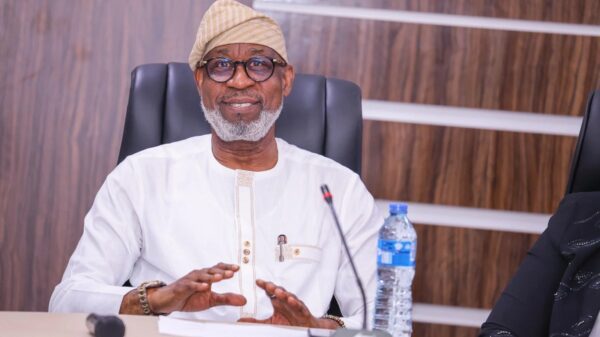

















The 16th Emir of Kano, Muhammadu Sanusi II, has voiced his concerns about the long-standing issue of leadership quality in Nigeria. Speaking at the second Kano International Poetry Festival (KAPFEST), the monarch described the nation’s leaders as “lousy” and emphasized that good governance is the only way to salvage the country from its current state.
“You rise and fall with the quality of your leadership,” he stated. “And Nigeria has had lousy leadership for a long time. You cannot give what you do not have. Until we begin to look at the people who we choose to lead us… I mean, in most parts of this country, you look at people who are leading you and you say, ‘Oh God, is this really the person? How did we end up here?'”
Sanusi criticized the pettiness and tribalism that he believes continues to plague national discourse. “You look at other countries, you look at other parts of the world, people are discussing climate change, discussing artificial intelligence,” he said. “We are still talking about Yoruba or Igbo or Hausa, Northern or Christian… We are still mired in that debate. We are still in conversations that we had in the 1960s.”
The former Governor of the Central Bank of Nigeria also weighed in on the removal of the fuel subsidy, arguing that the country would have gone bankrupt if President Bola Tinubu had not acted. While he said he has no issue with subsidies on production, he was clear in his objection to the subsidy on consumption, which he claimed was propping up foreign refineries. He explained that the billions of naira spent on subsidies should have been invested in building local refineries instead. “This is exactly what I said would happen,” he added. “Because beyond a point, government revenue will not be enough to pay the subsidy. You have to borrow to pay the subsidy.”
He also expressed concern over the rate at which governments in the country borrow and squander money, warning that this trend will have a devastating effect on the economy in the coming years.
Amid his criticisms, Sanusi issued a direct challenge to the nation’s youth, urging them to rise up and take the country back from the older generation. He believes that with enough willpower, the youth can easily “retire all of them and take over.”
Earlier in the festival, Nasiba Babale, the Creative Director of the Poetic Wednesdays Initiative (PWI), explained that the festival’s theme, “Poetry in a time of crisis,” was a call to action for poets to use their art to advocate for peace in northern Nigeria.