



















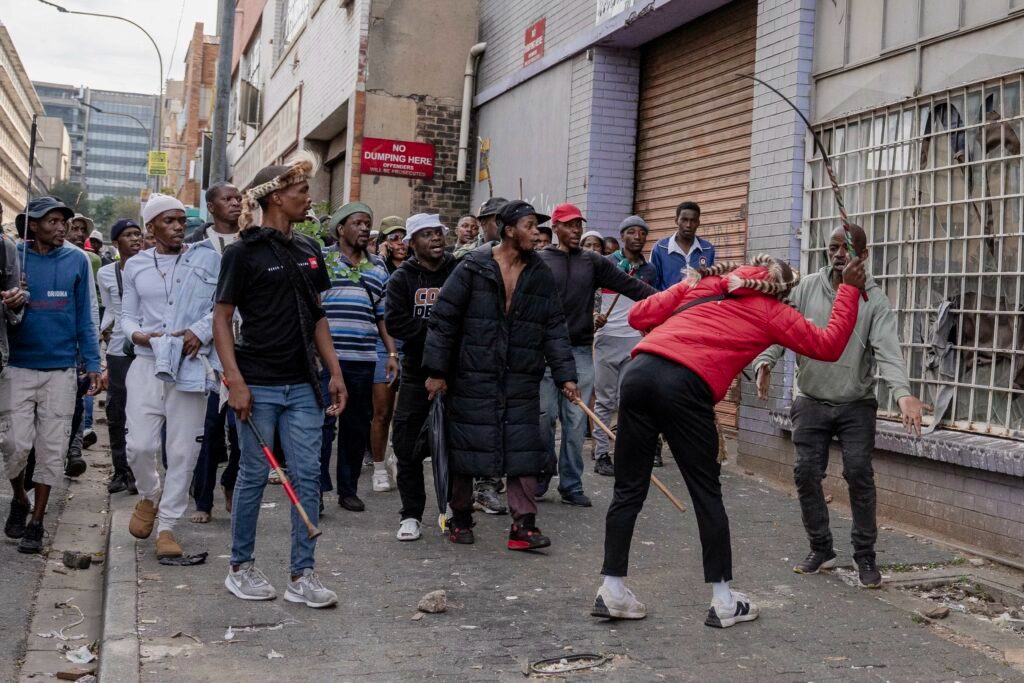
Anti migrant protests are gaining momentum across South Africa as the country moves closer to local government elections in November, with tensions over undocumented foreigners once again becoming a central public issue.
In one of the most notable recent gatherings near Johannesburg, hundreds of men took part in a demonstration led by Phakela Ndabandaba, a Zulu activist who has become a prominent voice in the growing movement. Dressed in traditional attire, many of the participants carried sticks, whips, and shields as they chanted messages demanding that foreign nationals without legal documents leave the country.
Ndabandaba described the turnout as a sign of widespread frustration, pointing to the fact that many of the participants were away from work. He argued that this reflected deeper concerns about unemployment and competition for limited economic opportunities.
With unemployment in South Africa remaining above thirty percent, several citizen led groups have echoed similar sentiments, claiming that foreign nationals are putting pressure on jobs and public resources. These grievances have been amplified further through social media, where anti migrant messages have spread rapidly in recent months.
The situation has already led to violence in some areas. Authorities and observers have linked rising tensions to the killing of two Mozambican nationals, raising fears of further outbreaks similar to past incidents of xenophobic violence in the country.
Some foreign nationals have reported intimidation and forced evictions, with groups reportedly moving from door to door instructing migrants to leave by June 30. Although this deadline has been widely circulated online and repeated by activists like Ndabandaba, it carries no official government backing.
In the Western Cape town of Gansbaai, a Malawian national described being attacked in the early hours of the morning when a group allegedly broke into homes, looted belongings, and forced residents to flee. Many affected migrants have since gathered at community centres while awaiting assistance from their home countries.
Several governments, including Ghana, Mozambique, and Malawi, have already repatriated hundreds of their citizens this month, while South African authorities maintain that many of those affected were in the country without proper documentation.
Ndabandaba, whose full name is Nkosikhona Phakel’umthakathi Ndabandaba and is believed to be in his forties, has distanced himself from accusations of violence, insisting that the movement has remained peaceful throughout its activities. He said the group’s marches are intended to draw attention to community concerns rather than promote harm.
He also stated that the movement has no political ambitions, describing its actions as a way of pressuring leaders to address public frustrations. However, analysts say the growing visibility of such groups could have political implications as campaigning intensifies ahead of the elections.
The movement has expanded beyond its original base in KwaZulu Natal, with rallies now taking place in parts of Gauteng and other provinces. Organisers claim funding comes from community contributions, including support from traditional leaders and local residents.
Another figure linked to similar protests, former radio presenter Jacinta Ngobese Zuma, has also denied political intentions, despite speculation about possible alignment with smaller political parties.
Experts monitoring the situation say the protests reflect a mix of economic hardship, political dissatisfaction, and rising populist messaging. Some warn that the closer the country gets to election day, the more volatile the environment may become, especially if misinformation continues to spread.
While some analysts believe these groups may attempt to influence voter sentiment or position themselves as power brokers in local politics, questions remain over their organisation, funding sources, and long term intentions.