
































Across Nigeria, frustration is rising over the quality of telecom services, with millions of subscribers complaining that poor network performance and fast draining data are no longer minor inconveniences but daily disruptions affecting business, communication, financial transactions and even emergency response.
Many users say the situation feels worse despite higher tariffs and the huge revenues reported by telecom operators, raising fresh questions about what is happening to service quality in the country’s fast growing digital space.
The concern has now reached the House of Representatives, where lawmakers recently faulted the Nigerian Communications Commission for what they described as weak regulatory oversight and a failure to ensure operators meet basic service standards.
During a motion sponsored by Ahmadu Jaha, who represents Chibok Damboa Gwoza Federal Constituency, lawmakers warned that unreliable telecom services have moved beyond consumer complaints and are now a national safety issue.
Jaha noted that telecommunications plays a central role in modern life, connecting families, supporting businesses and driving economic activity, yet the quality of service has continued to fall short of expectations.
He highlighted recurring issues such as dropped calls, delayed messages and slow internet speeds, describing them as signs of deeper structural problems within the sector.
He also raised concern over the growing gap between what Nigerians pay for data and the actual service they receive, saying many users exhaust data bundles quickly due to unstable connections.
Supporting the motion, Deputy Minority Whip George Ozodinobi accused telecom companies of focusing more on profit than service improvement while also criticising the regulator for not enforcing compliance strictly enough.
Nigeria’s telecom industry has expanded rapidly from less than one million connected lines in the early 2000s to over 180 million active subscriptions today, becoming a key part of the country’s digital economy.
However, experts say infrastructure growth has not matched the surge in demand, leading to congestion, poor coverage and inconsistent service quality across many regions.
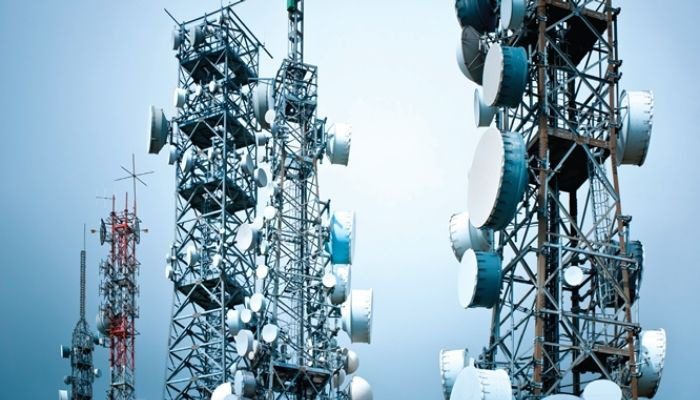
Industry stakeholders point to several challenges including vandalised fibre cables, inadequate base stations, poor power supply, insecurity and weak infrastructure planning as key factors affecting network performance.
Telecom expert and Chief Executive Officer of Broadbased Communications Limited, Chidi Ibisi, explained that fibre cuts remain one of the most frequent causes of network disruption, often triggered by road construction activities, vandalism and accidental damage.
He added that the pressure on existing infrastructure has increased sharply due to rising internet usage, especially outside major urban centres where connectivity is still weak.
According to him, government backed projects aimed at expanding broadband access could help improve affordability and strengthen network reach if fully implemented.
Another industry player, Chief Executive Officer of Open Access Data Centres, Obinna Adumike, said sustainable improvement in the sector depends heavily on government policies that encourage private investment and infrastructure expansion.
Despite these explanations, many subscribers are no longer convinced by technical reasons alone.
President of the National Association of Telecom Subscribers, Adebola Ogunbanjo, said network quality has dropped to one of its worst levels in decades, despite recent tariff adjustments approved by regulators.
He argued that telecom operators should reinvest more of their profits into improving service delivery and called for a compensation system for customers affected by poor connectivity.
While acknowledging security challenges and infrastructure damage, he maintained that users deserve better accountability and consistent service quality.
Responding to growing criticism, MTN Nigeria identified fibre cuts, vandalism, power issues, community interference and network congestion as major causes of service disruptions across its network.
The company’s Chief Technical Officer, Yahaya Ibrahim, explained that mobile connectivity relies on multiple layers of infrastructure working together from base stations to fibre networks and core systems, meaning disruptions at any point can affect service delivery.
He noted that congestion remains a major challenge, especially in high traffic areas where demand exceeds available capacity, leading to slower speeds and weaker connections.
MTN also revealed that fibre cuts occur almost daily, often linked to construction work, vandalism and sabotage, with dozens of incidents recorded each week.
The company further disclosed that hundreds of cases of vandalism were recorded within the year, including theft of generators, batteries, solar equipment and other critical infrastructure components.
Community disputes and restricted access to telecom sites were also highlighted as additional obstacles, with some service interruptions lasting longer when maintenance teams are denied entry to affected locations.
Despite these challenges, the company said it continuously monitors its network and responds quickly whenever faults are detected.
Another concern for subscribers is how quickly mobile data gets exhausted, a problem many users attribute to telecom operators or device manufacturers.
However, smartphone maker TECNO explained that modern devices naturally consume more data due to improved features and user expectations.
The company said today’s smartphones run continuous background processes such as app updates, cloud backups, security checks and notifications, all of which use data even when users are not actively browsing.
It also noted that higher resolution screens and the rise of high quality video content on social media platforms have significantly increased data consumption compared to previous years.
According to the company, what appears to be rapid data depletion is often the result of these background activities and improved digital experiences rather than deliberate manipulation.
To help users manage consumption, it recommended limiting background apps, disabling unnecessary automatic updates and reviewing cloud sync settings.
The Federal Ministry of Communications, Innovation and Digital Economy has acknowledged the ongoing challenges but insists that the focus is now shifting towards measurable improvements.
The ministry highlighted ongoing initiatives such as Project BRIDGE, a World Bank supported programme aimed at expanding national fibre coverage and improving broadband access across the country.
Officials said the goal is to ensure that businesses and individuals can access stable high speed internet without relying solely on mobile data connections.
For many Nigerians, however, patience is wearing thin. With dropped calls, unstable internet and fast depleting data becoming everyday experiences, the demand is now shifting from explanations to visible and lasting improvements in service quality.