
























The Nigerian naira maintained its steady run against the United States dollar as trading opened this week, showing minimal divergence between the government-regulated window and the street market.
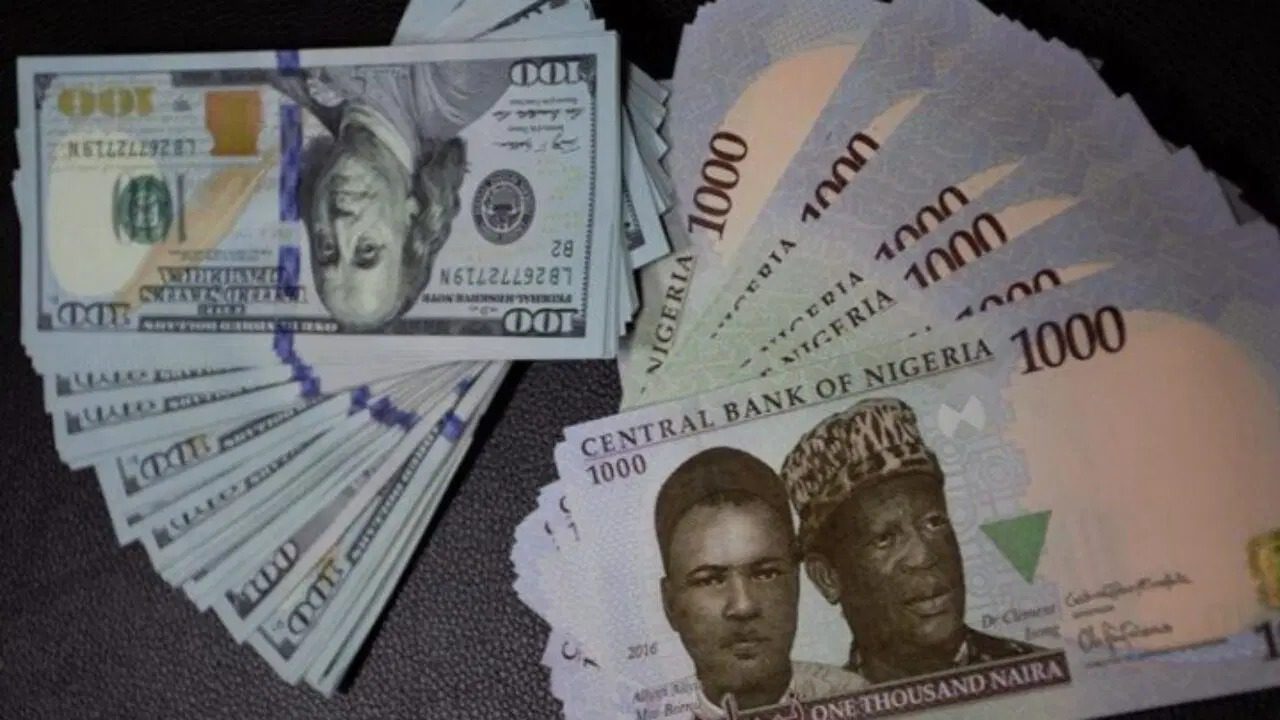
According to data tracking the close of business at the Nigerian Foreign Exchange Market on Monday, the local currency settled at an official rate of ₦1,379.22 against the greenback. For businesses and individuals clearing transactions through official banking channels, this puts the exchange value of a 100 dollar bill at approximately ₦137,922, while a 1,000 dollar transaction converts to about ₦1.379 million.
Meanwhile, activity across major trading hubs in Lagos and Abuja showed that the parallel market, widely known as the black market, mirrored this stability. Bureau de change operators and street dealers quoted buying rates around ₦1,390, while selling prices fluctuated tightly between ₦1,400 and ₦1,405. At the psychological benchmark of ₦1,400 per dollar on the open street, retail buyers can expect to part with ₦140,000 for 100 dollars, or roughly ₦1.4 million for 1,000 dollars.
Market analysts at Zoyols News point out that the gap between the two markets has compressed to just about ₦21. This remarkably narrow premium highlights a sustained period of calm for the local currency, a trend largely credited to consistent foreign exchange injections and a series of deliberate monetary policy tweaks designed to tame volatility.
The official benchmark relies on a volume-weighted average of all valid corporate transactions validated during the day, though retail customers might still notice slight variations in rates depending on individual commercial bank charges, specific bureau de change locations, or the volume of cash being exchanged.