















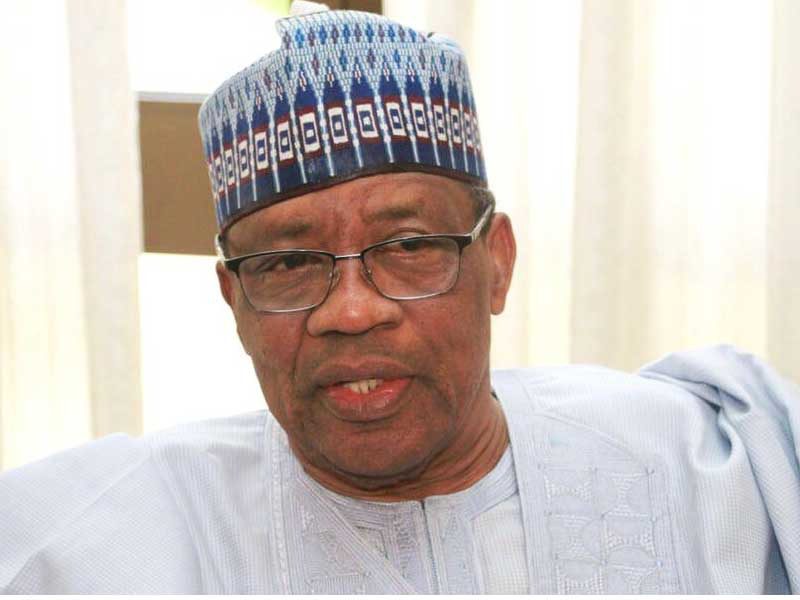
General Abdulsalami Abubakar would likely never have ascended to the position of Nigeria’s head of state had he not made the strategic decision to switch from the Nigerian Air Force to the Nigerian Army early in his career. This perspective was shared by former military president General Ibrahim Babangida in the foreword of Abubakar’s newly launched autobiography, Call of Duty, which was unveiled over the weekend in Abuja.
In his reflection, Babangida noted that divine forces seemed to be at play in shaping Abubakar’s journey, positioning him to restore peace to the nation following a period of intense political turbulence. Abubakar ultimately took the reins of power in June 1998, stepping in after the sudden demise of General Sani Abacha, who had governed the country since 1993.
The turning point in Abubakar’s military trajectory occurred back in 1966. According to details shared at the book launch, his initial pilot training in West Germany was abruptly cut short, prompting his transfer from the air force to the army. By October 1967, he was commissioned as a second lieutenant, a move that unknowingly altered his destiny.
Historically, the Nigerian Army has been the largest and most politically dominant branch of the nation’s armed forces. Since Nigeria gained independence in 1960, the country has seen eight military leaders, and every single one of them emerged from the ranks of the army. The Air Force, which was established later in 1964, simply did not wield the same level of political influence or control over key territorial formations during the decades marked by coups and counter-coups.
The line of army officers who steered the nation’s affairs includes Johnson Aguiyi-Ironsi, Yakubu Gowon, Murtala Muhammed, Olusegun Obasanjo, Muhammadu Buhari, Ibrahim Babangida, Sani Abacha, and finally, Abdulsalami Abubakar himself. During those turbulent decades, the figures who controlled troops on the ground were the ones who ultimately held the keys to state power and succession plans.
By stepping away from the flight deck and joining the infantry, Abubakar placed himself at the very center of Nigeria’s political gravity. Had he remained with the air force, he would have spent his career in a branch that has never produced a commander-in-chief. Instead, his transition to the army not only redefined his personal legacy but also put him in the unique position to successfully steer Nigeria back to democratic governance in 1999.