




















Midfield remains the true heartbeat of football, even in an era shaped by speed, power and relentless pressing. While goals and defensive structure still decide trophies, it is the middle of the pitch that often determines how matches are controlled, stretched and ultimately won. The modern game has not lost its appreciation for artistry either, with intelligent playmakers and tireless box to box runners now blending technique with endurance at the highest level.
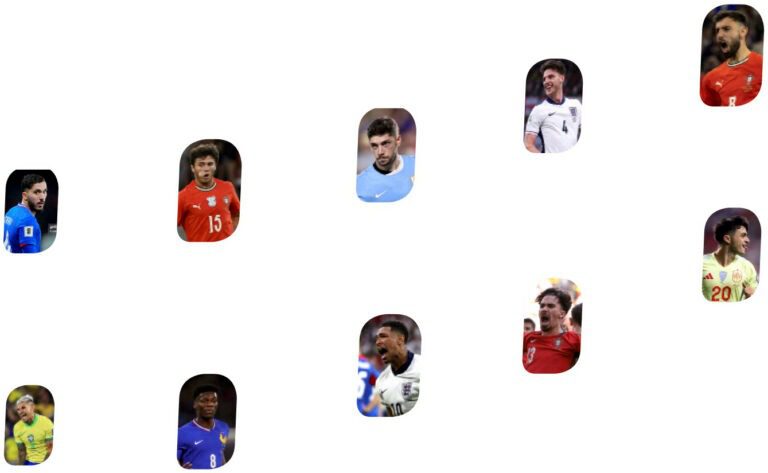
Looking ahead to the 2026 World Cup, several midfielders are expected to define the tournament, each bringing a different style that reflects the evolution of the position.
Rayan Cherki of France stands out as the unpredictable creative spark in Didier Deschamps’ squad. Though not guaranteed a starting role, his flair and ability to unlock tight defenses make him a dangerous option off the bench or in tactical switches. His time at Manchester City has already shown glimpses of his potential to shift momentum in big matches.
Brazil’s Bruno Guimarães continues to grow into a midfield leader. His ability to escape pressure and drive play forward gives Brazil both control and creativity. Even during injury setbacks at Newcastle United, his influence on the pitch was difficult to replace. At the World Cup, much of Brazil’s rhythm is expected to pass through him.
Portugal’s João Neves represents the new generation of midfield intensity. Despite his young age, he plays with remarkable maturity, combining relentless pressing with calm distribution. His energy and discipline allow more expressive teammates around him to thrive.
Aurélien Tchouaméni of France has developed into a key stabilizing figure, especially during a turbulent season at Real Madrid. His role is likely to be crucial for balance in midfield, offering protection to France’s attacking stars while ensuring structure under pressure.
Federico Valverde brings unmatched versatility for Uruguay. Known for his tireless work rate and ability to adapt to multiple roles, he remains the engine of Marcelo Bielsa’s side. His influence often goes beyond statistics, pushing Uruguay’s intensity in every phase of play.
England’s Jude Bellingham arrives with expectations despite an inconsistent year affected by injury. When fully fit, his ability to drive forward, score and dictate tempo makes him one of England’s most important figures heading into the tournament.
Declan Rice offers England something different, a midfield anchor built on reading danger and breaking up attacks. His defensive awareness and physical presence provide stability, while his improved leadership adds another layer to his growing reputation.
Vitinha has become a central figure in Portugal’s midfield evolution. His control of tempo and intelligence in possession allow him to dictate games in subtle but decisive ways. He links defensive structure with attacking flow, making him one of the most complete midfield operators in the game.
Bruno Fernandes brings creativity and risk taking to the same Portuguese setup. While his style can be unpredictable, his vision and set piece quality often change matches. His influence will be vital in unlocking defenses at crucial moments.
At the top of the list is Spain’s Pedri, widely regarded as the most complete midfielder heading into the tournament. His ability to adapt between defensive duties and attacking creativity makes him a rare all round talent. When fully fit, he dictates the rhythm of matches with a maturity beyond his age, and Spain will rely heavily on his control and vision in North America.