



































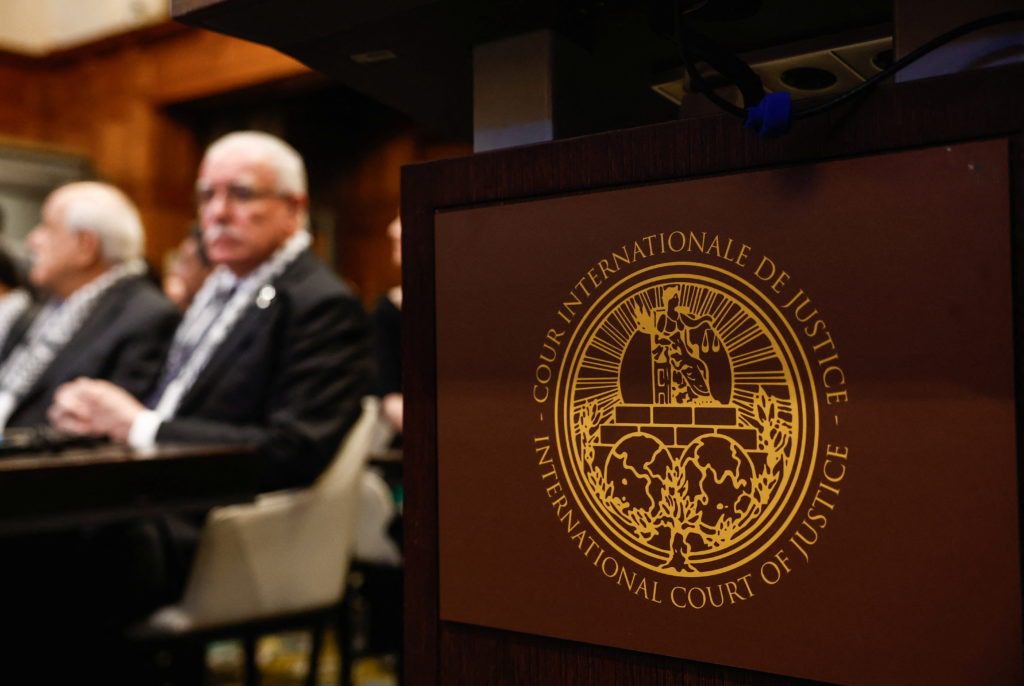
The International Court of Justice has called on Israel to ease the flow of humanitarian aid into Gaza, emphasizing its obligation to provide Palestinians with the basic necessities for survival. The ICJ ruling, issued Wednesday, comes as aid organizations race to deliver life-saving supplies during a fragile ceasefire that began earlier this month.
Although the ICJ’s advisory opinion is not legally binding, the court said it carries “significant legal weight and moral authority.” ICJ President Yuji Iwasawa stressed that Israel must facilitate relief operations run by the United Nations and its agencies, specifically highlighting UNRWA, the UN agency serving Palestinian refugees. Israel had previously barred UNRWA, accusing some staff of involvement in the October 7, 2023, Hamas attack, but the ICJ found no evidence to support these claims.
Israel swiftly rejected the ruling. Foreign ministry spokesman Oren Marmorstein said Israel “categorically rejects the ICJ’s advisory opinion,” describing it as a predictable political maneuver under the guise of international law. Another Israeli official clarified that while Israel cooperates with other UN agencies in Gaza, it will not work with UNRWA.
The ruling prompted immediate responses internationally. Norway announced plans to push for a UN General Assembly resolution demanding that Israel lift restrictions on aid. Meanwhile, Palestinian delegate Ammar Hijazi urged the global community to ensure Israel complies, warning that the responsibility lies with nations to enforce humanitarian norms.
Humanitarian operations continue under difficult conditions. Since the ceasefire began on October 10, the UN World Food Programme reported that 530 trucks carrying over 6,700 tonnes of food have reached Gaza, enough to feed nearly half a million people for two weeks. Yet aid delivery remains far below the WFP’s daily target of 2,000 tonnes, with only around 750 tonnes entering each day.
The ICJ reiterated that Israel, as the occupying power, has a dual responsibility: to provide the local population with essential supplies and to refrain from blocking aid. The court reminded Israel that international law forbids using starvation as a method of warfare.
The advisory opinion follows a broader request from the UN to clarify Israel’s obligations toward ensuring unhindered humanitarian support. Evidence presented to the ICJ in April included testimony from dozens of nations and organizations, addressing UNRWA’s role and the delivery of aid. While some, including a US official, questioned UNRWA’s impartiality and cited Hamas’s alleged misuse of its facilities, the ICJ noted that UNRWA cannot be quickly replaced without a structured transition plan.
Palestinian representatives have accused Israel of using aid restrictions as a “weapon of war,” intensifying the humanitarian crisis in Gaza. The ICJ ruling adds to a growing series of international legal challenges against Israel. In July 2024, the court declared Israel’s occupation of Palestinian territories unlawful and called for an immediate end. Additional allegations, including claims under the 1948 UN Genocide Convention and warrants issued by the International Criminal Court for both Israeli and Hamas leaders, underscore the escalating legal scrutiny.