

























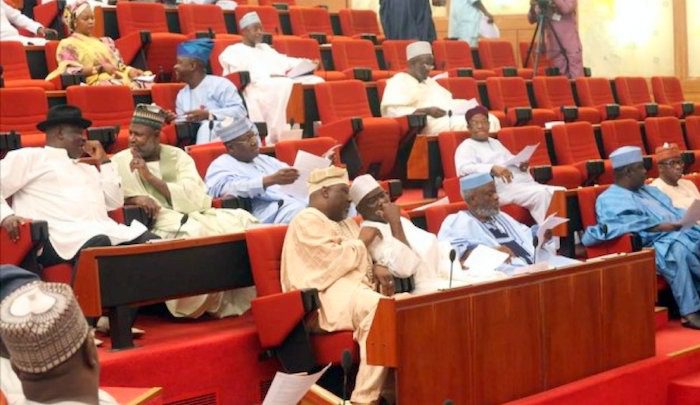
The true reasons behind the Senate’s decision to remove the “real-time” requirement from the 2026 Electoral Bill have finally come to light. Senator Opeyemi Bamidele, representing Ekiti State, recently addressed the controversy through a statement from his media directorate, providing a detailed breakdown of why the legislative body opted for a more cautious approach to electronic result transmission.
At the heart of the debate was Clause 60(3), a provision that would have legally mandated presiding officers to upload results to the INEC Result Viewing Portal (IReV) immediately from polling units. While the Senate initially considered the move, the clause was eventually redrafted to allow for electronic transmission without the strict “real-time” constraint. Senator Bamidele noted that while the idea is something any modern parliament would want to embrace, Nigeria’s current infrastructure simply isn’t ready to support it on a national scale.
To back this stance, the lawmaker pointed to sobering data regarding the country’s digital landscape. Internet penetration in Nigeria sits at roughly 44.53 percent, with broadband coverage hovering around 70 percent as of 2025. Bamidele highlighted that Nigeria ranks significantly lower than the global average on the Speedtest Global Index, placing 85th out of 105 countries for mobile network reliability and 129th for fixed broadband.
The disparity is even more glaring when compared to global leaders. While countries like the UAE and Qatar boast mobile speeds exceeding 500 or 600 mbps, Nigeria’s average struggles at around 44.14 mbps. The Senator argued that forcing a “real-time” mandate onto a network that ranks near the bottom of 150 countries for fixed broadband could jeopardize the entire electoral process.
Beyond the internet, the nation’s power crisis remains a major hurdle. Bamidele revealed that approximately 85 million Nigerians still live without access to the national grid. Despite a generation capacity of up to 13,500 megawatts, the country can only reliably distribute about 4,500 megawatts to homes and businesses. He expressed optimism that the Electricity Act of 2025 would eventually fix these gaps, but cautioned that the current reality cannot be ignored.
Ultimately, the Senate Leader emphasized that lawmaking must be guided by facts rather than public emotion. He maintained that the decision to remove the “real-time” wording was a move to ensure the electoral framework is functional and stable. By aligning the law with Nigeria’s actual technical capabilities, the Senate aims to protect the integrity of the vote while still pushing for long-term transparency.