


































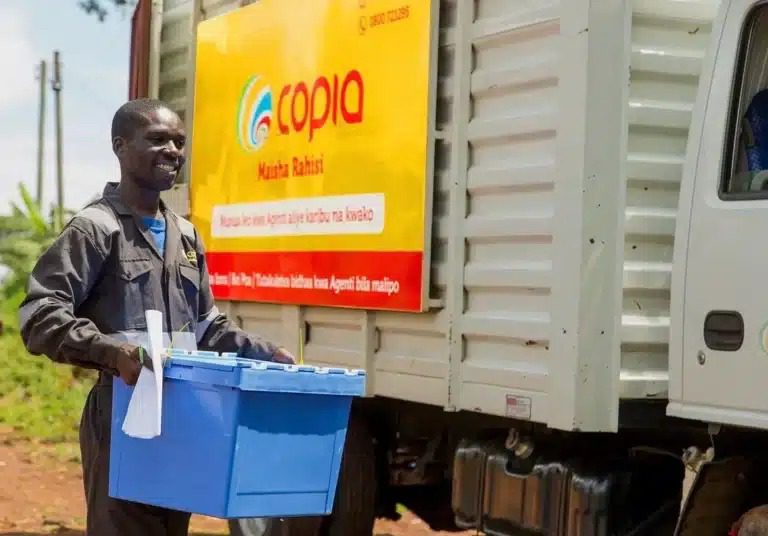
The long-running effort to save Copia Kenya has reached a definitive turning point as the company’s insolvency case moves to the High Court of Kenya. According to a formal notice published recently, the very administrators appointed to rescue the business in 2024, Anthony Makenzi Muthusi and Julius Ngonga of KPMG, have now become the petitioners in a legal process that signals the end of the road. With a hearing scheduled for May 11, creditors are being called upon to either support or challenge the petition, effectively moving the saga from a restructuring attempt to a final legal settlement.
This transition is significant because the administration phase was originally designed to give the company breathing room. The hope was that Copia could stabilize its daily operations, secure new funding, or find a suitable buyer to keep the dream alive. However, the fact that the administrators themselves are now asking the court to step in suggests that these efforts have failed to bear fruit. Reports indicate that the atmosphere within the company had already soured mid-way through 2024, when staff were warned that the struggle to keep the business afloat had been unsuccessful and that liquidation was the most probable outcome.
The fall of Copia is particularly jarring because it was far from a “paper” startup. Unlike many ventures that struggle to find an audience, Copia built a tangible and impressive logistics network that reached deep into rural and peri-urban areas across Kenya and Uganda. By utilizing a massive network of 50,000 agents, the company successfully delivered essential household goods like soap, cooking oil, and sugar to hundreds of thousands of families who are typically overlooked by major retail chains. At its height, the company employed around 1,800 people and proved that its delivery infrastructure actually worked; it was the financial sustainability that proved impossible to maintain.
The underlying lesson from this collapse is a sobering one for the African tech ecosystem. Experts point out that rural e-commerce on the continent demands an extraordinary amount of patience and massive upfront capital. Despite raising over $120 million from various impact investors and development finance institutions, the funds simply weren’t enough to bridge the gap toward profitability. The reality is that such a model likely requires a decade or more of “patient” capital—a timeline that the venture capital market, scorched by the funding slowdown of 2022 and 2023, is no longer willing to accommodate.
Copia now joins a sobering list of African logistics and commerce firms that scaled rapidly only to hit a wall when investor sentiment shifted. With other players like Sendy entering administration and companies like Twiga and Wasoko scaling back their ambitions, a clear pattern has emerged. High delivery costs, razor-thin profit margins, and a squeeze on consumer spending have clashed with investor demands for immediate returns. In the end, Copia might be remembered not just as a failed business, but as a classic example of what happens when the ambitious timelines of modern finance fail to align with the physical realities of African infrastructure.