
























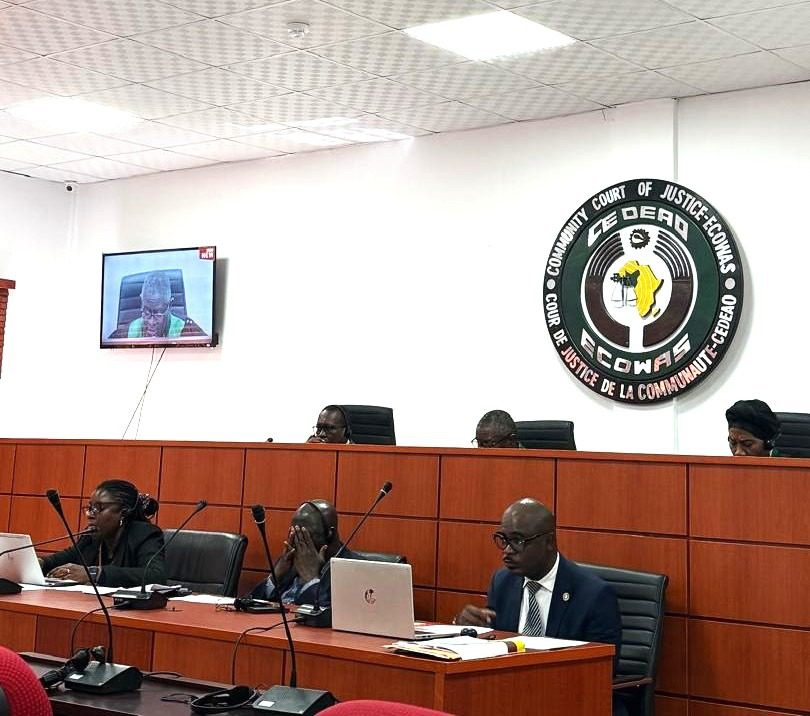
The ECOWAS Community Court of Justice began a high-level engagement in Sierra Leone on Monday, bringing together the Court, the Competent National Authority (CNA), and other key stakeholders to review the enforcement of its judgments. Scheduled to run from February 9 to 13, 2026, the meeting is part of activities marking ECOWAS’s 50th anniversary.
The week-long session is designed to strengthen collaboration between the Court and national authorities, create a platform for sharing best practices, and tackle the challenges that have hindered effective enforcement of judgments. By fostering dialogue with the CNAs, the Court aims to improve compliance, harmonize enforcement procedures across jurisdictions, and build the capacity needed to ensure its rulings are applied consistently.
According to a statement released on Sunday, discussions will focus on crafting actionable strategies to raise enforcement rates, addressing practical constraints, and promoting sustainable cooperation between the Court and national authorities. A special forum will provide an overview of the Court’s enforcement mechanisms and the broader enforcement landscape from a government perspective.
Civil society organizations will also take part, contributing insights on challenges and opportunities for improving enforcement. Deliberations will explore next steps and establish a roadmap for future engagement between the Court and national authorities.
The programme begins with courtesy visits to top government officials, including the Minister of Planning and Development, Minister of Foreign Affairs, Attorney General, Minister of Justice, the Chief Justice, and the Speaker of Parliament. Senior figures such as the Chairperson of the Human Rights Commission of Sierra Leone and the President of the Bar Association will also participate.
Leading the Court’s delegation is its President, Hon. Ricardo Cláudio Monteiro Gonçalves, accompanied by Vice President Sengu Mohamed Koroma, directors, and other key staff members. The meetings in Sierra Leone represent a significant step toward ensuring the Court’s judgments are respected and effectively enforced across the region.