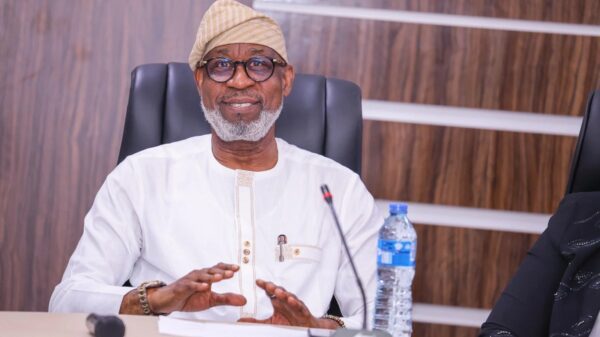






















The National Chairman of the All Progressives Congress, Abdullahi Ganduje, has hinted that the party may be willing to welcome former Kano State Governor Rabiu Musa Kwankwaso back into its fold, describing it as a moral responsibility to support a “political son” in distress.
Speaking at the APC national secretariat in Abuja after a private meeting with the Minister of State for Housing and Urban Development, Yusuf Ata, Ganduje likened Kwankwaso’s situation to “a fish running out of water,” suggesting that the former governor, now leader of the New Nigeria Peoples Party, might soon seek refuge in the APC. He said it would be wrong for the party to shut its doors against someone who had once been part of its political family.
“When a fish is running out of water, that’s exactly what is happening,” Ganduje said. “If the water is drying up, the fish has to find its way back to water. It is only right that we accommodate him.”
However, his remarks were met with sharp opposition from Ata, who cautioned that Kwankwaso’s return could ignite fresh tension within the Kano APC. He argued that Kwankwaso no longer holds political relevance in the state, adding that President Tinubu is aware of how unpopular he has become among the grassroots.
“Kwankwaso is no longer attractive in Kano,” Ata said. “He is coming to the APC on his own, not because we asked him to. His return could cause serious internal conflict.”
The minister further noted that the once-dominant “red cap” movement that symbolized Kwankwaso’s political following has faded drastically. “Even in large gatherings such as mosques, you can hardly find a handful of his supporters these days,” he added.
Although Ata maintained his personal opposition to Kwankwaso’s reentry, he acknowledged that he would defer to Ganduje’s final decision as the leader of the party in the state.
Kwankwaso, once Ganduje’s ally and later his fiercest rival, has not officially indicated interest in returning to the APC. Still, the renewed conversation around his political comeback underscores the deep divisions and strategic maneuvering that continue to shape Kano’s political terrain ahead of the 2027 general elections.