

























Enugu State Governor, Dr. Peter Mbah, has inaugurated a special committee to examine the state’s tax policies, levies, and fees, aiming to enhance fairness, transparency, and revenue efficiency. The panel will benchmark Enugu’s revenue practices against those of Lagos State, the Federal Capital Territory, and other South East states, focusing on land use charges, Certificate of Occupancy fees, market levies, stall rents, business registration, and signage advertisement fees.
The nine-member committee is chaired by the Solicitor-General of Enugu State, Ikechukwu Ezenwukwa, alongside the Senior Special Assistant on Revenue Mobilisation, Adenike Okebu. Its members also include representatives from organised labour, civil society, market associations, and the business community. Among them are Comrade Ben Asogwa, Chairman of the Trade Union Congress, Enugu State; Chief Chinwuba Igwesi, Chairman of the Enugu State Market Association; and Engr. Nnanyelugo Onyemelukwe, First Deputy President of ECCIMA. The panel has been given two weeks to complete its assignment.
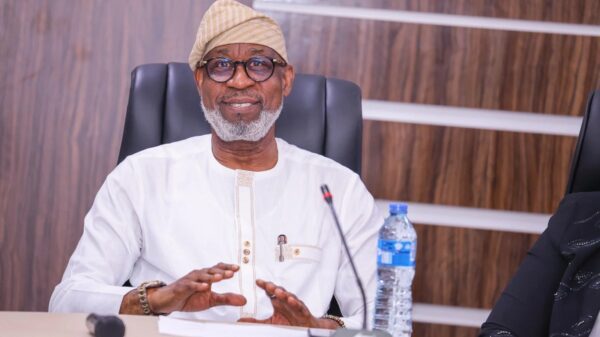
Speaking at Government House in Enugu, Governor Mbah, represented by the Secretary to the State Government, Prof. Chidiebere Onyia, said the committee was established in response to public complaints about taxes and other state-controlled revenue streams. He outlined the committee’s mandate to review existing revenue laws, assess their impact, identify duplications and multiple taxation, examine tax compliance culture, and evaluate the fairness and efficiency of current rates and collection methods.
The governor emphasised the importance of stakeholder engagement, directing the committee to conduct surveys and interviews with property owners, traders, local government officials, civil society organisations, and business leaders.
Mbah highlighted reforms introduced since his administration took office, noting the shift from fragmented revenue collection to a unified, data-driven system. Cash collections across all Ministries, Departments, and Agencies were halted in favour of digital payments, ensuring real-time monitoring and reducing opportunities for fraud. He also introduced a performance appraisal framework linking revenue targets to each agency’s operational mandate.
“Revenue is not just a fiscal tool. It is a moral obligation,” Mbah said. “Every naira collected must translate into better schools, safer roads, cleaner water, and a brighter future. Our approach is rooted in transparency, traceability, and accountability.”
Chairman of the committee, Ikechukwu Ezenwukwa, praised the governor’s commitment to listening to the people and promised that the panel would carry out its work diligently, reflecting the confidence placed in them.