


































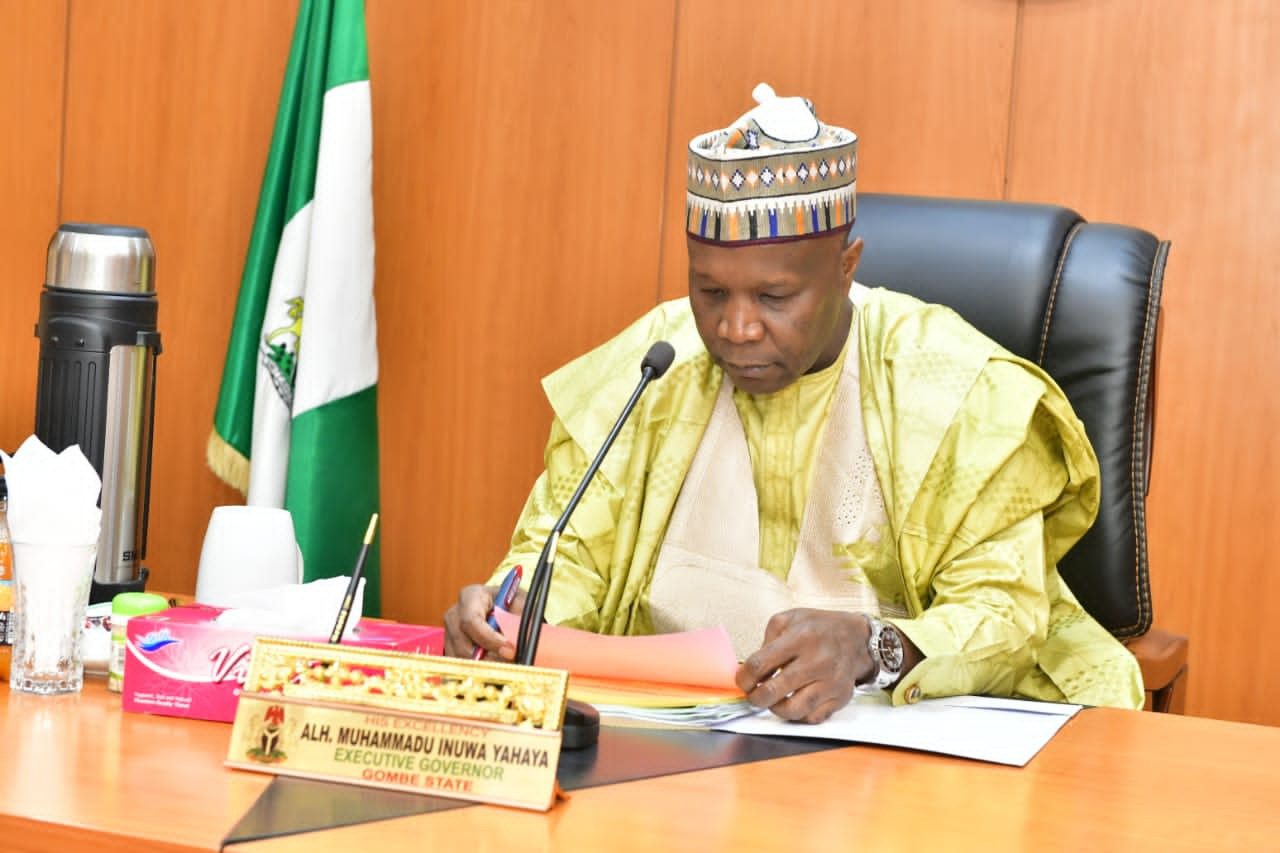
Gombe State Governor, Muhammadu Inuwa Yahaya, has unveiled a forward-looking framework aimed at curbing farmer-herder conflicts, banditry, and related security challenges, even as the state continues to maintain low levels of such incidents. The plan, captured in a White Paper, reflects his administration’s commitment to proactive governance and sustainable conflict resolution.
The Governor announced the formation of a high-level White Paper Implementation Committee on Grazing Reserves, Forest and Game Reserves, and Cattle Routes. The committee brings together security experts, legal professionals, and geospatial technology specialists, tasked with turning government policy into actionable and enforceable measures.
Governor Yahaya explained that this committee follows the work of an earlier Assessment Committee, which evaluated the challenges surrounding grazing reserves, forest and game reserves, and cattle routes. Their recommendations, now approved by the State Executive Council, form the foundation of the White Paper.
“This initiative aims to dismantle outdated and unregulated grazing practices, strengthen security and legal frameworks, and prevent farmer-herder clashes, while ensuring food security and peaceful coexistence across the state,” the Governor said.
Highlighting the broader context, he noted that conflicts between farmers and herders remain one of Northern Nigeria’s most persistent challenges, often fueled by competition over land and resources during critical farming periods. He pointed out that encroachment on grazing reserves and cattle routes has worsened the situation and criticized previous administrations for failing to tackle the problem with the necessary political will.
Governor Yahaya stressed that Nigeria’s large swaths of underutilized land could be harnessed to modernize animal husbandry, contain grazing activities, and reduce the long-distance movement of cattle that often fuels insecurity and banditry. Restoring encroached grazing reserves, forest reserves, and cattle routes is central to safeguarding livelihoods for both farmers and herders.
With over 80 percent of Gombe State’s population engaged in crop and animal production, the Governor emphasized the importance of political resolve in protecting lives, property, and economic productivity. As Chairman of the Northern States Governors’ Forum, he expressed confidence that modern grazing techniques and the phasing out of outdated practices would create a sustainable model for Gombe State, Northern Nigeria, and the country as a whole.
The Governor tasked the committee with implementing the White Paper’s recommendations, overseeing the restoration and management of grazing and forest reserves, and ensuring all actions comply with the rule of law to promote mutual respect and peaceful coexistence.
In response, the committee Chairman, AIG Babaji Sunday, expressed gratitude for the trust placed in the members. He described their role as both an honor and a responsibility and assured the Governor that the committee would leverage modern technologies and best security practices to achieve its mandate.
The committee is expected to engage stakeholders, roll out practical strategies, and ensure the effective implementation of White Paper policies in line with the state government’s commitment to security, food sufficiency, and sustainable development.