
































Iran carried out another round of missile strikes across parts of the Middle East on Wednesday, even as fresh signals from U.S. President Donald Trump about possible talks with Tehran helped calm global markets.
Oil prices fell sharply while Asian stocks climbed, reflecting renewed hopes that tensions could ease after nearly a month of fighting. Trump, whose tone has shifted between firm warnings and open diplomacy, said discussions with Iran were already underway.
Speaking from the Oval Office, he hinted at a recent development he described as significant, linking it to activity around the Strait of Hormuz. While he did not go into detail, he suggested the move showed the United States was engaging with the right counterparts.
Iran has not confirmed any formal negotiations. Still, reports monitored by Zoyols indicate that Washington may have sent a detailed proposal through Pakistan, which has stepped forward as a possible mediator. It remains unclear whether Israel is fully aligned with that effort.
Trump also repeated his long-standing position that Iran has agreed it will not pursue nuclear weapons, a claim that ties back to earlier agreements that were later abandoned during his first term.
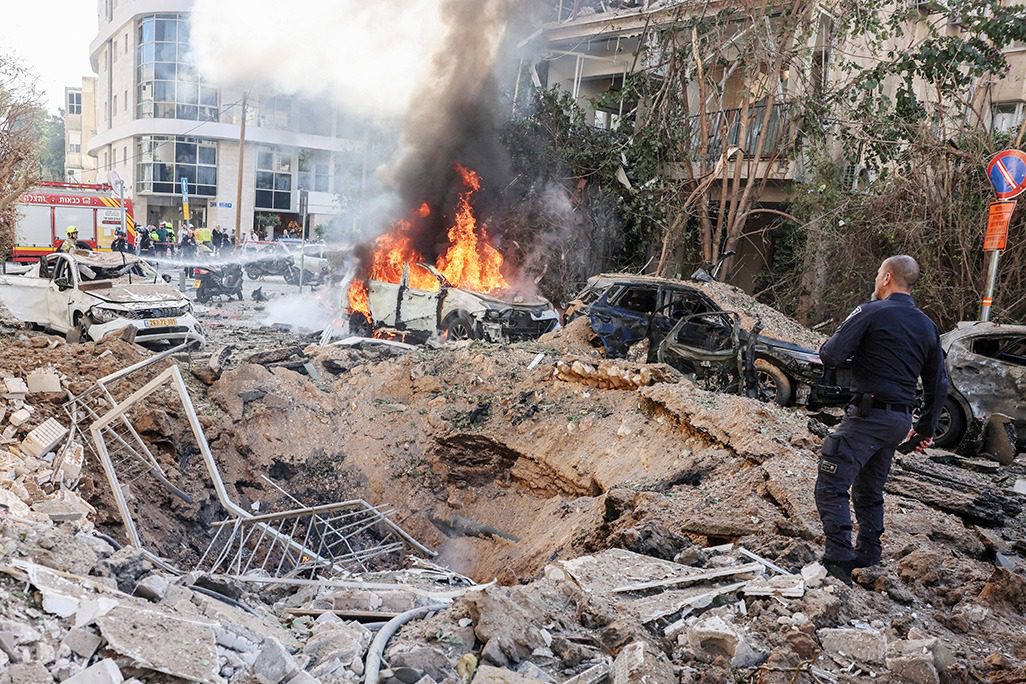
Despite the talk of diplomacy, military activity on the ground has not slowed. Iran’s Revolutionary Guards confirmed launching another wave of missiles, targeting Israel and locations hosting U.S. forces in Kuwait, Jordan, and Bahrain. These strikes are part of what Tehran describes as retaliation against countries it believes are supporting U.S. operations.
In Kuwait, a drone strike hit a fuel facility at the international airport, causing a fire and limited damage. Bahrain activated air raid sirens, while in Jordan, debris from intercepted projectiles landed near the capital without causing casualties. Saudi Arabia reported intercepting several drones in its eastern region.
Israel responded by announcing new strikes on what it described as key Iranian military infrastructure. At the same time, Iran accused Israel of hitting its Bushehr nuclear facility for a second time, a claim that has raised further concern.
For civilians, the conflict is becoming part of everyday life. Residents in Tehran say the sound of explosions and incoming missiles has become routine, adding to the growing strain of prolonged uncertainty.
The situation has also intensified in Lebanon, where Israeli strikes reportedly killed several people in areas near Sidon. Israel has increased its operations against Hezbollah, saying it aims to secure territory up to the Litani River.
The war has continued to draw in neighboring countries. Iraq has reacted strongly to recent strikes on its soil, signaling possible diplomatic action while also allowing certain armed groups to respond.
Attention remains fixed on the Strait of Hormuz, a critical route for global oil supply. Iran has stated that ships from countries it considers neutral will be allowed safe passage, while vessels linked to the United States and Israel could face restrictions.
Earlier threats from Washington to take stronger action if the strait remained blocked were softened after signs of diplomatic progress. That shift helped ease pressure on global oil markets, with prices dropping noticeably.
Still, the situation remains fragile. While there are hints of movement behind the scenes, the continued exchange of strikes shows just how far the region is from stability.