





































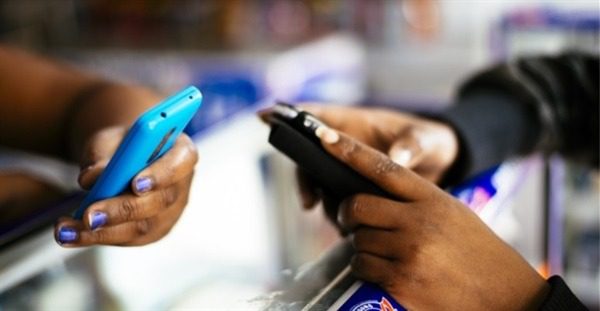
Kenya’s mobile money sector continues to expand as subscriptions climbed to more than 54 million by June, further strengthening the role of mobile phones in the country’s financial system.
Data from the Communications Authority of Kenya showed that mobile money subscriptions rose by 13.2 per cent during the 2025/26 financial year to reach 54.01 million.
The figure represents a penetration rate of 101.3 per cent. The rate exceeding 100 per cent does not mean that more people than the country’s population are using mobile money. It reflects the fact that individuals can hold more than one mobile money subscription.
The growth is happening alongside a wider expansion of Kenya’s telecommunications industry. Active mobile subscriptions reached almost 88 million by June, while smartphone connections rose to 52.26 million.
Mobile data subscriptions also increased by 9.7 per cent year on year to 64.26 million, giving more consumers access to digital applications and online services through mobile networks.
The growing combination of mobile connectivity and digital payments is making the smartphone an increasingly important tool for accessing financial services.
Kenya’s mobile money market, however, remains dominated by one major operator. Safaricom accounted for 88.8 per cent of mobile money transfers at the end of June, according to the regulator. The company also held 69.8 per cent of mobile subscriptions and 64.4 per cent of mobile broadband subscriptions.
Mobile money is also becoming an increasingly important source of income for telecommunications companies. Kenya’s mobile service revenue increased by 3.6 per cent to KSh440.9 billion in 2025.
The largest portion came from other services, which accounted for 42.8 per cent of total mobile service revenue. The category includes mobile money, roaming, bulk SMS and airtime credit.
Data services contributed 28.2 per cent of revenue, while voice services accounted for 25.6 per cent and SMS generated 3.4 per cent.
The figures point to a changing telecommunications market in Kenya, where traditional services such as voice calls and SMS are increasingly sharing the spotlight with mobile data and financial services.
Smartphone adoption is also contributing to the shift. By June, Kenya had 52.26 million smartphones connected to mobile networks, compared with 27.42 million feature phones.
The Communications Authority attributed the increase in smartphone adoption partly to the continued expansion of 4G and 5G networks. Mobile broadband subscriptions reached 54.93 million, representing 85.5 per cent of total mobile data subscriptions.
The regulator said 4G remained the most widely adopted broadband technology, while data consumption over both 4G and 5G networks continued to increase.
As more Kenyans move towards internet based services, traditional communication patterns are also changing. Domestic SMS traffic fell by 0.3 per cent during the financial year to 57.1 billion messages, with the regulator pointing to the growing use of internet messaging platforms such as WhatsApp as one factor behind the decline.
The latest figures highlight how deeply mobile money has become embedded in Kenya’s digital economy. What began largely as an additional service offered through telecommunications networks has developed into a major part of the financial activity taking place through the country’s mobile infrastructure.