






































Fresh fighting has erupted between Tigrayan forces and Ethiopia’s federal troops, raising renewed fears that the country could be heading back toward a wider conflict less than four years after a peace agreement ended the devastating Tigray war.
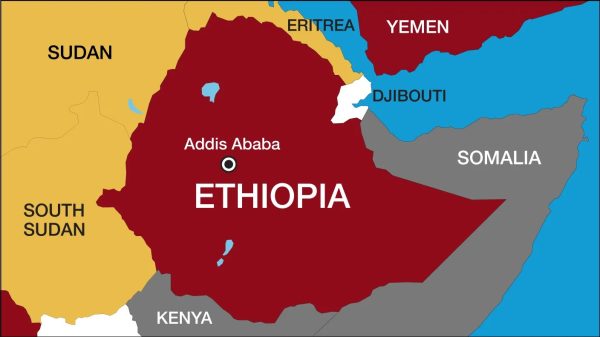
Fighting was reported in parts of the neighbouring Afar region, where Tigrayan forces reportedly took control of several towns and airports while engaging federal troops. The latest clashes came after months of growing tensions, sporadic fighting and drone strikes in and around the Tigray region.
Two humanitarian workers operating in Afar said fighting broke out late Tuesday in the towns of Abala and Erebti. One of the workers said there were already concerns that the violence could spread, as humanitarian teams moved food supplies to people displaced by the fighting.
A foreign security source also confirmed the clashes and said Tigrayan forces had taken control of Abala, a town situated in the mountain ranges along the border with Tigray. Federal forces had maintained a presence in the area in recent months.
Erebti, meanwhile, is located about 100 kilometres further inside Afar.
A former senior Tigray People’s Liberation Front official claimed that Tigrayan forces had also taken control of Berhale, Megale, Dalul and Konoba, although those claims had not been independently confirmed. He also said federal forces were rapidly retreating from some positions.
The Tigray regional government said the latest fighting followed what it described as heavy attacks by federal forces on Tuesday. According to the regional authorities, aircraft, drones and artillery were used in the bombardment.
The Tigray government described the military response as a defensive operation against what it called an invasion. The claims about the initial bombardment could not be independently verified, while federal authorities in Addis Ababa had not publicly responded to the allegations at the time of reporting.
The renewed fighting has also affected air travel. Tigrayan forces reportedly seized control of airports in Mekelle and Shire, with reports also indicating that Axum airport had been taken over.
Ethiopian Airlines subsequently suspended flights to the three airports.
An employee at Alula Aba Nega Airport in Mekelle said workers were told to return home after their supervisor received information that Tigrayan forces had taken control of the facility. A small number of federal police officers were believed to be guarding the airport, although their situation remained unclear.
The developments have triggered concern among former TPLF figures as well. Getachew Reda, a former TPLF leader who later broke with his former colleagues and joined the federal government, described the renewed fighting as heartbreaking.
Getachew alleged that TPLF leaders had launched a major offensive against government positions in Afar and Amhara. The reported fighting in Amhara had not been independently confirmed.
The latest escalation comes only days after the TPLF announced that it had joined a new alliance involving armed groups opposed to the federal government. Ethiopia has faced several insurgencies in recent years, particularly in Oromia and Amhara, two of the country’s largest and most politically significant regions.
The TPLF previously dominated Ethiopian politics for decades. It controlled the federal government from 1991 until 2018, when Prime Minister Abiy Ahmed came to power and began a political shift that eventually pushed the TPLF into opposition.
Relations between the TPLF and Abiy’s government deteriorated further, eventually leading to the Tigray war that began in 2020. The conflict caused enormous loss of life, with African Union estimates putting the death toll at around 600,000.
The Pretoria Peace Agreement, signed in 2022, brought the war to an end and created an uneasy period of relative calm. However, several provisions of the agreement remain unresolved, while tensions between the federal government and Tigrayan authorities have continued.
By late 2025, clashes had resumed, with the federal government carrying out drone strikes in Tigray and increasing the presence of troops around the regional border.
Tigray is still struggling to recover from the previous war. Around one million people remain displaced, while major humanitarian and political issues linked to the peace agreement have yet to be fully addressed.
Rights groups have also accused Tigrayan authorities of carrying out forced recruitment as concerns over another conflict have grown. The Tigray authorities have faced additional accusations from the federal government of developing links with neighbouring Eritrea and armed groups operating elsewhere in Ethiopia.
The renewed confrontation is unfolding against a backdrop in which Ethiopia’s military capabilities have also changed significantly since the last war. The federal government has expanded its production and use of military drones, giving its forces a significant technological advantage compared with the previous conflict.
For a country that has yet to fully recover from the devastating Tigray war, the latest clashes have once again raised questions about whether the fragile peace can survive the growing confrontation between the federal government and Tigrayan forces.