
























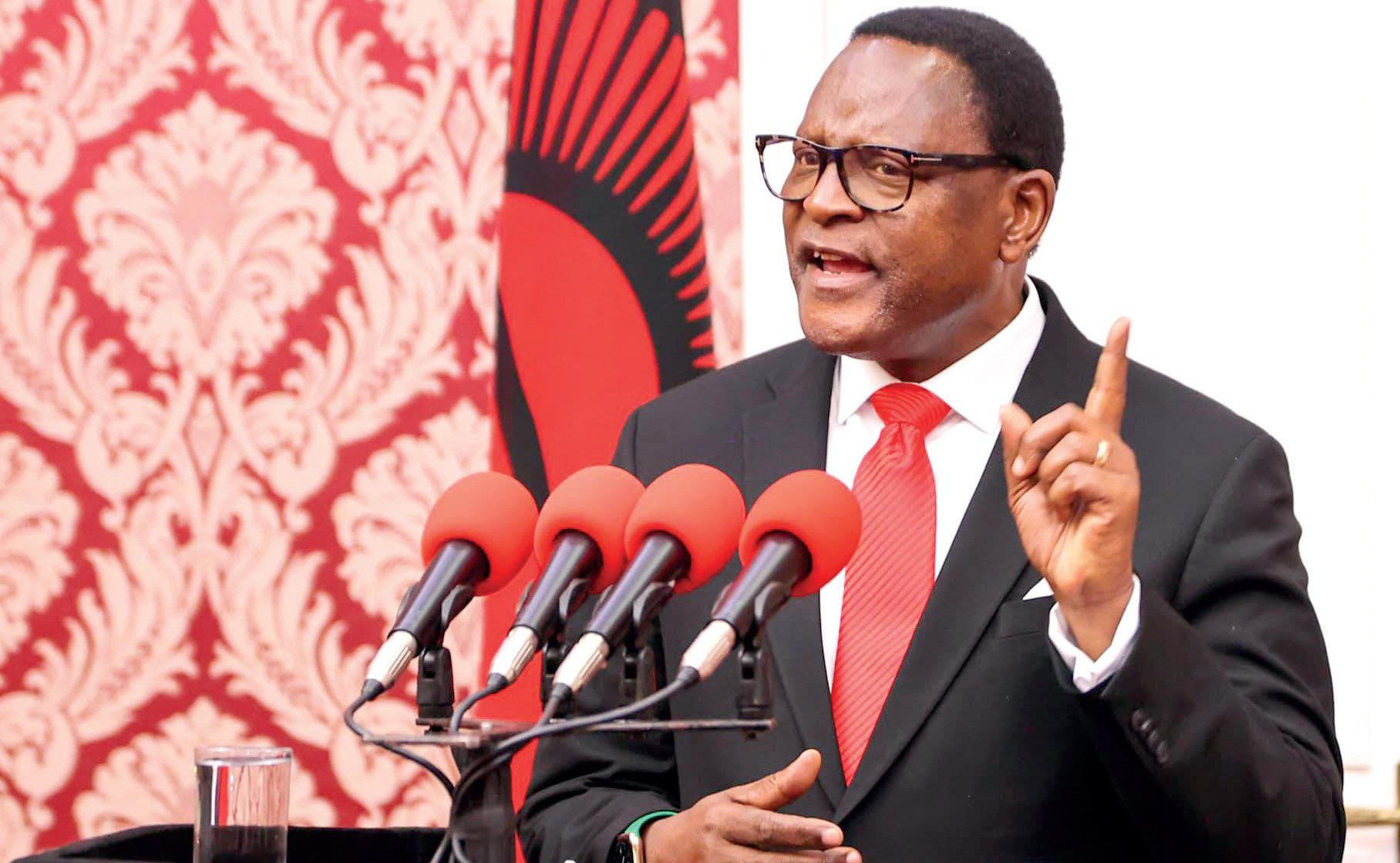
Malawians are heading to the polls today to elect a new president, but the vote is cast against a backdrop of deep economic hardship and widespread public dissatisfaction. The race is dominated by two familiar faces: the incumbent, Lazarus Chakwera, and his predecessor, Peter Mutharika, a situation that has left many voters feeling as though they’re choosing between two sides of the same coin.
Of the 17 presidential candidates, three have previously held the nation’s highest office, and another is the current vice president. The crowded field has done little to inspire confidence, as many Malawians have lost faith in the political class to deliver meaningful change in one of the world’s poorest countries. “Whether it is Chakwera or Mutharika, nothing changes for us,” said Victor Shawa, a 23-year-old unemployed man in the capital, Lilongwe. “It’s like choosing between two sides of the same coin.”
A Battle of Two Presidents
The election is a third showdown between Chakwera and Mutharika. Chakwera, a 70-year-old evangelical preacher, is seeking a second term after a mixed performance during his first, which was handed to him only after the 2019 election was nullified over rigging claims. His tenure has been overshadowed by climate-related disasters and an economic crisis marked by soaring inflation, chronic fuel shortages, and corruption scandals. Despite these challenges, his campaign calls for continuity to “finish what we started,” pointing to several road, school, and hospital construction projects.
Mutharika, an 85-year-old former law professor, is attempting a comeback. His first term, which began in 2014, was also marked by food shortages and corruption scandals. Known affectionately by his supporters as “Adadi” (father), he is campaigning on a “return to proven leadership” and a promise to revive the struggling economy. He argues that things were better during his time in office.
The Economy is Everything
For most Malawians, the vote comes down to one issue: the economy. Polls by the Institute of Public Opinion and Research (IPOR) show Mutharika with a lead, but with neither candidate expected to secure the required 50% plus one vote for an outright victory, a second-round runoff is considered almost inevitable.
“The economy, the economy, and the economy—in that order—is what is driving this election,” said Boniface Dulani, a politics lecturer at the University of Malawi. He explained that inflation, fuel shortages, and corruption have significantly eroded public trust in Chakwera, whose support has nearly halved since he took office in 2020. While Chakwera’s administration has faced external shocks like the COVID-19 pandemic and Cyclone Freddy, critics argue that these events only exposed the government’s lack of a clear strategy. As Bertha Chikadza, president of the Economics Association of Malawi, put it, “When people cannot afford food, when jobs are scarce, when inflation is out of control—those factors influence the vote more than anything else.”