



















There is a plea, almost a prayer point, that echoes from many Nigerian homes as families prepare to leave for the day: K’a ma rin nigbati ebi ba npa ona. It translates loosely to, “May we not walk when the road is hungry.” It is a cautionary plea so weighted with genuine fear that it reliably draws the loudest collective “Amen.”
The road, it seems, was ravenous on the day Derin (Genoveva Umeh) and Fola (Kunle Remi) stood at the altar and exchanged their vows. “Now, you are ready to step into a new chapter filled with joy and hope,” the priest announced. Joy and hope. If only he had added a desperate prayer for safe passage as they embarked on their journey.
In a deeply religious country, where vehicles are blessed and passengers prayed over, safety on the highway is never guaranteed. Anyone traveling Nigeria’s expansive road network knows they might find themselves at the mercy of kidnappers—some who force their victims into fates with no return, others who hold them for ransom, or those whose motives twist into something else, something entirely uncertain.
For actor and director Daniel Etim Effiong, this agonizing uncertainty was not merely an abstract thought but the fertile ground for a story he felt compelled to tell. His desire solidified during a period when he felt creatively drained by Nollywood, worn down by a career that no longer offered personal fulfillment. At this crucial crossroads, he chose to step away from acting solely in others’ projects to tell his own stories. “You tell the stories you like to tell, tell the stories that you feel that you deserve,” he reflected. “And that’s what I set out to do.”
His film, The Herd, landed precisely at a moment of acutely escalated kidnappings across Nigeria, particularly surging in the north-central region. Violent abductions, a recurring threat for years, intensified in boldness and frequency, transforming routine travel, school attendance, and even simple church gatherings into acts of profound risk.
Official figures underscore this crisis. Reports indicate that between July 2024 and June 2025, a devastating 4,722 people were kidnapped across the country, with ransom payments reaching an estimated ₦2.57 billion. The United Nations specifically reported that between November 17 and 30 alone, no fewer than 402 people, mostly schoolchildren, were abducted across Borno, Kwara, Kebbi, and Niger states. It is against this grim reality that Effiong’s film achieves its sharpest resonance, deliberately blurring the line between cinematic fiction and the daily trauma facing millions of Nigerians.
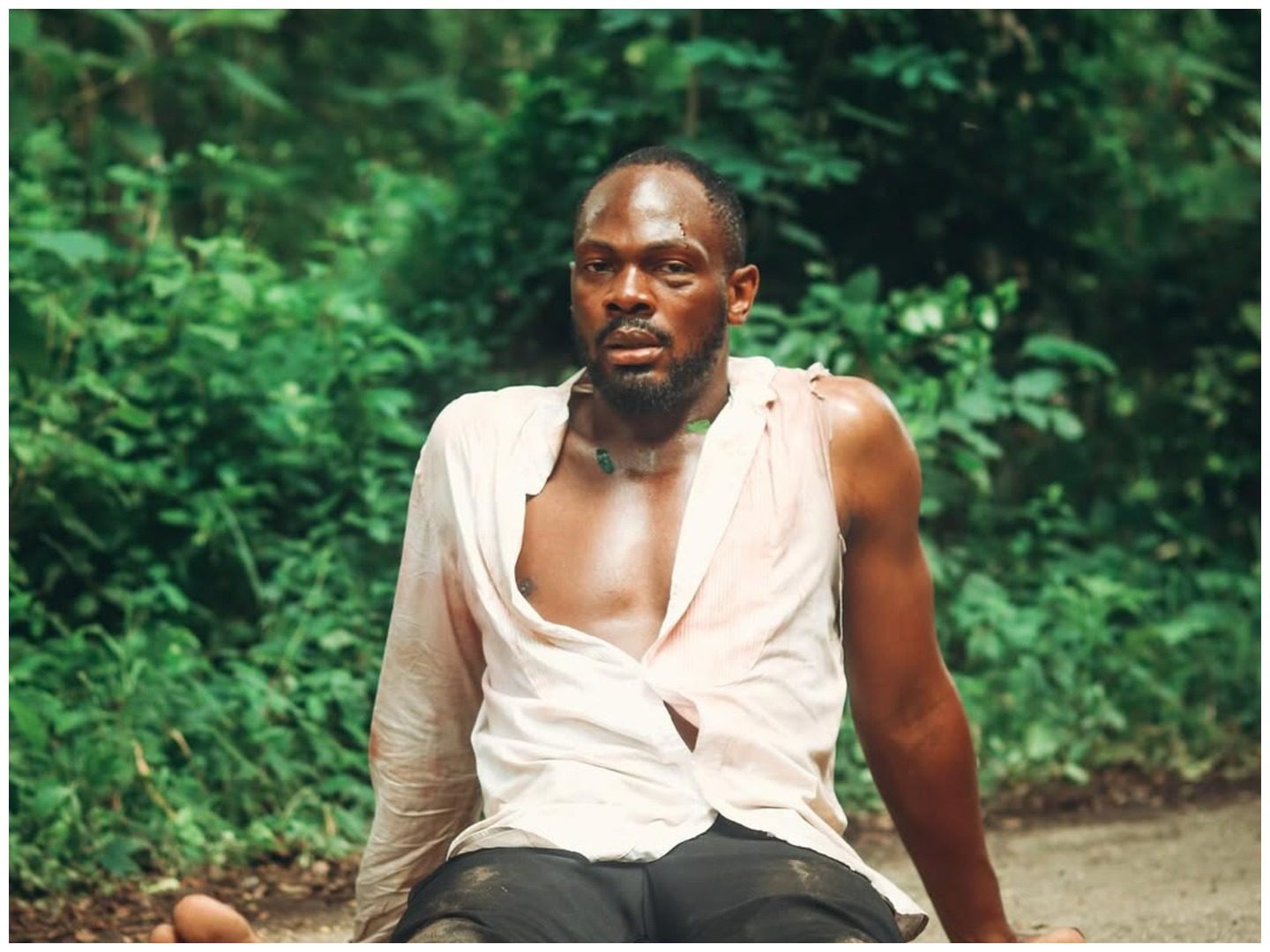
The Herd began as a simple premise: a man traveling to Ekiti to attend his best friend’s wedding is kidnapped, and his wife goes to unimaginable lengths to bring him home.
The film’s emotional weight is heavily drawn from Effiong’s own harrowing family history. When he was just one year old, his father was arrested by the military government and imprisoned for allegedly plotting against Ibrahim Badamasi Babangida. His mother relentlessly fought for his release until she tragically died when Effiong was four, during one of her arduous journeys from Benin to the prison in Kano. After his father’s release in 1993, Effiong recalled road trips across the country—journeys that felt like a precious act of reclamation. Today, the same roads that hold those fond memories are fraught with risks he considers unthinkably high for his own children.
From the start, Effiong intended The Herd to be more than just entertainment. The narrative navigates moral dissonance and violence with a brutal urgency. A bride is widowed in mere seconds; a friend is faced with choices that test the very limits of loyalty and sanity; and families are thrust into situations that feel surreal yet agonizingly familiar.
The script, crafted by Lani Aisida, layers complex themes: insecurity, prejudice, and even religious contradiction. The film presents bandits who pause their violence for prayer, pastors who double as organ traffickers, and a fleeting moment of identity shaming when Emeka (Emeka Nwagbaraocha) mocks Gosi’s inability to speak the Igbo language. These stark juxtapositions underscore the film’s central question: the rituals and identities people cling to, even as the social structures around them utterly fail.
Away from the forest’s brutality, the film’s tension shifts to a quieter, socially sanctioned cruelty. Adamma, (Linda Ejiofor Suleiman) races to raise the $\text{₦}50$ million ransom, only to be confronted by her in-laws’ caste prejudice because she is Osu. In desperate need of financial support, she offers to end her marriage just to secure their help. In a story preoccupied with violence and captivity, this societal cruelty hits just as hard, revealing how entrenched hierarchies continue to define and destroy lives.
The film’s resonance has been undeniable, quickly topping Netflix charts in Nigeria, Kenya, and South Africa, with viewers praising its unflinching realism. Much of this authenticity stems from rigorous research. Lani Aisida’s script was informed by survivor accounts, detailed reports on kidnappings across Nigeria and the Sahel, studies of armed groups’ migration patterns, and even bandits’ social media activities. Director Effiong further deepened this foundation with conversations with security agents and a deep reflection on his own family history.
Still, the film drew sharp criticism from some quarters. Concerns were raised that it stereotyped an ethnic group, and calls for its ban were heard. Bashir Ahmad, a former Special Assistant on Digital Communications to former President Muhammadu Buhari, publicly voiced this concern. “The reason why some Arewa people are angry about The Herd movie is not because we are denying the reality of banditry… It is about the dangerous consequences of profiling an entire ethnic group and region that has already suffered immensely from years of insecurity,” he wrote. He argued that the film paints Fulani herdsmen as “armed kidnappers,” a claim Effiong strongly refutes.
Effiong maintains that the film’s portrayal is far more complex. He insists that The Herd was never intended as a tribal or religious indictment but as an urgent study of how profoundly divided the country has become. “The story takes on the many places where intolerance shows up in Nigeria, whether religious or tribal. And even when you narrow it further to our different groups, there’s still division. With the Igbos, there’s division. With the terrorists and the bandits, there’s division,” he asserted, making it clear the film is a mirror held up to Nigeria’s systemic fractures.