
























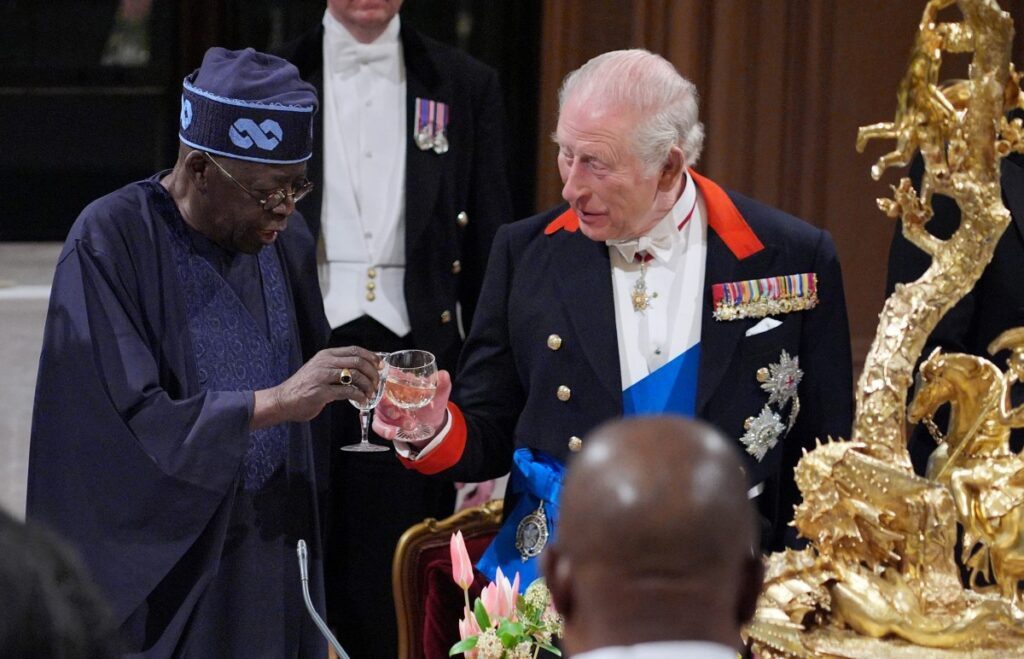
President Bola Tinubu’s recent state visit to the United Kingdom, spanning March 17 to 19, 2026, has sparked significant debate regarding the actual benefits of such high-level diplomatic engagements. While the President is no stranger to British soil—having made at least nine trips since his inauguration in 2023 for various private and working vacations—this particular visit was framed as a “monumental” diplomatic event. He was received by King Charles and Prime Minister Keir Starmer, yet the optics of the trip were immediately clouded by tragedy at home.
On the very eve of his departure, a wave of violence struck Maiduguri. Bombs targeted crowded areas including the Monday Market, the Post Office, and the University of Maiduguri Teaching Hospital, leaving at least 27 people dead and over 100 injured. Many Nigerians questioned whether the Commander-in-Chief should have proceeded with a ceremonial state visit while the nation mourned, or stayed to direct the emergency response to such a devastating massacre.
The outcome of the visit, analyzed through the lens of the trade Memoranda of Understanding signed in London, suggests a partnership that feels decidedly one-sided. The eight core trade agreements appear heavily tilted in favor of British commercial expansion rather than Nigerian industrial growth. These deals include regulatory approvals for the UK fintech firm ‘Wise’ to enter the Nigerian market and plans for British developers to explore dairy production. Furthermore, a subsidiary of Associated British Foods committed £24 million to a manufacturing plant in Lagos, while several British educational institutions, including Wellington College and the University of West England, announced plans to expand their footprint in Nigeria.
While these investments were touted as gains, they pale in comparison to the controversial agreements regarding the transfer of prisoners and those who have overstayed their visas back to Nigeria. Critics argue that the administration has no business taking on the burden of those convicted under British law. This policy has faced accusations of being rooted in a double standard; while roughly 80% of the UK prison population is white, there are no equivalent high-profile agreements to deport prisoners of European descent to their ancestral homelands.
Perhaps most glaring was the missed opportunity to address a deep-seated historical injustice. Just months prior, the High Court of Enugu State delivered a landmark 80-page ruling holding the British government liable for the 1949 Iva Valley Mine massacre, where colonial police killed 21 striking miners. The court ordered a public apology and damages totaling £20 million for each victim’s family. Despite the court’s directive for the Nigerian government to initiate diplomatic engagement on this matter, the issue was noticeably absent from the formal agenda in London.
By prioritizing lopsided trade deals and the repatriation of prisoners over a historic judgment for the lives of Nigerian workers, the visit has left many feeling that the “monumental” nature of the trip favored the host nation far more than the people back home. Under Section 12 of the Nigerian Constitution, any such international agreements must be domesticated by the National Assembly, providing a final window for citizens and lawmakers to scrutinize a deal that many view as a step backward for national dignity.