






















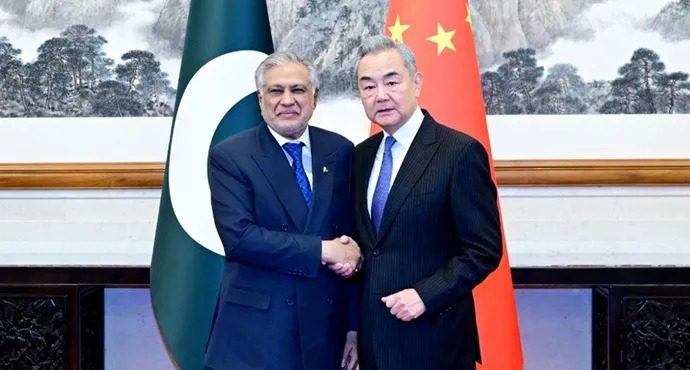
In a high-level diplomatic meeting in Beijing, China and Pakistan have formally called for an immediate end to hostilities across the Gulf and Middle East. This urgent appeal forms the core of a new five-point initiative established following discussions between China’s Foreign Minister, Wang Yi, and Pakistan’s Deputy Prime Minister and Foreign Minister, Senator Mohammad Ishaq Dar. The two leaders met on March 31, 2024, to review the rapidly evolving security situation in the region and chart a path toward stability.
The initiative places a heavy emphasis on de-escalation, with both nations urging all parties involved to exercise maximum restraint to prevent the conflict from spreading into a wider regional war. Beyond a ceasefire, there is a firm demand for the unhindered delivery of humanitarian aid to all war-affected areas. According to details shared with Reports, both countries maintain that the sovereignty, national independence, and territorial integrity of Iran and other Gulf states must be strictly respected, arguing that dialogue remains the only realistic way to resolve deep-seated disputes.
Protection of civilians and vital infrastructure is another cornerstone of this joint position. China and Pakistan are calling for an immediate halt to attacks on non-military targets, stressing that international humanitarian law must be upheld at all costs. This includes a specific plea to stop targeting essential facilities such as power plants, desalination units, energy hubs, and peaceful nuclear infrastructure, all of which are critical to the survival of the civilian population.
The two nations also turned their attention to the maritime crisis in the Strait of Hormuz. They have called for the guaranteed safety of ships and crew members currently caught in the crossfire. The goal is to allow for the safe and early passage of commercial vessels, ensuring that one of the world’s most vital trade routes can return to normal operations as quickly as possible.
This collaborative stance concludes with a call for a return to true multilateralism. By strengthening the primary role of the United Nations, China and Pakistan believe the international community can better manage these crises. As the situation remains tense, this diplomatic push highlights a growing concern over the global economic and security implications of continued instability in the Middle East.