


































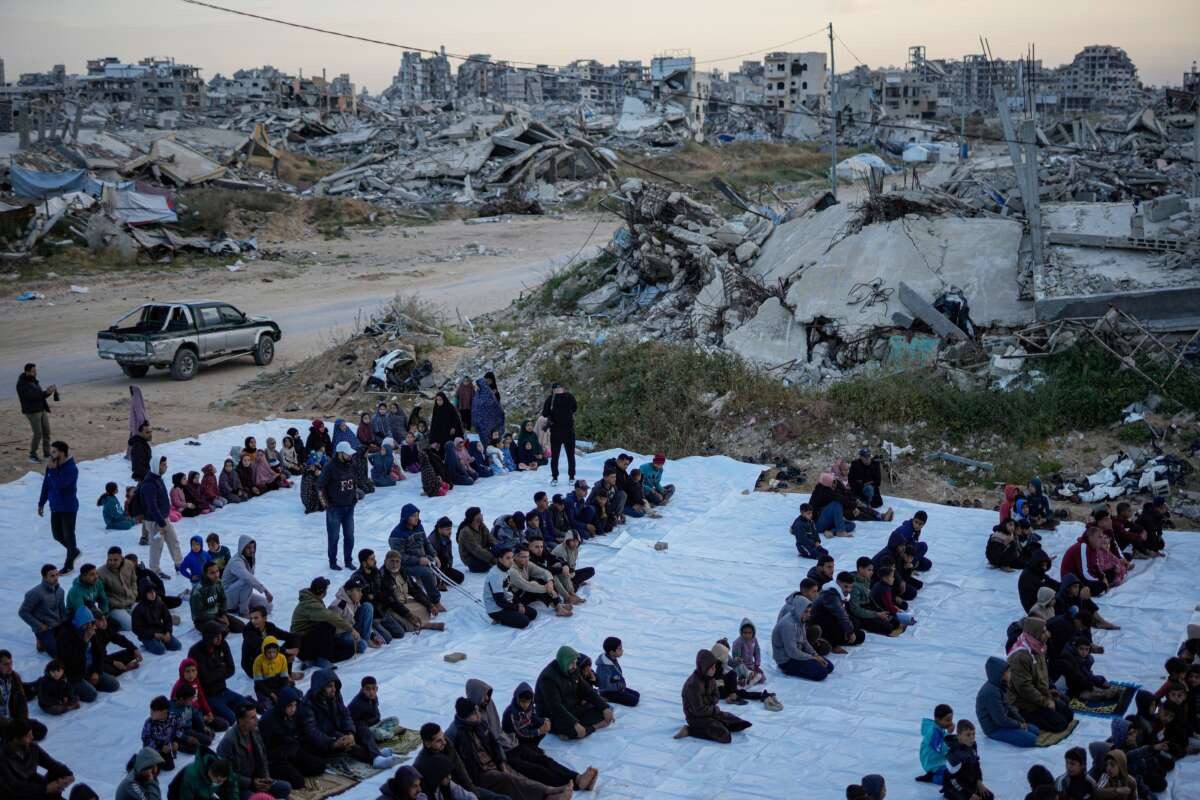
Eid celebrations in Gaza have taken on a deeply somber tone as residents struggle with war, displacement and soaring prices that have stripped the holiday of its usual joy and traditions.
Across the territory, familiar signs of the festive season such as new clothes for children, sacrificial sheep and traditional sweets have become either too expensive or completely out of reach for many families. What is normally a time of happiness and gathering has instead become a period marked by hardship and survival.
A resident of northern Gaza now living in Deir al Balah, Nadia Abu Shamala, described the emotional toll of the situation. She said visits to the market have become painful experiences, as she can only look at goods she cannot afford. According to her, this year’s Eid carries none of the joy the community once knew, with families unable to meet even basic needs for their children.
Despite a ceasefire that began in October 2025, conditions in Gaza remain fragile. Reports indicate that air strikes have continued intermittently, while large parts of the territory remain heavily damaged. With many residents relying on humanitarian aid, daily life continues to be shaped by shortages and uncertainty.
Movement of goods into Gaza remains tightly controlled, with limited supplies entering through border points. Humanitarian groups say this restriction has contributed to persistent shortages and rising prices that ordinary families cannot cope with.
For some residents, however, there is still an effort to preserve tradition. Abu Abdullah al Mosadar shared that he and his brother pooled a significant amount of money to purchase a sheep for Eid sacrifice. He admitted the cost was extremely high but said he felt compelled to maintain the ritual despite the difficult circumstances.
Eid al Adha traditionally centres on the sacrifice of livestock in remembrance of Prophet Ibrahim’s devotion, a story deeply rooted in Islamic belief. In Gaza today, however, the practice has become increasingly difficult to observe.
According to agricultural authorities in the region, the number of livestock has dropped sharply since the conflict began. Limited breeding, disrupted farming and supply constraints have left only a fraction of the pre war sheep population available, serving a population of over two million people.
A spokesperson from the agriculture sector, Raafat Asaliya, explained that prices have surged dramatically due to scarcity and increased costs of feed and transport. What once cost around a thousand shekels now sells for many times that amount, placing it far beyond the reach of most families.
Residents like Ahmed Abu Salem say the situation has made even basic traditions impossible, with many families unable to afford even small portions of meat for their children during the holiday.
Cooking and baking have also become difficult due to shortages of gas and fuel. In many areas, displaced families now rely on improvised methods to prepare food, with some producing traditional Eid sweets under makeshift shelters using whatever materials are available.
In southern Gaza, families in Khan Yunis were seen preparing traditional biscuits under temporary coverings, continuing cultural practices in whatever way they can despite the harsh conditions.
From her shelter, Nadia Abu Shamala expressed a lingering hope for relief, describing life in displacement camps as exhausting and filled with uncertainty. For many like her, Eid this year is less about celebration and more about enduring another day under difficult circumstances.