
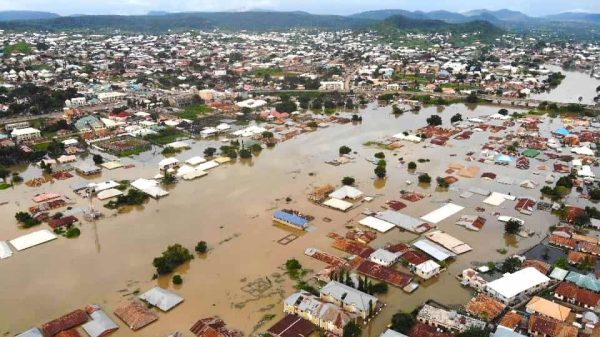












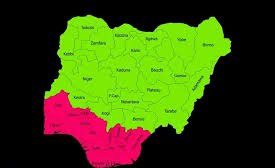





















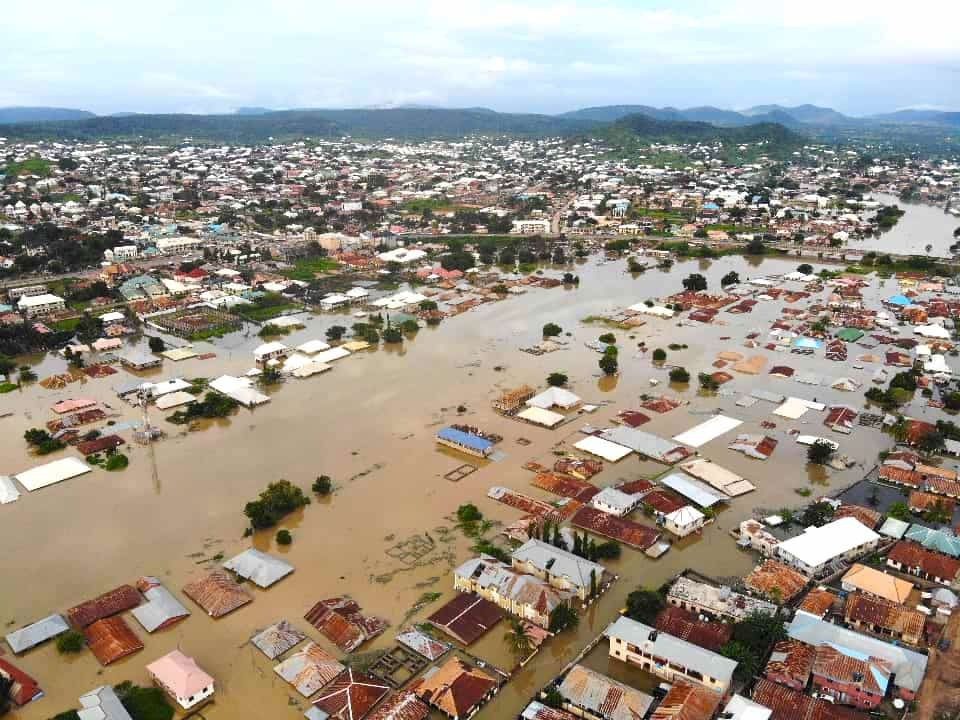
State governments across the country are currently on high alert following a serious warning from the Federal Government regarding the 2026 flood season. The latest Annual Flood Outlook, recently unveiled in Abuja by the Nigeria Hydrological Services Agency, indicates that 33 states and the Federal Capital Territory are at risk of significant flooding this year. With thousands of communities potentially in the path of rising waters, the report has triggered a wave of emergency preparations from coast to coast.
The situation is particularly concerning for high-risk zones like Lagos, Bayelsa, Delta, Adamawa, and Kebbi. In total, over 14,000 communities spread across 266 local government areas are expected to face severe flood threats. Major urban centers including Abuja, Kano, and Port Harcourt are not exempt either, as experts warn that intense rainfall combined with blocked drainage systems could lead to devastating flash floods in these cities.
The Minister of Water Resources and Sanitation, Joseph Utsev, has made it clear that these predictions should be viewed as a call to action rather than just a set of statistics. He emphasized that while the government is working closely with weather experts to provide accurate forecasts, these warnings only matter if they lead to real changes on the ground. He urged state leaders to fix crumbling drainage networks and enforce stricter building codes to prevent future disasters.
In response, states like Benue and Sokoto have already started moving away from simply reacting to disasters to being more proactive. In Benue, emergency teams have launched radio campaigns and opened toll-free lines to keep the public informed. Meanwhile, officials in Sokoto are busy mapping out vulnerable areas and setting up temporary camps for people who might need to evacuate their homes.
Further north, Kano State has kicked off a massive urban drainage project to clear out waste that usually clogs the city’s waterways during the rainy season. Similarly, in Kogi, Governor Ahmed Usman Ododo has directed the establishment of Emergency Operations Centres to ensure that health, agriculture, and security teams can coordinate their efforts effectively if the water levels begin to rise dangerously.
Down in the coastal regions, the threat is twofold. States like Edo and Rivers are bracing for both heavy rainfall and rising sea levels. Zoyols News gathered that Edo State has already begun renovating IDP camps and clearing large-scale drainage systems to ensure water can flow freely. In Adamawa, the message is even more direct: residents living along the riverbanks are being strongly advised to move to higher ground before the peak of the season.
At the federal level, technology is playing a bigger role than ever. The government has introduced a new mobile app and a real-time dashboard designed to help people track flood risks in their specific areas. While these tools are a huge step forward, experts remind us that the real test will be how quickly local communities can react when the alerts go off. For now, the focus remains on clearing gutters, stockpiling relief materials, and ensuring that every citizen knows exactly what to do when the rain starts to fall.