































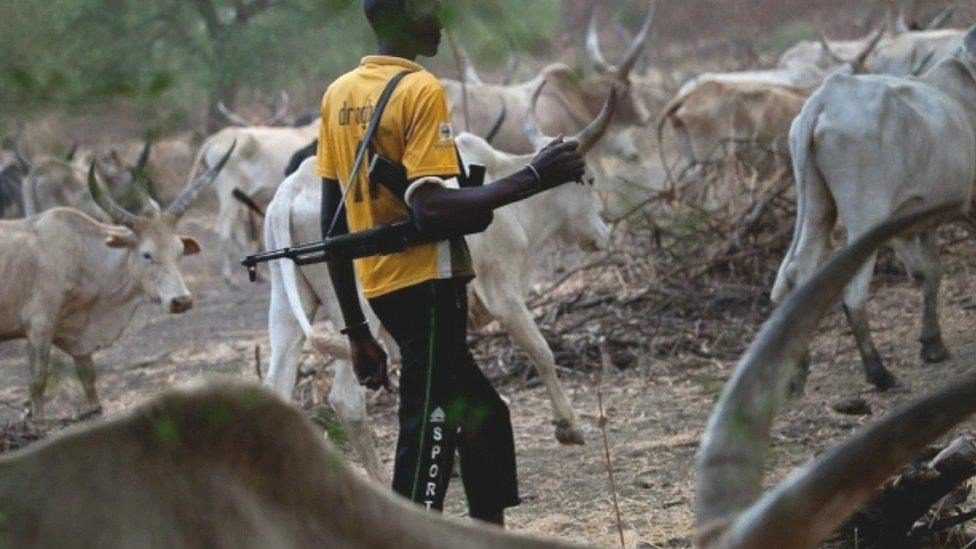
A new report released by the United States Commission on International Religious Freedom has raised fresh concerns over the growing insecurity in Nigeria, revealing that an estimated 30,000 armed Fulani militants are currently operating across different parts of the country.
The report, published in May 2026 and titled “Nonstate Violators of Religious Freedom in Nigeria: Fulani Militants,” described the armed groups as some of the most dangerous non state actors linked to violent attacks in the Middle Belt and parts of Southern Nigeria.
According to the commission, the militants operate in groups ranging from small units to large armed clusters with as many as 1,000 fighters. The report stated that their activities have resulted in thousands of deaths, mass displacement and worsening religious tensions in affected communities.
The commission said attacks connected to Fulani militants recorded the highest number of deaths among religious communities in Nigeria within the past year, surpassing casualties linked to organised insurgent groups and criminal gangs.
While many of the attacks reportedly targeted Christian communities, the report noted that Muslim communities have also suffered killings, kidnappings and raids carried out by armed groups.
The report explained that although the militants do not appear to operate under one central leadership structure, some factions occasionally work alongside bandit groups and extremist organisations. According to the commission, these alliances are often driven by different motives including financial gain, territorial control and violent extremism.
USCIRF stated that many of the attacks are usually carried out at night in vulnerable rural communities. The militants reportedly move on motorcycles and attack residents with automatic weapons and machetes, forcing many families to flee their homes and farmlands.
The commission estimated that violence linked to Fulani militants and other armed groups has displaced at least 1.3 million people across the Middle Belt. Many of the victims are said to be living in overcrowded camps with poor sanitation and limited security.
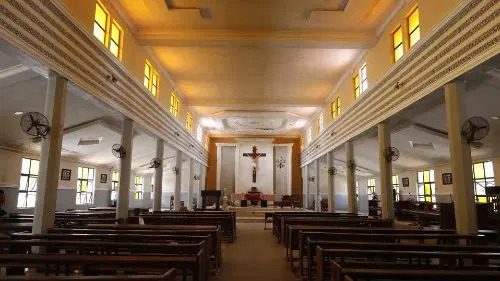
Several deadly incidents from 2025 and early 2026 were highlighted in the report, including attacks in Benue State and Plateau State. One of the incidents referenced was a June 2025 attack in Benue State where at least 200 people, including displaced persons sheltering in a Catholic mission, were reportedly killed.
The commission also mentioned the Yelwata massacre in Benue State, where more than 200 Christians, mostly women and children, were allegedly killed while thousands of others were displaced from their homes.
According to the report, some attacks were deliberately carried out during Christian celebrations such as Christmas and Easter in order to create greater fear and emotional trauma within affected communities.
In another incident cited by the commission, suspected Fulani militants reportedly killed at least 32 people in Niger State in February 2026. The report also referenced an attack on Holy Trinity Parish in the Kafanchan Diocese of Kaduna State where three persons were killed and 11 others, including Reverend Father Nathaniel Asuwaye, were abducted.
The violence has not been limited to Christian communities alone. USCIRF disclosed that armed men abducted an imam and seven worshippers from a mosque in Plateau State in February 2026 before demanding a ransom of N16 million.
The report further stated that Palm Sunday and Easter attacks in April 2026 left dozens dead across Plateau, Kaduna and Benue states. On Easter Sunday alone, five worshippers were reportedly killed at two churches in Kaduna State while 31 others were abducted.
USCIRF noted that debates over the true cause of the violence have made it difficult to fully understand the crisis. While some analysts blame environmental challenges, land disputes and economic pressures, others believe religion also plays a major role in many of the attacks.
The commission criticised the response of security agencies, saying victims have repeatedly complained about delayed intervention whenever attacks occur. Some Christian advocacy groups also accused security personnel of bias during investigations and security operations, though the report acknowledged that efforts are being made to tackle the crisis.
According to the commission, governors from 11 states launched an initiative in June 2025 aimed at establishing ranches for herders to reduce conflicts over grazing routes and farmland.
The report also linked renewed government action to the decision by the United States government under President Donald Trump to designate Nigeria as a Country of Particular Concern over religious freedom violations in October 2025.
Following that development, President Bola Tinubu reportedly classified kidnappers and violent armed groups, including Fulani militants, as terrorists in December 2025.
USCIRF stated that Nigerian security operatives rescued 309 kidnapped victims during operations carried out in Kogi State and Kwara State in January 2026. During the same operations, 129 suspected militants were reportedly arrested while 55 others were killed.
The report also mentioned the Miyetti Allah Cattle Breeders Association of Nigeria, which has faced criticism from some Christian leaders over allegations that it failed to curb militant activities and land invasions. The association, however, denied supporting or protecting any form of violence or criminal activity.
USCIRF further revealed that the United States Congress introduced the Nigeria Religious Freedom and Accountability Act of 2026 in February, proposing sanctions against the association over alleged involvement in serious religious freedom violations.
Despite ongoing security operations and peace efforts, the commission warned that insecurity remains deeply rooted across central Nigeria and may continue unless stronger measures are taken by both federal and state governments to protect lives and guarantee freedom of worship in affected communities.