
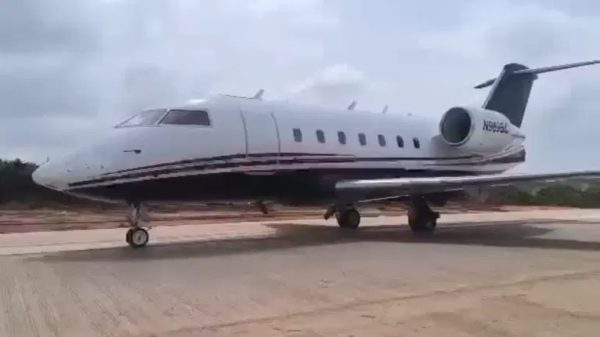





































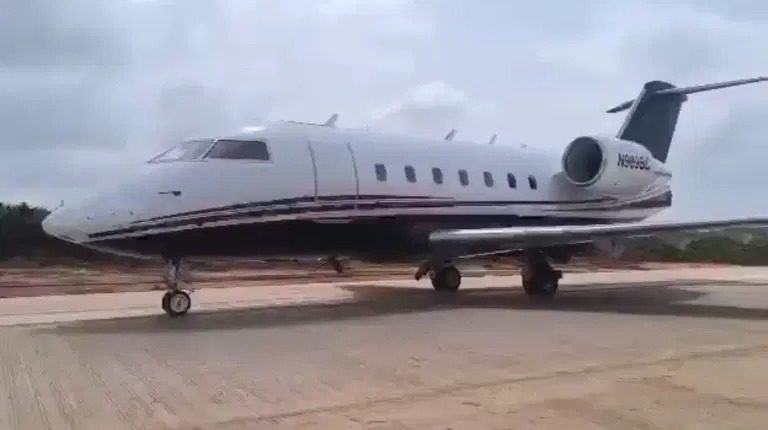
The dramatic landing of a private aircraft on a newly constructed road in Ogwashi-Uku, Delta State, has continued to stir conversations, prompting the Nigerian Civil Aviation Authority to clarify the regulatory compliance and ages of the flight crew involved. The pilot in command of the American-registered aircraft is 75 years old, while his co-pilot is 70.
A fresh perspective on the incident was shared by Captain Don Spiff, the Director of Operations, Licensing, and Training at the aviation regulatory body, during a recent broadcast on News Night, an Arise TV programme. Addressing the immediate public concern regarding the ages of the crew, Spiff explained that because the aircraft carries a United States registration, the crew operated legally under American Federal Aviation Administration regulations, which permit pilots of that age to fly under specific operational categories.
While the statutory age limit for commercial pilots within Nigeria is currently capped at 65, Spiff noted that domestic policies are undergoing a review to reflect the evolving nature of global aviation. He indicated that upcoming amendments to the Civil Aviation Act may soon allow Nigerian pilots above 65 to operate private flights, provided they maintain a valid first-class medical certification.
The flight, which originated from Lagos with a logged flight plan for Asaba, encountered difficulties upon reaching its destination. After an aborted landing attempt and a subsequent go-around at the Asaba airport, the aircraft ultimately touched down on the Delta State road. While the exact circumstances leading to this unconventional landing remain a subject of intense scrutiny, the regulatory body expressed deep concern over the crew’s subsequent decision to take off from the road without clearing the action with air traffic control or safety authorities.
Describing the unauthorized takeoff as an incredibly reckless and dangerous maneuver, Spiff confirmed that the operator’s commercial certificate, known as the Permit for Non-Commercial Flight, has been suspended. The Nigerian Safety Investigation Board has launched a formal investigation to uncover the operational factors and motives behind the incident. If the board classifies the occurrence as a minor event rather than a serious accident, oversight of the case will be returned to the regulatory authority for final disciplinary measures.
Despite the widespread attention gathered by the event, authorities maintain that the incident is an isolated anomaly and does not reflect the broader security of the nation’s skies. The aviation sector remains governed by stringent oversight, and officials emphasize that the safety of the airspace remains robust and reliable.