

























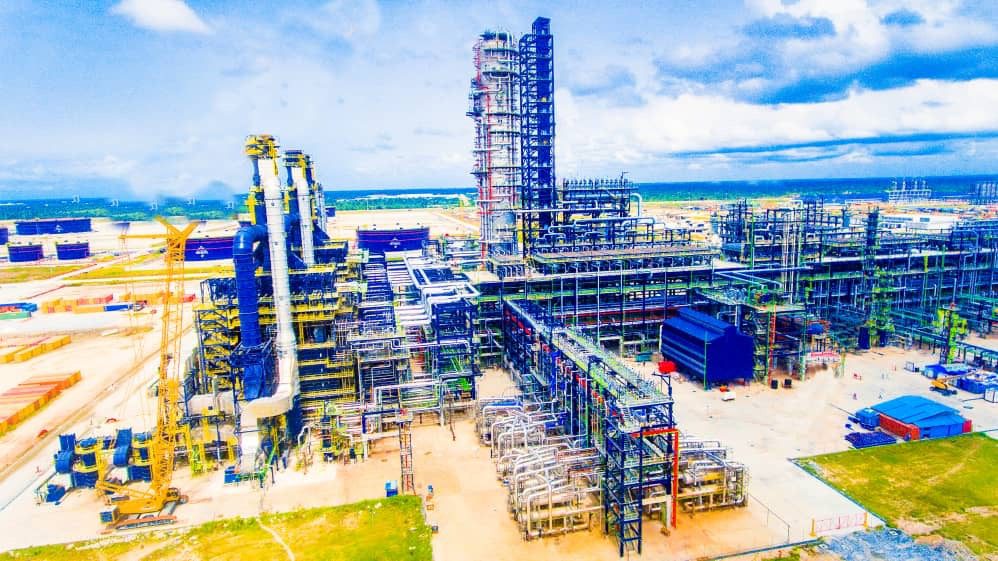
Dangote Petroleum Refinery and Petrochemicals has raised its crude oil processing capacity to 700,000 barrels per day following a successful performance test carried out by process licensors, further strengthening its status as the world’s largest single train petroleum refinery.
The latest achievement takes the refinery beyond its official installed capacity of 650,000 barrels per day, highlighting the facility’s growing operational strength and efficiency. The successful test demonstrated the refinery’s ability to process larger volumes of crude while maintaining smooth performance across its production units.
The Vice President for Oil and Gas at Dangote Industries Limited, Devakumar Edwin, described the development as part of a broader expansion strategy aimed at significantly increasing the refinery’s output in the coming months.
According to him, plans are already in place to raise capacity to 1.4 million barrels per day within the next 30 months. If achieved, the expansion would position the facility among the largest refining complexes in the world.
Edwin noted that the planned growth is expected to strengthen Nigeria’s energy security, reduce reliance on imported refined petroleum products and further establish the country as a major refining and export hub in Africa.
He explained that the refinery’s long term vision extends beyond meeting local demand, with a clear focus on becoming a dominant force in both regional and global refining markets.
Owned by Nigerian businessman and philanthropist Aliko Dangote, the refinery began fuel production in 2024 and has continued to increase output of petrol, diesel, aviation fuel and other petroleum products.
Since commencing operations, the facility has expanded its presence in international markets, supplying refined products to several African countries as well as destinations across Europe, including the United Kingdom, France, Spain, Italy and the Netherlands. The refinery has also exported gasoline to the United States and supplied jet fuel to Saudi Arabia.
Industry observers say the refinery has become an increasingly important player in the global energy market, particularly at a time when geopolitical tensions in the Middle East continue to affect supply chains and energy prices.
As a result, several African nations are turning to the refinery as a dependable source of refined petroleum products, reinforcing its growing role in supporting energy security across the continent.