

































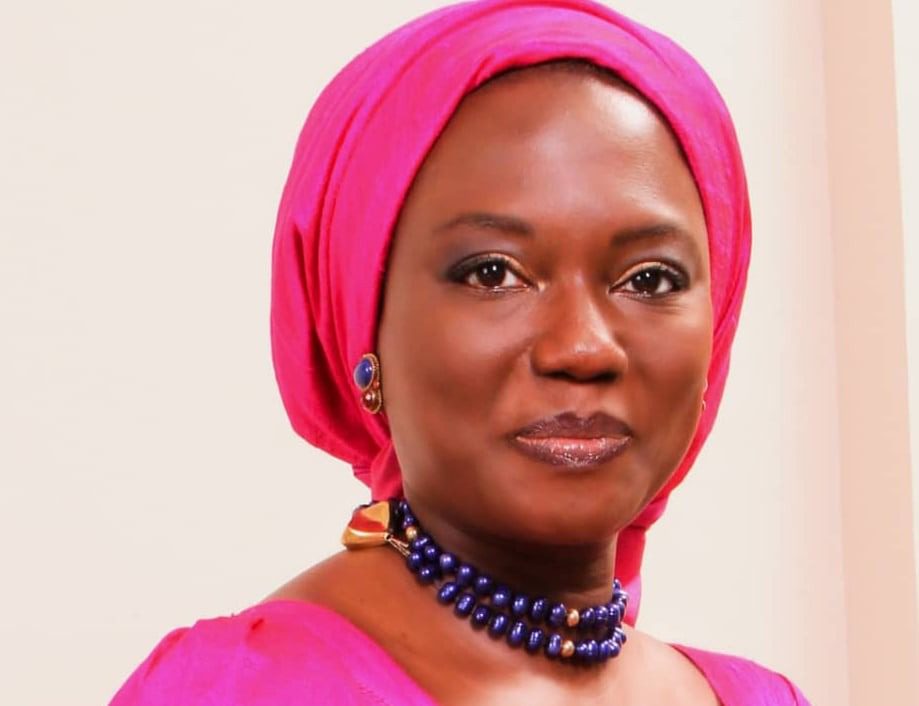
Aisha Muhammed Oyebode carries a name that is woven deeply into Nigeria’s history. As the first daughter of the late Murtala Ramat Muhammed, the former military Head of State assassinated on February 13, 1976, her life has been shaped by legacy, loss, and responsibility.
Now a lawyer, entrepreneur, author, activist, and philanthropist, she serves as Group Chief Executive Officer of Asset Management Group Limited and CEO of the Murtala Muhammed Foundation. Educated at Queens College, Lagos, she went on to earn a law degree from the University of Buckingham, a Master’s in Public International Law from King’s College, University of London, an MBA in Finance from Imperial College London, and later a doctorate from SOAS University of London.
But long before the titles and achievements, there was a 12-year-old girl whose world shifted overnight.
She describes losing her father as deeply disorienting. It felt, she says, like learning to walk again without legs. Beyond the silence of his absence came the weight of expectations and the politics of preserving his legacy. Childhood ended abruptly. Grief did not disappear; it simply became something she and her siblings learned to grow around.
Her father, she explains, stood for discipline, clarity of purpose, and a strong sense of Nigerian and African identity. At the time, she did not fully grasp what the nation had lost. Her mother, widowed with six children — the youngest just six months old — had no choice but to press forward.
What she and her siblings missed most was not just his public stature, but his presence at home. He was protective, warm, and involved. Sundays were sacred family days — swimming at the Federal Palace Hotel when the weather allowed, or simple outings to buy fruits and groceries when it rained. Even after official trips, no matter how late he returned, he would personally pick up his children.
He loved gadgets, books, animals, and plants. He believed deeply in education, especially for his daughters. While disciplined and firm, he was also gentle in everyday moments. His absence left a gap that could never truly be filled.
The news of his assassination reached her in fragments while she was in secondary school. Confusion turned to certainty only after traveling to Kano and realizing he had already been buried. That was when the loss became painfully real.
The days that followed were heavy with sorrow. Yet she remembers something else: the collective grief of Nigerians. Tributes poured in. Music legends created heartfelt memorial songs. People mourned openly. That national response, she says, became part of her family’s own mourning.
Despite the pain, she never felt resentment toward the Nigerian state. Disappointment, yes. Confusion at times, certainly. But resentment never took root. Her father believed in Nigeria without condition, and she chose to honor that belief rather than surrender to bitterness.
Healing came slowly — through her mother’s strength, through education, through work, through building her own family. Each achievement became a quiet act of resilience.
She speaks of her mother, Madam Ajoke Muhammed, as the backbone of the family. Widowed young in a challenging society, managing children and struggling businesses, she carried the family forward with faith and discipline. Bitterness never defined her. Instead, she instilled dignity, resilience, and ambition in her children.
Asked about the simplicity of her father’s grave in Kano, she responds calmly. He was not a man who sought grandeur. His resting place reflects the humility with which he lived. Still, after decades of neglect, the children have decided to refurbish his grave and that of their brother Zack, who lies beside him. For her, however, legacy does not live in monuments. It lives in how people choose to act.
Through the Murtala Muhammed Foundation, that legacy continues. One of its strongest commitments is advancing education for girls in northern Nigeria, where enrollment rates remain troublingly low and illiteracy among young women is high.
She believes the problem cannot be solved by building schools alone. Poverty, insecurity, culture, and trust all intersect. Solutions must address economic barriers through scholarships and school feeding programs. Communities must feel safe sending their daughters to school. Traditional and religious leaders must champion the cause. Education must clearly connect to real opportunities.
For her, educating a girl is not charity. It is nation-building. When a girl learns, a family stabilizes.
Fifty years after her father’s death, she continues to carry his values — discipline, service, and decisive action. Corruption, she says, was never something he merely discussed. He treated it as an emergency. And that mindset, she believes, remains relevant today.