
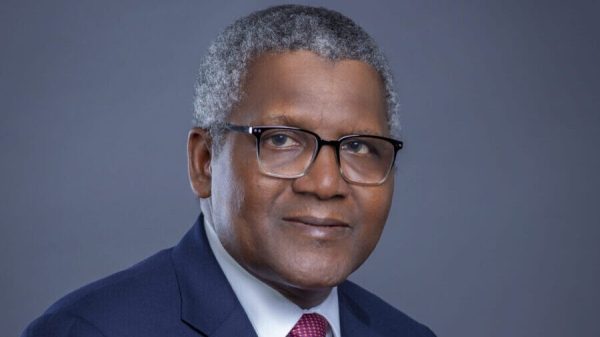




















Africa’s richest man and President of Dangote Petroleum Refinery, Aliko Dangote, says Nigeria has finally broken free from five decades of persistent fuel queues. He revealed that the refinery, which began producing petrol exactly one year ago, has saved the country over $1 billion in demurrage payments and is now meeting the nation’s daily fuel demand.
Speaking at a press briefing held at the refinery complex in Lagos to mark the one-year anniversary of its petrol rollout, Dangote described the refinery as a turning point for Nigeria. He said that since September 15, 2024, when production began, Nigerians have steadily witnessed the end of fuel shortages that had plagued the country since 1975.
“The queues that started almost 50 years ago are finally behind us. Nigerians are witnessing a new chapter,” Dangote said.
He admitted that the journey to establishing the 650,000 barrels per day facility was not without challenges. According to him, experts, investors, and even government officials had repeatedly warned that only sovereign nations could successfully manage such a project, stressing that failure would have cost him all his assets.
“The risk was huge, but we believed in Nigeria and Africa. If the refinery had failed, lenders would have taken everything. Yet we pressed on because this was bigger than business—it was about nation building,” he explained.
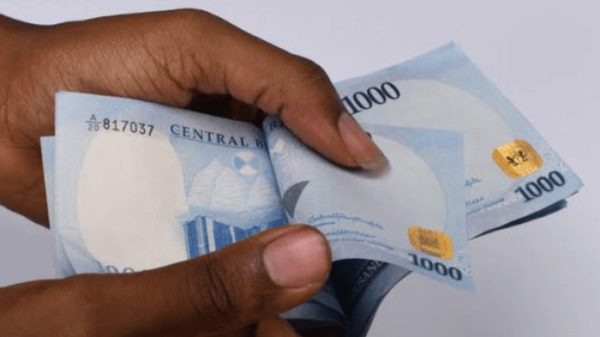
The refinery’s operations have already impacted petrol prices. Before it came onstream, the pump price had climbed close to ₦1,100 per litre. Today, it sells at an average of ₦841 in Abuja, Lagos, and several other states, with further reductions expected as compressed natural gas (CNG) trucks are rolled out nationwide.
Between June and early September 2025, the facility exported more than 1.1 billion litres of petrol, a move that not only demonstrates its capacity to meet domestic demand but also strengthens Nigeria’s foreign exchange earnings.
On job creation, Dangote emphasized that the refinery was designed to generate employment rather than displace workers. He announced that 4,000 CNG-powered trucks, expected to create at least 24,000 jobs, are being deployed across the country.
“Our employees earn three times the minimum wage, with life and health insurance for themselves, their spouses, and up to four children. Drivers, mechanics, fleet managers, and other professionals are all part of this value chain. We are building an economy that takes care of its people,” he said.
He also clarified that the company will not compete in retail operations, noting that he turned down offers to acquire filling stations. Instead, the refinery will focus on wholesale supply while opening its doors to collaborations across the downstream sector.
Looking ahead, Dangote disclosed that the refinery’s capacity will be expanded to 700,000 barrels per day in its second year, positioning Nigeria as Africa’s refining hub. He further revealed plans for large-scale polypropylene exports, cement exports projected to fetch $500 million annually from 2026, and investments in electric vehicles starting January that same year.
He stressed the need for Nigeria to protect its industries and avoid the collapse of vital sectors, citing the textile industry as a warning sign of unchecked import dependence. “If we continue importing everything, we are exporting jobs and importing poverty. Industrialisation is the only way forward,” he noted, urging lawmakers to back policies that prioritize local industries.
Dangote praised the federal government, partners, staff, and Nigerians for their support, while commending the Independent Petroleum Marketers Association of Nigeria (IPMAN) for registering members to benefit from the free CNG truck distribution scheme.
On security concerns surrounding truck deployment, he assured Nigerians that drivers and assets were safe, stressing that the country operates under the rule of law and that security agencies remain fully empowered to provide protection.
Dangote concluded by reaffirming his commitment to industrialising Nigeria and Africa, creating jobs, boosting exports, and strengthening the economy. “Our dream is for Nigeria to be the pride of Africa, and with this refinery, that journey has already begun,” he said.