






















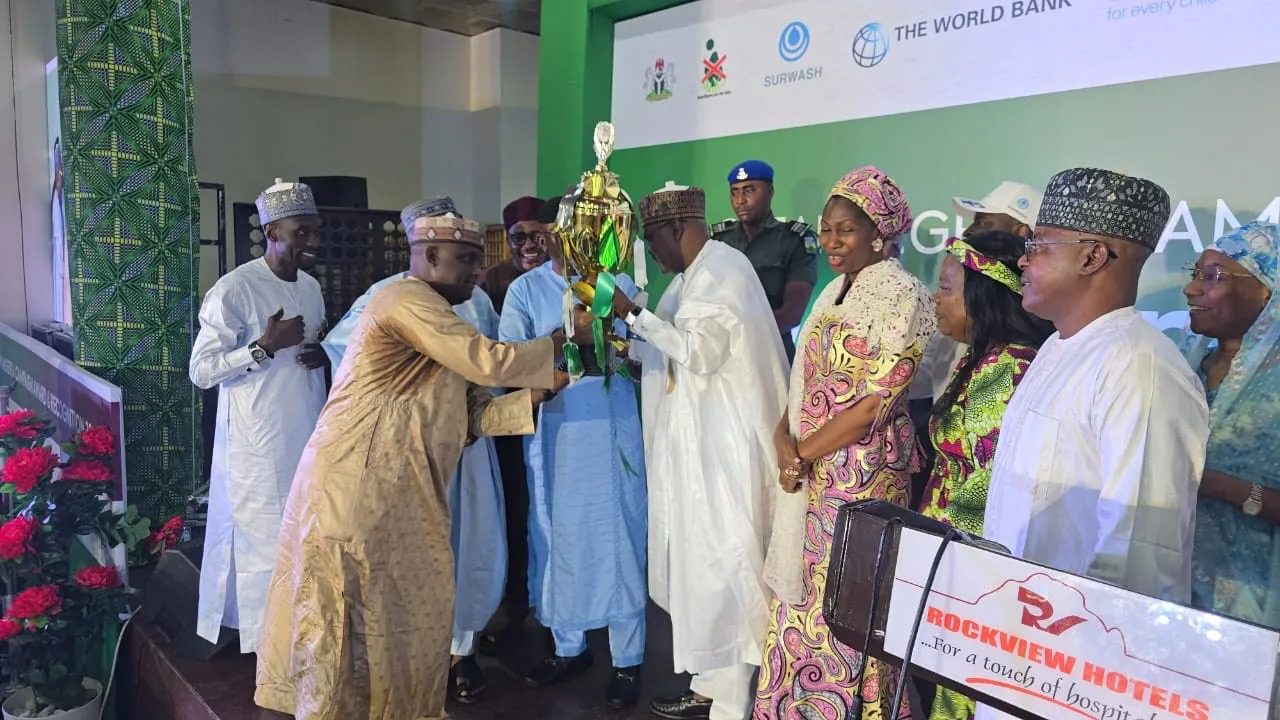
Katsina State has achieved a remarkable national milestone, as the Federal Government has officially declared it Open-Defecation-Free. This recognition places Katsina among Nigeria’s top-performing states advancing the Water, Sanitation and Hygiene agenda.
The certification was awarded during the 6th Anniversary of the Clean Nigeria Campaign and the 2025 World Toilet Day Commemoration, organised by the Federal Ministry of Water Resources and Sanitation in partnership with the Clean Nigeria: Use the Toilet Campaign and other national WASH stakeholders. This year’s event, themed “We’ll Always Need the Toilet,” took place at Rockview Hotel Royale, Wuse 2, Abuja, and featured a national sensitisation walk to promote safe sanitation practices.
Governor Dikko Umaru Radda was represented at the ceremony by the Commissioner for Water Resources, Dr Bishir Gambo Saulawa, who received the ODF certification on the state’s behalf. He was joined by the Permanent Secretary of the Ministry, as well as leaders from RUWASSA, STOWASSA, SEPA, and the State Coordinator of SURWASH, all of whom have been instrumental in driving sanitation reforms across Katsina’s 34 local government areas.
Dr Saulawa hailed the achievement as a major boost to the state’s sanitation reforms and a testament to the collective effort of communities, traditional institutions, local stakeholders, and sanitation agencies. “This recognition reflects the dedication and commitment of every actor involved in improving hygiene and sanitation across Katsina,” he said.
The commemoration brought together senior federal officials, development partners, civil society organisations, school children, cultural troupes, and WASH stakeholders from across Nigeria. The programme included a symbolic walk, goodwill messages, and a documentary showcasing national progress toward eliminating open defecation.
Development partners, including UNICEF, the World Bank, WaterAid, SURWASH, Action Against Hunger, and Self Help Africa, applauded Katsina’s achievement, emphasizing the importance of sustaining momentum in sanitation efforts. World Toilet Day, observed globally on November 19, promotes progress toward the United Nations Sustainable Development Goal 6: Clean Water and Sanitation for All. With this certification, Katsina becomes the second state in Nigeria, after Jigawa, to attain full ODF status.
Dr Saulawa noted that this milestone was achieved within a relatively short period under Governor Radda’s leadership and stressed that it comes with greater responsibility. “This achievement is not just a badge of honour. It is a reminder that the health and dignity of our people must remain at the centre of government action,” he said. “Governor Radda remains committed to strengthening WASH systems, expanding access to toilets, and ensuring that every community in Katsina enjoys a clean, safe, and healthy environment.”
The Commissioner highlighted that the state’s strategy combines infrastructure investment, community mobilisation, behavioural change campaigns, and partnerships with federal institutions and development organisations. He also credited the leadership and teamwork of RUWASSA, STOWASSA, SEPA, and SURWASH, describing them as the backbone of Katsina’s rapid progress.
Dr Saulawa emphasized that improved sanitation has already reduced disease outbreaks, enhanced the safety of women and children, and created cleaner, healthier communities. He praised community volunteers and local institutions for their dedication and assured that the administration would continue to expand sanitation coverage, strengthen monitoring systems, and support communities to sustain ODF status over the long term.
The Minister of Water Resources and Sanitation, Prof Utsev, commended states like Katsina that have demonstrated exceptional commitment to the Clean Nigeria Campaign. He stressed that ending open defecation is critical for public health, environmental protection, and national development. According to him, Katsina’s success illustrates how political will, institutional coordination, and active community participation can drive meaningful progress.