

































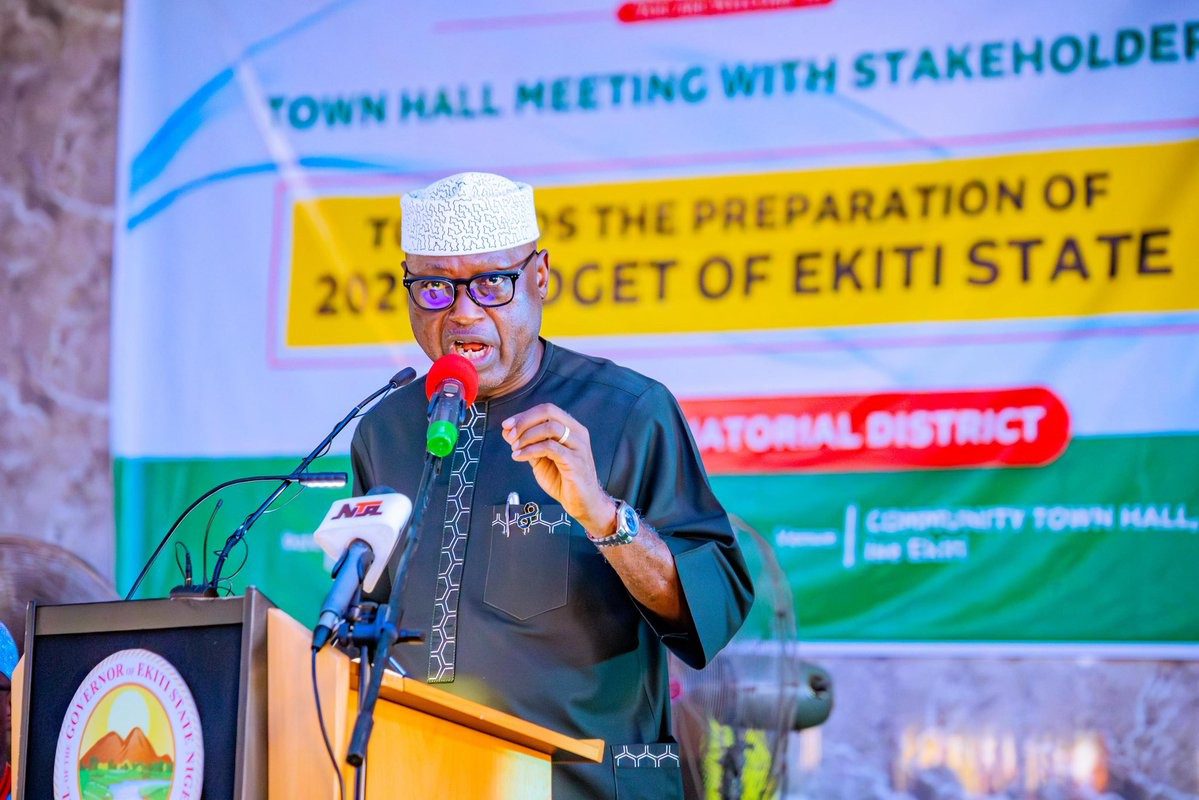
When the story of Nigeria’s Fourth Republic is eventually written, Governor Abiodun Abayomi Oyebanji of Ekiti State will certainly earn a prominent mention. His second term ambition, recently highlighted by the submission of his nomination form in Abuja, has generated excitement across the state and beyond. While many may dismiss such activities as mere political showmanship, the mood in Ekiti tells a different story.
As someone with deep roots in the state, I have closely followed Ekiti’s political journey. Between 1999 and 2022, the state was often marked by infighting and bitter rivalries. That atmosphere has shifted remarkably since Oyebanji assumed office. For the first time in decades, leading political figures from different camps are working in unison for the stability of the state. Former governors and influential stakeholders who once stood on opposing sides are now aligned behind him, a rare development in Nigerian politics.
The contrast with other states could not be clearer. In Ogun, the rivalry among Dapo Abiodun, Gbenga Daniel and Ibikunle Amosun continues to divide the party. In Kwara, the factions of Bukola Saraki and Governor AbdulRahman AbdulRazaq remain at loggerheads. Ondo still grapples with the political tensions between the late Rotimi Akeredolu’s camp and that of Governor Lucky Aiyedatiwa, while in Kaduna, Governor Uba Sani and his predecessor Nasir El-Rufai are at open war. Rivers State remains the most dramatic example, with the uneasy standoff between Governor Siminalayi Fubara and Nyesom Wike. Against this backdrop, Ekiti stands out as an oasis of calm.
Under Oyebanji, the state has embraced a peace it has not known in decades. His leadership has shown that stability is achievable when a leader puts unity above division. Across history, societies have been transformed by visionary leaders who inspired collective responsibility figures such as Nelson Mandela, Martin Luther King Jr., and Mahatma Gandhi. Oyebanji, in his own way, is driving a similar spirit in Ekiti, anchoring his governance on development, inclusivity and non-violent engagement.
The governor’s influence is visible in agriculture, infrastructure, technology, education and digital transformation. By the time he completes his tenure, Oyebanji is expected to leave a legacy that will reshape Ekiti’s political and social landscape for generations.
The scale of support for his re-election bid was evident during his nomination form submission at the APC headquarters in Abuja. He was accompanied by an impressive delegation that included Senate Leader Opeyemi Bamidele, the first civilian governor of the state Otunba Niyi Adebayo, four former deputy governors, members of the National Assembly, and even opposition figures such as Hon Bisi Kolawole of the PDP. Their presence signaled a rare consensus around Oyebanji’s leadership.
Leaders who addressed the gathering spoke highly of his inclusive style and the stability he has brought to the party and the state. Oyebanji himself urged the APC leadership to recognize the will of Ekiti people and ensure continuity in governance, stressing that the trend of instability must be halted for the state to achieve sustainable development.
Observers agree that his re-election momentum is unprecedented. The APC in Ekiti has never been this united, and long-standing grievances within the party have been resolved under his watch. His simplicity and accessibility have endeared him further to the people. Unlike many in his position, Oyebanji attends grassroots events and local meetings, maintaining close ties with party members and ordinary citizens.
The governor has argued that the inability of any leader to secure a second term in Ekiti has stunted the state’s growth. Breaking this jinx, he insists, is critical to achieving long-term development. For the first time, many in Ekiti believe this is possible.
What Oyebanji has built is more than a campaign it is a movement for stability and progress. Those who may be tempted to challenge his re-election are being urged to set aside personal ambition and allow him to complete the work he has started. Ekiti, at last, has a leader who has united its people, and that rare gift should be nurtured, not disrupted.